
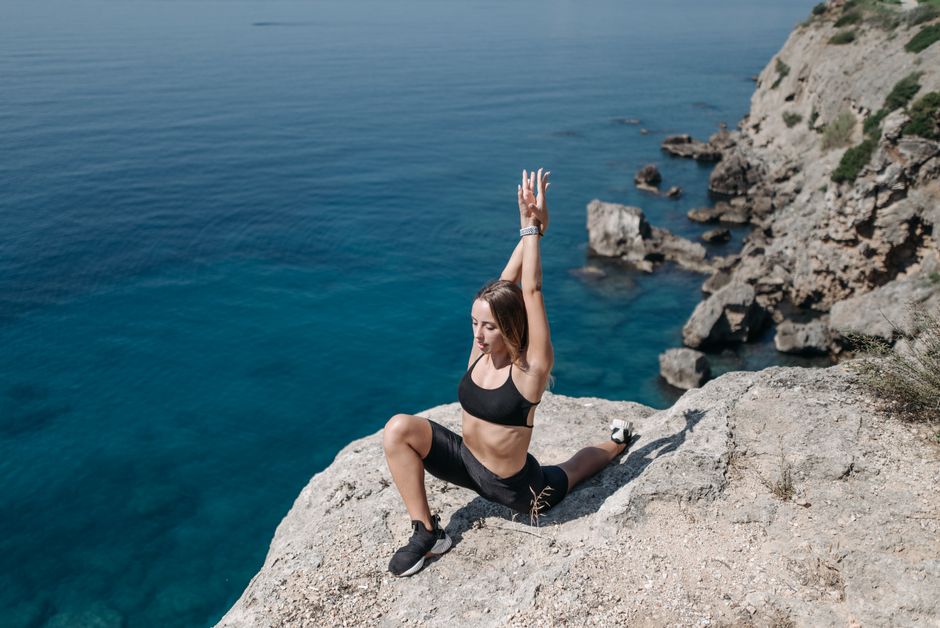
Tight hips usually respond best to slow, sustained stretches held for 30 to 60 seconds, done consistently a few times a week. The moves that work target the specific muscles that are actually short — the hip flexors, the hamstrings, the glutes, and the adductors — rather than stretching the whole hip area vaguely. Static stretching after activity or when muscles are warm is the most reliable approach, and pairing it with strength work for the surrounding muscles tends to help more than stretching alone.
Why Do My Hips Feel Tight In The First Place?
Hip tightness is a sensation, not always a physical shortening of muscle. That distinction matters because it changes what will actually help.
Some people genuinely have reduced flexibility in specific muscles. Others feel tight because a muscle is working hard all day — the hip flexors in anyone who sits for long stretches, for example — and a fatigued or overactive muscle can feel tight even when it isn’t short. Still others feel stiffness from joint changes, old injuries, or simply from being sedentary.
The hip is a ball-and-socket joint surrounded by some of the largest muscles in the body. The glutes, hip flexors, hamstrings, adductors (inner thigh), and deep rotator muscles all cross it. When one group is weak or underused, another often compensates and tightens. This is why stretching the same spot every day sometimes does nothing.
One clarification worth knowing: research on stretching shows that most of the immediate gain in range of motion comes from increased tolerance to the stretch sensation, not from the muscle physically lengthening. That doesn’t make stretching useless. It means consistency and gradual progression matter more than forcing a deep stretch once.
How To Stretch Tight Hips: Moves That Actually Work
The stretches below target the main muscle groups around the hip. Hold each one for 30 to 60 seconds, breathe normally, and stop before sharp pain. Mild pulling is expected. Sharp or pinching pain is a signal to back off.
Kneeling Hip Flexor Stretch
Kneel on one knee with the other foot flat in front, forming a right angle at the front knee. Tuck your pelvis slightly — think of tilting the tailbone under — and gently shift your weight forward until you feel a stretch at the front of the kneeling hip. The pelvic tuck is what makes this work; without it, many people just arch their lower back and feel nothing.
This targets the iliopsoas, the deep hip flexor that tightens with prolonged sitting. Hold 30 to 60 seconds per side.
Figure-4 Glute Stretch
Lie on your back with both knees bent. Cross one ankle over the opposite knee, forming a figure four. Reach through and pull the supporting thigh toward your chest until you feel it in the back of the crossed hip. This targets the glutes and deep hip rotators, which often feel tight in people with low back discomfort.
Seated Butterfly Stretch
Sit with the soles of your feet together and knees falling out to the sides. Sit tall and lean forward from the hips, not by rounding your back. This targets the inner thigh muscles, the adductors. Hold 30 to 60 seconds.
Standing Hamstring Stretch
Place one heel on a low step with the leg straight. Keep your back flat and hinge forward from the hips until you feel a stretch behind the thigh. The hamstrings cross the hip joint, so tight hamstrings often get blamed on the hips. Keep the knee soft rather than locked.
90/90 Hip Rotation Stretch
Sit on the floor with one leg bent in front at 90 degrees and the other bent behind at 90 degrees. Sit tall and gently rotate your torso toward the front leg. This works the deep hip rotators and is useful for people whose tightness feels more like stiffness than a pull.
Static Or Dynamic Stretching — Which Should I Do?
Both have a place, and the timing is what separates them. Static stretching means holding a position still. Dynamic stretching means moving a joint through its range with control, like leg swings or hip circles.
Before activity, dynamic movement is the better choice. Static stretching right before something explosive can temporarily reduce power output. After activity, or as a separate session when muscles are warm, static holds are the standard approach for improving flexibility over time.
For most people with everyday tightness, a short static routine done consistently beats an elaborate one done rarely. Two or three sessions a week is a reasonable starting point, and daily is fine for gentle holds.
Does Stretching Alone Fix Tight Hips?
Not always, and this is where many people get stuck. Stretching can improve range of motion, but if the tightness comes from weak or overworked muscles, stretching without strengthening often gives only temporary relief.
Some evidence suggests combining stretching with strengthening the surrounding muscles works better than stretching alone for persistent tightness. The logic is straightforward: if your hip flexors are overactive because your glutes are underused, stretching the flexors helps briefly, but building the glutes addresses the underlying pattern.
Practical strength additions include glute bridges, clamshells, and controlled step-ups. These don’t need to be intense. A few sets a couple of times a week is a reasonable starting point for most healthy adults.
When Is Hip Tightness A Sign Of Something Else?
Most hip tightness is muscular and responds to movement. Some isn’t. Knowing the difference matters.
See a clinician if tightness comes with sharp groin pain, a catching or locking sensation, pain that wakes you at night, or stiffness that doesn’t improve with any movement. These can point to joint problems, labral issues, or other conditions that stretching won’t fix and may worsen.
Older adults with hip stiffness and groin pain should be assessed rather than assumed to have “tight muscles.” Osteoarthritis of the hip is common and presents differently from muscular tightness. It’s not something to self-treat with aggressive stretching.
Sudden severe hip pain, inability to bear weight, or pain after a fall warrants prompt medical attention.
Common Mistakes That Make Tight Hips Worse
Bouncing during a stretch is one of the most common errors. Ballistic bouncing triggers a protective reflex that makes muscles tighten rather than relax. Slow, steady holds work better.
Forcing a stretch to the point of pain is another. Discomfort is fine; sharp pain is not. Pushing past pain risks injury to muscles, tendons, or the joint itself.
Stretching cold muscles aggressively is less effective and slightly riskier. A few minutes of walking or light movement beforehand helps.
Perhaps the biggest mistake is expecting a fix from stretching alone while spending most of the day in the position that caused the tightness. If you sit for hours, brief movement breaks throughout the day do more for hip comfort than a single long stretch session.
- Hold stretches 30 to 60 seconds rather than brief bounces
- Breathe steadily instead of holding your breath
- Pair stretching with strengthening for lasting change
- Break up long sitting periods with short movement
- Stop at discomfort, not pain
How Long Until Hips Feel Less Tight?
Most people notice some improvement within a few weeks of consistent stretching, though this varies widely. Meaningful, lasting change in flexibility typically takes several weeks to a few months of regular practice.
The honest position: timelines are individual and depend on the cause of the tightness, how consistent you are, and whether you address contributing factors like inactivity or weakness. No single schedule works for everyone, and anyone promising a fixed result in a set number of days is overselling.
Progress is often gradual and easy to miss. Tracking how easily you can do everyday movements — bending, squatting, climbing stairs — is a more useful measure than chasing a deeper stretch.
Frequently Asked Questions
How often should I stretch tight hips?
Two to three sessions a week is a reasonable starting point, and gentle daily stretching is generally fine for most healthy adults. Consistency matters more than duration.
Should I stretch before or after exercise?
Dynamic movement before exercise and static holds after are the usual approach. Static stretching right before intense activity can temporarily reduce power output.
Can tight hips cause back pain?
Tight hip muscles can contribute to altered movement patterns that some people link to low back discomfort, though the relationship is complex and not one-directional. Back pain has many causes and should be assessed on its own.
Why do my hips feel tight even though I stretch daily?
If stretching isn’t helping, the tightness may come from weak or overworked muscles rather than short ones. Adding strengthening for the glutes and surrounding muscles, and breaking up long sitting, often helps more than more stretching.
