
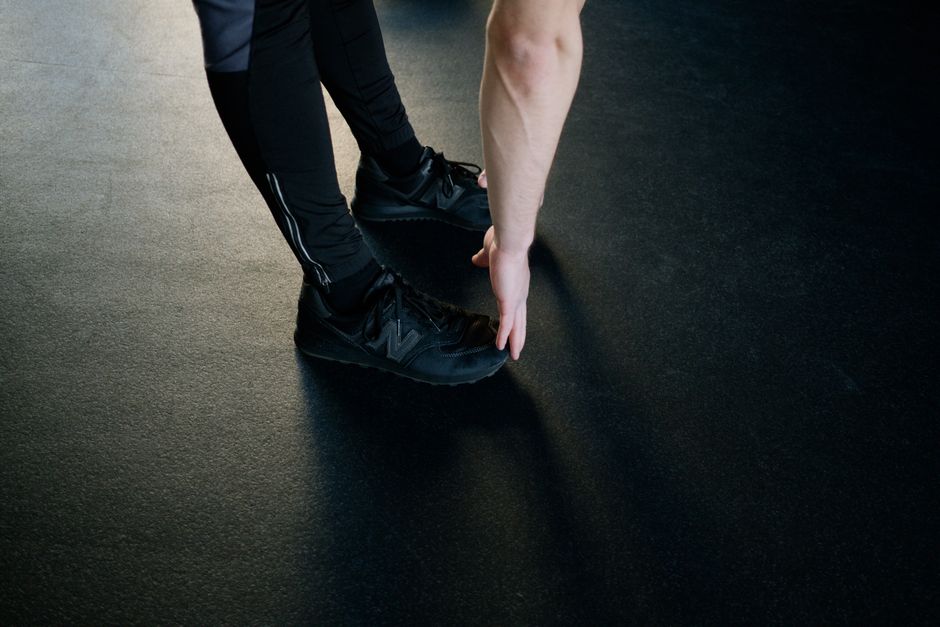
The gastrocnemius is the large, visible muscle on the back of your lower leg. To stretch it, you keep the back knee straight while the front knee bends, because that straight knee is what puts this particular muscle on tension. Three reliable stretches do the job: the standing wall stretch, the step or stair stretch, and the downward dog variation. Each one works the same muscle from a slightly different angle, and all three are easy to do at home with no equipment.
Most people who stretch their calves are actually stretching the wrong muscle, or the right muscle the wrong way. The calf is not one muscle. It is a small group, and the largest member of that group only stretches when your knee is straight. That single detail changes everything about how you should set up the movement.
What Is The Gastrocnemius And Why Does It Matter?
The gastrocnemius is the muscle that forms the rounded bulge you can see and feel at the back of your lower leg. It starts above the knee joint and attaches down at the heel through the Achilles tendon. It crosses two joints, the knee and the ankle, which is unusual for a muscle and explains why its position depends on both.
Underneath it sits the soleus, a flatter muscle that runs only from below the knee to the heel. Together these two make up what people call the calf. The soleus does most of the work when you walk, stand, or keep your knee bent. The gastrocnemius does more of the work during faster movement, jumping, and pushing off.
This matters for stretching because the two muscles respond to different positions. A bent knee takes tension off the gastrocnemius and shifts it to the soleus. A straight knee does the opposite. If your goal is the gastrocnemius specifically, the knee must stay straight. This is the single most common mistake people make.
Why Does The Knee Need To Stay Straight?
A straight knee is what isolates the gastrocnemius. Because this muscle crosses the knee joint, bending the knee shortens it at the top while you are trying to lengthen it at the bottom. The result is less tension and a weaker stretch. Straightening the knee removes that slack.
Try this to feel it yourself. Stand facing a wall and put one foot back with the heel down and the knee straight. You will feel a pull high in the calf. Now bend that back knee slightly while keeping the heel down. The pull moves lower, toward the ankle. That lower sensation is the soleus taking over.
Neither version is wrong. They simply target different muscles. For a complete calf routine, it makes sense to include both. But if you are specifically after the gastrocnemius, keep that back knee straight and keep the heel firmly on the ground.
How To Stretch The Gastrocnemius: 3 Key Stretches
These three stretches cover the muscle from different angles and fit into almost any routine. Move into each one slowly and hold without bouncing. Bouncing triggers a reflex that tightens the muscle rather than relaxing it.
1. Standing Wall Stretch
Stand facing a wall and place both hands on it at about shoulder height. Step one foot back about two to three feet, keeping that back heel flat on the floor and the back knee straight. Both feet should point forward, not out to the side.
Lean into the wall by bending your front knee while your back leg stays straight. You should feel a stretch in the upper calf of the back leg. Hold it there. If you feel nothing, move the back foot further away or check that the heel has not lifted.
This is the most accessible version and the easiest to control. It works well as a starting point and as a quick reset during the day.
2. Step Or Stair Stretch
Stand on a step or low stair with the balls of both feet near the edge and your heels hanging off. Hold a railing or wall for balance. Slowly lower both heels below the level of the step until you feel a stretch in the calves.
For the gastrocnemius, keep your knees straight as you lower. For the soleus, bend the knees slightly. This version uses your body weight to create the stretch, so it can go deeper than the wall stretch. Lower slowly and stop before anything feels sharp.
Because both legs stretch at once, this one saves time. It also lets you control the intensity by how far you lower your heels.
3. Downward Dog Variation
Start on your hands and knees, then lift your hips up and back into an inverted V shape. Press your heels toward the floor. They do not need to touch. Alternate bending one knee and then the other while pressing the straight leg’s heel down.
When a knee bends, the opposite leg straightens and its heel presses down. That straight leg gets the gastrocnemius stretch. Pedaling between sides lets you spend time on each calf. This position also lengthens the hamstrings and the back, which is a bonus if those areas feel tight too.
If your hamstrings are tight, bend your knees a little and focus on pressing the heels down rather than forcing the legs straight.
How Long Should You Hold Each Stretch?
Hold each stretch for about 30 seconds. That duration is a common recommendation in flexibility research and in clinical settings, and it is long enough for the muscle to settle into the position. Shorter holds of 10 to 15 seconds are fine if you are just warming up or taking a quick break.
Repeat each stretch two to four times per leg. Once a day is enough for most people. Some people stretch twice a day, which is also reasonable. More is not automatically better, and aggressive stretching can leave a muscle sore.
For a general routine, a total of a few minutes per leg is plenty. You do not need to hold for minutes at a time, and doing so offers no clear extra benefit.
When Should You Stretch And When Should You Skip It?
Stretching works well after a workout or after a warm shower, when muscles are warm and more willing to lengthen. Some people also like a gentle stretch in the morning to shake off stiffness. Both are fine.
Static stretching right before activities that need power, like sprinting or jumping, may slightly reduce performance for a short time. If you are about to do something explosive, a dynamic warm-up is a better choice than long static holds. Save the longer holds for afterward.
Skip stretching, or check with a clinician first, if you have a calf injury, a recent strain, Achilles tendon problems, or pain that gets worse with movement. Sharp pain, swelling, or a sudden “pop” in the calf are reasons to stop and get evaluated rather than stretch through it.
What If Stretching Does Not Seem To Help?
Tightness that does not improve with consistent stretching may not be a flexibility problem at all. Sometimes the calf feels tight because it is weak, or because the ankle joint itself has limited motion, or because the way you walk and stand keeps loading it. In those cases stretching alone tends to disappoint.
Strengthening the calf with slow heel raises can help, and it also builds the tissue’s tolerance for load. Some clinicians pair stretching with strengthening for this reason. If your calf tightness comes with numbness, tingling, or pain that travels down the leg, that points to something other than a tight muscle and deserves a proper evaluation.
Persistent tightness that limits your daily activity, or that shows up on only one side, is worth having looked at. A physical therapist can assess whether the issue is the muscle, the joint, or how you move.
Common Mistakes That Weaken The Stretch
- Bending the back knee when the goal is the gastrocnemius. This shifts the stretch to the soleus.
- Letting the back heel lift off the floor. The stretch fades the moment the heel comes up.
- Turning the back foot outward. Keep both feet pointing forward.
- Bouncing instead of holding still. Bouncing tightens the muscle rather than relaxing it.
- Pushing into sharp pain. A stretch should feel like tension, not like injury.
Frequently Asked Questions
Does stretching the gastrocnemius require a straight knee?
Yes, keeping the back knee straight is what puts the gastrocnemius on tension. Bending the knee shifts the stretch to the soleus muscle underneath it.
How long should I hold a calf stretch?
Hold each stretch for about 30 seconds and repeat two to four times per leg. Once a day is enough for most people.
Can I stretch my calves every day?
Yes, daily stretching is generally safe for healthy people. If you have a calf injury or Achilles problem, get guidance before stretching.
Why does my calf still feel tight after stretching?
Ongoing tightness can come from weakness, limited ankle motion, or how you move rather than from a short muscle. If it persists or affects one side only, have it evaluated.
