
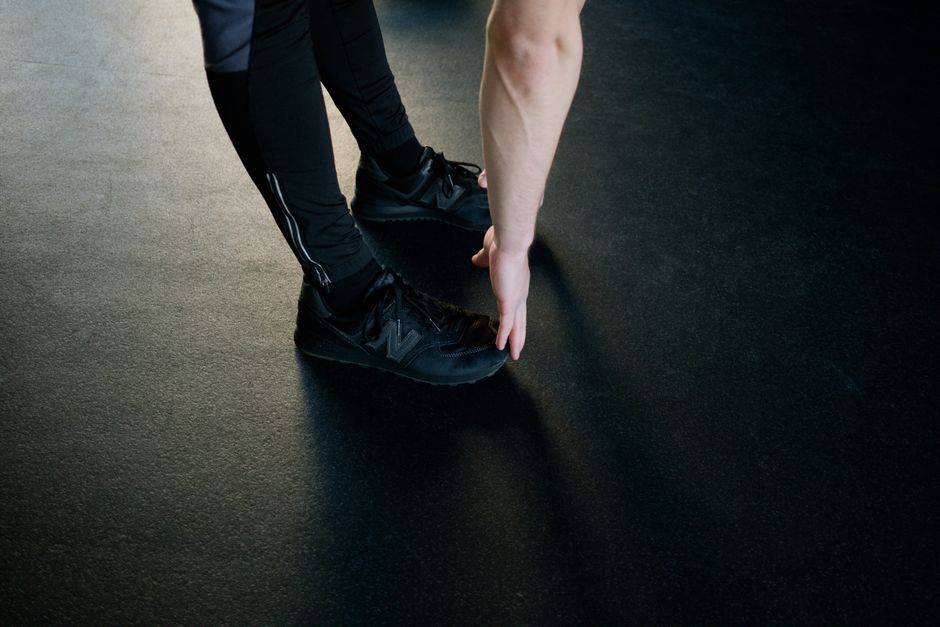
Most people think of the calf as the big muscle in the back of the lower leg, but the front of your calf—the tibialis anterior—works just as hard. It runs along the shin bone and is responsible for lifting your foot upward and controlling how your foot lands when you walk or run. When this muscle gets tight, you may feel a dull ache along your shin or notice that your ankle feels stiff. Stretching the front of your calf is straightforward, but it requires the right positions to be effective. The most reliable approach is a kneeling stretch where you sit back on your heels, or a standing stretch that dorsiflexes the ankle—meaning you pull your toes toward your shin. These moves lengthen the tibialis anterior and the surrounding tissues, which can relieve tightness and improve ankle mobility.
Why Does the Front of My Calf Feel Tight?
The tibialis anterior is the primary muscle on the front of your lower leg. It attaches from the outer surface of the shin bone down to the inside of the foot. Its main job is dorsiflexion—lifting your toes and foot upward. It also helps control the foot as it slaps down after your heel strikes the ground during walking.
Tightness here often develops from repetitive use. Running, walking long distances, or playing sports that involve frequent stopping and starting can fatigue this muscle. Sitting for long periods with your toes pointed can also shorten it over time. When the tibialis anterior is tight, it can pull on the shin bone, which is why some people feel discomfort along the front of the lower leg.
This area is also prone to a condition called shin splints, which is a general term for pain along the shin. Tightness in the tibialis anterior is one possible contributor, but shin splints can also involve the bone, the connective tissue, or the muscles on the inner side of the leg. If you have sharp pain, swelling, or pain that worsens with activity, that is different from simple muscle tightness and should be evaluated by a clinician.
What Is the Best Way To Stretch the Front of Your Calf?
The kneeling stretch is the most direct way to target the tibialis anterior. Start by kneeling on a padded surface with your knees hip-width apart. Your toes should be tucked under so the tops of your feet rest on the floor. Slowly sit your hips back toward your heels. You will feel a stretch along the front of your ankles and shins. Hold this position for 20 to 30 seconds. If the stretch is too intense, place a rolled towel under your ankles to reduce the angle.
A second effective option is a seated stretch. Sit on a chair or on the floor with your legs extended. Loop a towel or strap around the ball of one foot and gently pull your toes back toward your shin. Keep your knee straight but not locked. You should feel tension along the front of your lower leg. Hold for 20 to 30 seconds, then switch sides.
For a standing version, stand facing a wall. Place one foot behind you with your toes on the floor and your heel lifted. Press the top of your foot into the floor while keeping your ankle straight. You will feel a stretch in the front of the ankle and shin. This position can be harder to balance in, so hold onto the wall or a chair for support.
How Often Should You Stretch This Muscle?
Stretching the front of your calf two to three times per day is reasonable if the muscle feels tight. Each stretch should be held for 20 to 30 seconds. Avoid bouncing or forcing the position. A mild pulling sensation is normal, but sharp pain is not.
Consistency matters more than duration. A short daily routine is more effective than a long session once per week. If you are an athlete or runner, consider stretching after your workout when the muscles are warm. Stretching a cold muscle is not harmful, but it may feel less comfortable and may not produce as much lengthening.
Some evidence suggests that static stretching—holding a position—does not prevent injuries on its own. Stretching is best used as part of a broader routine that includes strength training and proper warm-up. If your goal is to reduce tightness, static stretching is appropriate. If your goal is to improve athletic performance, dynamic movements that take the ankle through its full range of motion may be more useful.





Are There Other Ways To Relieve Tightness in the Front of the Calf?
Stretching is not the only tool. Massage can help release tension in the tibialis anterior. Use your fingers or a massage tool to apply firm pressure along the muscle, moving from the top of the shin down toward the ankle. Keep the pressure moderate. The muscle is not large, so deep pressure is usually not necessary.
Strengthening the opposite muscle group—the calf muscles in the back of your leg—can also help balance the lower leg. When the posterior calf is weak, the front of the calf has to work harder. Simple heel raises, where you lift your heels off the ground and lower them slowly, can address this imbalance.
Foam rolling the back of the calf can indirectly help the front. The muscles in the lower leg work as a unit. Releasing tension in the gastrocnemius and soleus—the muscles in the back—can reduce the overall load on the tibialis anterior. Roll slowly along the back of the lower leg for 30 to 60 seconds per side.
Footwear also plays a role. Shoes that are too stiff or have a high heel can change how your ankle moves and increase strain on the front of the calf. If you notice tightness after wearing certain shoes, consider switching to a more flexible option or alternating between pairs.
When Should You See a Doctor About Front Calf Pain?
Tightness that resolves with stretching is not usually a concern. But front calf pain can sometimes indicate a more serious problem. Seek medical attention if you have swelling, redness, warmth, or pain that does not improve with rest. These signs could point to a stress fracture, tendinitis, or in rare cases, a blood clot.
Pain that worsens with activity and improves with rest is a pattern associated with stress fractures. This is different from muscle tightness, which typically feels better after stretching. If you cannot bear weight on the leg, or if the pain is severe enough to disrupt your sleep, see a clinician promptly.
Compartment syndrome is another condition that can cause front leg pain. It occurs when pressure builds up inside a muscle compartment, reducing blood flow. This condition typically causes a feeling of tightness or fullness that worsens with exercise and eases with rest. It is uncommon, but it requires medical evaluation. No home stretching routine will resolve it.
How To Stretch The Front Of Your Calf Muscle Without Worsening Pain
If you have an injury, be cautious with stretching. Stretching an already irritated muscle can make it worse. If stretching causes sharp pain, stops, and consult a healthcare provider. A mild stretch sensation is acceptable, but pain that radiates or feels like tearing is a sign to stop.
Start with a gentle range of motion before moving into a deeper stretch. Sit with your legs extended and simply move your foot up and down, then in circles. This warms up the tissue and gives you a sense of how the ankle feels. Only after this should you attempt a static stretch.
If you are recovering from a shin injury, be especially careful. The tibialis anterior attaches near the shin bone, and aggressive stretching can pull on the attachment site. Some clinicians recommend isometric exercises—contracting the muscle without moving the joint—before returning to stretching. This approach is common in rehabilitation, though evidence for its superiority over other methods is limited.
Frequently Asked Questions
How long should I hold a front calf stretch?
Hold the stretch for 20 to 30 seconds. Repeat two to three times on each side if the muscle feels tight.
Can tight front calf muscles cause shin pain?
Yes, tightness in the tibialis anterior can pull on the shin bone and contribute to pain. However, shin pain can also come from the bone itself or other muscles, so persistent pain should be evaluated.
Is it better to stretch or massage the front of the calf?
Both can help, and they work through different mechanisms. Stretching lengthens the muscle, while massage releases local tension and improves blood flow.
Should I stretch the front of my calf before running?
Static stretching before running is not strongly supported for injury prevention. A short warm-up that includes walking or light jogging, followed by dynamic ankle movements, is generally a better choice.
