
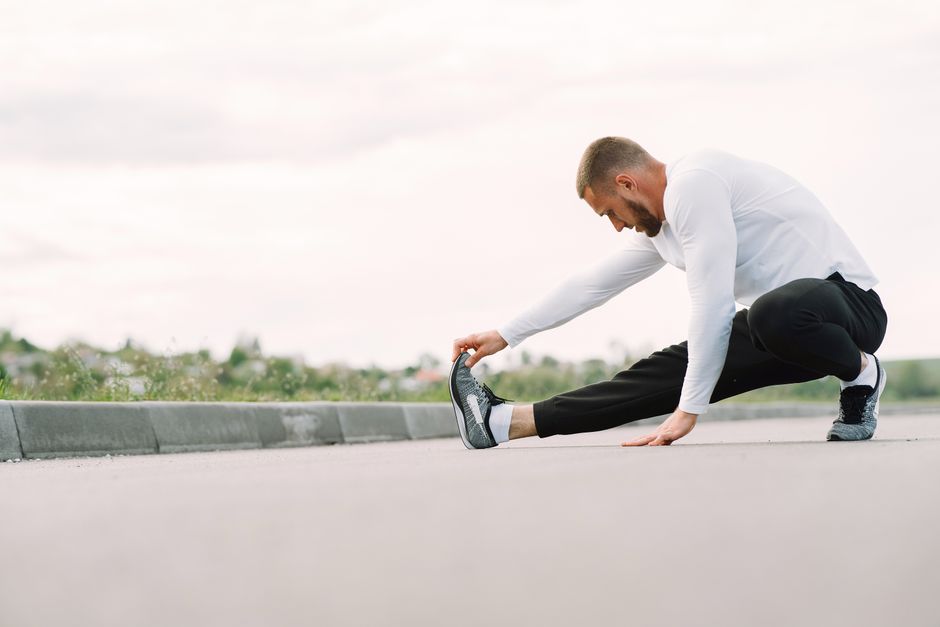
Runner’s knee is one of the most common running injuries, and it usually gets better with the right stretching, strengthening, and load management. The key muscles to target are the quadriceps, hamstrings, calves, and hips. Gentle stretching can ease tightness around the knee joint, but strengthening the hip and thigh muscles is what most often reduces pain over time. If pain is sharp, swollen, or comes with locking or giving way, see a doctor before stretching.
What Is Runner’s Knee And Why Does It Hurt?
Runner’s knee is the everyday name for pain around the kneecap, medically called patellofemoral pain syndrome. It is not a single injury with one cause. It is a pattern of pain that usually comes from how the kneecap tracks against the thigh bone during movement.
The kneecap sits in a groove at the end of the femur. When you bend and straighten your leg, the kneecap glides up and down that groove. Muscles and connective tissue on both sides of the knee control how smoothly that glide happens. When some muscles are tight and others are weak, the kneecap can get pulled slightly off track. That creates friction and irritation.
This is why the pain often shows up gradually. It is rarely a single moment of injury. It builds over days or weeks of running, especially with increased mileage, downhill running, or long periods of sitting. Many people notice it most when walking down stairs or after sitting with a bent knee for a while.
One detail worth knowing: the kneecap itself is not usually the problem. The pain comes from the soft tissue and bone surfaces around it, not from the cartilage being worn away. This matters because it means the condition is often reversible with the right approach rather than a sign of permanent damage.
How To Stretch Runner’s Knee And Ease The Pain
Stretching helps, but it works best as part of a routine that also includes strengthening. Stretching alone rarely fixes runner’s knee. The muscles below are the ones most often involved.
Quadriceps Stretch
Stand and hold onto a wall or chair for balance. Bend one knee and bring your heel toward your buttocks. Hold your ankle with your hand. Keep your knees close together and your back straight. You should feel a stretch along the front of your thigh. Hold for 20 to 30 seconds and repeat on each side. Do not pull hard enough to cause knee pain.
Hamstring Stretch
Sit on the floor with one leg straight and the other bent. Reach toward the toes of the straight leg with a straight back. A gentle pull behind the thigh is what you want. Hold for 20 to 30 seconds per side. Tight hamstrings can change how your knee moves, so this one matters.
Calf Stretch
Stand facing a wall with your hands on it. Step one foot back, keeping that back leg straight and the heel on the floor. Lean forward until you feel a stretch in the calf. Hold for 20 to 30 seconds. Repeat with the knee slightly bent to target a deeper calf muscle. Tight calves can increase load through the knee during running.
Hip Flexor Stretch
Kneel on one knee with the other foot flat in front of you. Push your hips gently forward until you feel a stretch at the front of the hip of the kneeling leg. Hold for 20 to 30 seconds per side. Tight hip flexors are common in runners and can affect how the knee tracks.
IT Band and Outer Thigh Stretch
Stand and cross one leg behind the other. Lean away from the crossed leg and reach the opposite arm overhead. You should feel a stretch along the outside of the hip and thigh. Hold for 20 to 30 seconds per side. The iliotibial band is a thick band of tissue on the outer thigh that some people blame for knee pain, though its exact role in runner’s knee is debated.
Why Strengthening Matters More Than Stretching Alone
Stretching loosens tight tissue. But the deeper issue in most runner’s knee cases is weak muscles that cannot control the knee during running. This is why strengthening is usually the more important half of recovery.
The hip muscles are the main target. The gluteals control how the thigh rotates and how the knee lines up with the foot. When they are weak, the knee can drift inward during running, which increases stress on the kneecap. Clamshells, side-lying leg lifts, and hip bridges are common starting points.
The quadriceps matter too. They help control the kneecap directly. Straight-leg raises and wall sits are often used because they build strength without much knee bend. Some clinicians recommend starting with these before moving to deeper squats or lunges.
This is one place where common practice and strong evidence do not always line up perfectly. Strengthening the hip and quadriceps is widely recommended and supported by a good amount of research, but the exact exercises and how quickly they help can vary a lot from person to person. There is no single routine that works for everyone.
A useful rule: if an exercise makes the pain worse during or right after, it is too much for now. Back off and try a gentler version. Pain that settles within a day or two of activity is generally considered acceptable during recovery. Pain that lingers or worsens is a sign to pull back.





What Else Helps Runner’s Knee Heal?
Stretching and strengthening are the core, but a few other things support recovery.
- Reduce mileage temporarily. Cutting back on running volume gives irritated tissue time to calm down. This does not always mean stopping entirely.
- Ice after activity. Cold packs can ease pain and swelling short term. They do not speed healing, but they can make the knee feel better.
- Check your shoes. Worn-out running shoes lose cushioning. Replacing them when the midsole breaks down is reasonable, though shoe choice alone rarely fixes runner’s knee.
- Avoid running downhill. Downhill running puts extra load through the kneecap. Flat routes are easier on the knee while it recovers.
- Consider a knee strap. Some runners find a patellar strap helps. The evidence for these is mixed, so treat it as a comfort measure rather than a fix.
Some clinicians also recommend taping or orthotics, but the evidence for these is limited and results vary. They are worth discussing with a physical therapist if pain is not improving.
When Should You See A Doctor?
Most runner’s knee cases improve with self-care over weeks to a few months. But some signs mean you should get checked out.
See a doctor or physical therapist if:
- The knee is swollen, red, or warm to the touch
- You feel a locking or catching sensation
- The knee gives way or feels unstable
- Pain is sharp and specific to one spot rather than general
- Pain does not improve after several weeks of self-care
- You cannot bear weight on the leg
These signs can point to other problems, such as a meniscus tear, ligament injury, or tendon issue. Runner’s knee is a common diagnosis, but it is not the only cause of knee pain in runners. Getting the right diagnosis matters because the treatment differs.
A physical therapist can assess how you move, identify weak or tight areas, and build a plan for your specific case. This is often more effective than a generic stretching routine.
How Long Does Runner’s Knee Take To Heal?
Recovery timelines vary widely. Many people notice improvement within a few weeks of starting a consistent stretching and strengthening program. Full recovery often takes longer, sometimes several months.
How fast you improve depends on how long you had the pain before starting treatment, how consistent you are with exercises, and whether you adjust your running load. People who keep running through significant pain tend to take longer to recover.
There is no set timeline that applies to everyone. Some runners are back to normal mileage in a month. Others need a few months of gradual rebuilding. Being patient with the process tends to work better than pushing through pain.
Can You Prevent Runner’s Knee?
You cannot guarantee you will never get it, but some habits lower the risk.
Increase mileage gradually rather than jumping up quickly. Sudden increases in distance or intensity are a common trigger. Strengthen your hips and thighs year-round, not just when something hurts. Replace worn shoes. Mix in other activities like cycling or swimming to reduce repetitive stress on the knee.
Warming up before running and cooling down after may help, though the evidence for warm-up specifically preventing runner’s knee is not strong. What is clearer is that consistent strength training reduces the chance of the muscle imbalances that contribute to the problem.
Pay attention to early warning signs. A little soreness after a run is normal. Pain that shows up during runs, lasts into the next day, or gets worse over time is worth addressing before it becomes a bigger problem.
Frequently Asked Questions
Can stretching alone fix runner’s knee?
Stretching alone rarely fixes runner’s knee because weakness in the hip and thigh muscles is usually part of the problem. Stretching works best alongside strengthening exercises.
Should I stop running if I have runner’s knee?
You do not always need to stop completely, but reducing mileage and avoiding hills or hard surfaces usually helps. If running makes the pain worse, take a break and let it settle.
How often should I stretch for runner’s knee?
Most general stretching routines recommend holding each stretch for 20 to 30 seconds and repeating a few times per session. Daily stretching is common, but there is no single schedule that has been proven best for runner’s knee.
Is runner’s knee a sign of arthritis?
No, runner’s knee is not the same as arthritis and does not usually mean the joint is wearing out. It is a soft tissue and tracking problem, though arthritis can also cause knee pain and should be ruled out by a doctor if symptoms persist.
