
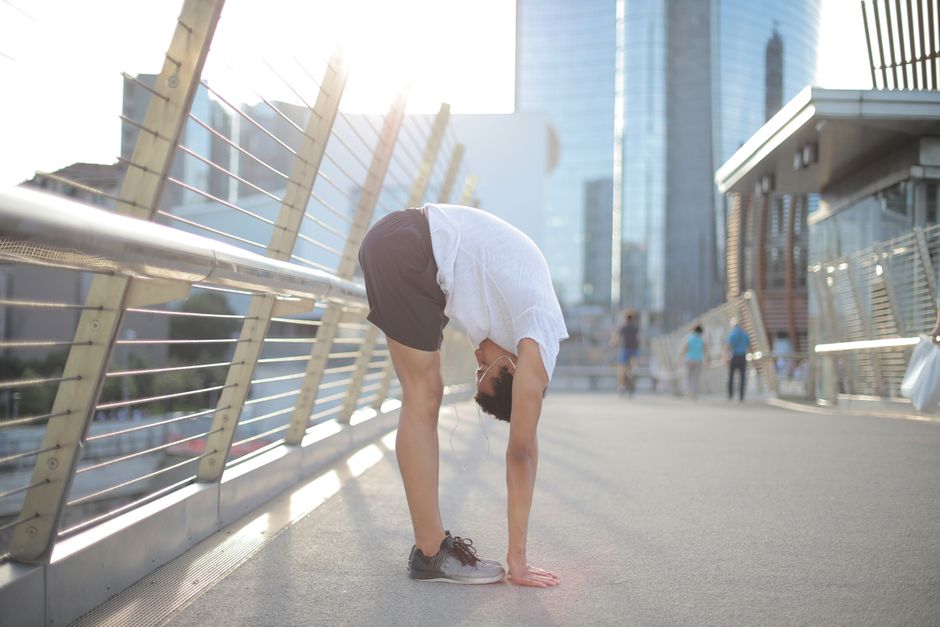
Tight hips are a common complaint, especially if you sit for long hours or have recently increased your activity level. The fastest way to relieve that feeling is to perform a gentle static stretch like the kneeling hip flexor stretch or a figure-four stretch, holding each position for 30 seconds without bouncing. This immediate relief works by lengthening the muscles that cross the hip joint, but to keep the tightness from returning, you need to address the underlying cause and incorporate a few targeted moves into your routine.
What Actually Causes That Tight Feeling?
Hip tightness usually comes from the muscles around the joint being held in a shortened position for too long. The main culprits are the hip flexors, which run from your lower spine and pelvis down to your thigh bone.
Sitting for extended periods is the most common cause. When you sit, your hip flexors are in a shortened, contracted position. Over time, your brain and nervous system adapt to this posture, and the muscles become less willing to lengthen when you stand up.
It is also worth noting that “tight” does not always mean “short.” Sometimes a muscle feels tight because it is weak and overworked. Your body perceives the strain and sends a signal of tension to protect the area. Stretching alone may not fix this type of tightness. Strengthening the opposing muscle group, the glutes, is often just as important as stretching.
How To Stretch Out Your Hip When It Feels Tight: The Immediate Moves
When you need quick relief, these three stretches are the most effective starting points. Hold each one for 30 to 45 seconds and repeat twice on each side. Do not bounce. Bouncing triggers a reflex in the muscle that causes it to contract, which works against your goal.
The Kneeling Hip Flexor Stretch: Kneel on your right knee with your left foot flat on the floor in front of you, creating a 90-degree angle at both knees. Tuck your pelvis under slightly by squeezing your glutes. Lean forward gently until you feel a stretch in the front of your right hip. Keep your torso tall and do not arch your lower back.
The Figure-Four Stretch: Lie on your back with both knees bent and feet flat on the floor. Cross your right ankle over your left knee. Reach your hands through the opening and pull your left thigh toward your chest. You should feel a deep stretch in your right outer hip and glute. This targets the deep rotator muscles, which often feel tight alongside the flexors.
The Standing Quad Stretch: Stand tall and hold onto a wall for balance. Bend your right knee, bringing your heel toward your glutes. Grab your ankle with your right hand and gently pull it closer. Keep your knees together and push your hips forward slightly. This stretches the rectus femoris, one of the four quadriceps muscles that also crosses the hip joint.
Why 30 Seconds Is the Right Amount of Time
Static stretching works by gradually lengthening the muscle fibers and resetting the nervous system’s tolerance for that length. Research consistently shows that holding a stretch for 30 seconds is enough to produce a measurable increase in range of motion in most people.
Holding for longer than 60 seconds does not provide significantly more benefit for a general tightness routine. It can actually reduce muscle power temporarily, which is not ideal if you plan to exercise or lift weights immediately after stretching.
For the best results, stretch when your muscles are warm. A five-minute walk or a hot shower before stretching increases blood flow and makes the muscle tissue more pliable. Stretching a completely cold muscle is less effective and slightly increases the risk of strain.





Strengthening Exercises That Stop the Tightness From Returning
If your hips feel tight every day, stretching alone is unlikely to fix the problem permanently. The muscles need to be strong enough to hold your pelvis in a neutral position when you stand and walk.
The glutes are the primary antagonist to the hip flexors. When your glutes are weak, your hip flexors have to work harder to stabilize your pelvis, which makes them feel perpetually tense. Strengthening the glutes can directly reduce that sensation of tightness.
The Glute Bridge: Lie on your back with knees bent and feet flat on the floor. Squeeze your glutes and lift your hips until your body forms a straight line from shoulders to knees. Hold for two seconds and lower slowly. Do three sets of 12 to 15 repetitions.
The Clamshell: Lie on your side with knees bent at a 45-degree angle and feet together. Keep your feet touching and open your top knee like a clamshell. Do not let your pelvis roll backward. Do three sets of 15 repetitions on each side.
Walking Lunges: Step forward into a lunge and push back up to standing. This movement lengthens the hip flexor on the back leg while simultaneously activating the glute on the front leg. It combines stretching and strengthening in one functional movement.
When Hip Tightness Is Not a Muscle Problem
Sometimes the feeling of tightness is not coming from the muscles at all. The hip joint itself can be the source of the problem.
Hip osteoarthritis causes stiffness and a restricted range of motion that feels similar to muscle tightness. The difference is that arthritis pain is usually worse in the morning, improves with gentle movement, and returns after prolonged activity. Stretching may provide temporary relief but will not fix the underlying joint wear.
Femoroacetabular impingement, often called hip impingement, is another condition that mimics muscle tightness. It occurs when extra bone grows along the edge of the hip joint, causing the bones to rub against each other during certain movements. Deep flexion positions, like the kneeling stretch, can actually increase the pain in this condition.
If your hip tightness is accompanied by sharp pain, a catching sensation, or a feeling that the joint is unstable, see a healthcare provider. A physical therapist can assess your specific movement patterns and identify whether the issue is muscular, joint-related, or a combination of both.
Daily Habits That Prevent Hip Tightness
The way you move throughout the day matters more than the few minutes you spend stretching. Small changes in your routine can have a significant cumulative effect.
If you work at a desk, stand up and walk for two minutes every hour. This simple break interrupts the prolonged shortening of the hip flexors. Set a timer if you need a reminder. Even a short walk to the water cooler resets the muscle length.
Consider your sleeping position. Sleeping on your side with your knees pulled up toward your chest keeps the hip flexors in a shortened position for seven to eight hours. Sleeping on your back with a pillow under your knees allows the hips to rest in a more neutral position.
Pay attention to your walking stride. A shorter, quicker stride keeps the hip flexors working in a limited range. Consciously taking longer steps, especially when walking uphill, extends the hip fully with each stride and naturally stretches the flexors throughout the day.
How Long Before You Notice a Difference?
Most people feel immediate relief after a single stretching session. That sensation of tightness often drops significantly within minutes of holding a stretch.
However, lasting change takes time. Muscles adapt to consistent stretching over a period of four to eight weeks. If you stretch daily and address the underlying strength imbalances, you should notice that your hips feel looser during normal activities within two weeks.
If you stretch consistently for three weeks and see no improvement at all, the tightness is likely not a simple muscle length issue. This is a reasonable point to seek professional evaluation. A physical therapist can determine whether you need a different type of stretch, a strengthening program, or treatment for an underlying joint condition.
Frequently Asked Questions
How long should I hold a hip stretch?
Hold each stretch for 30 to 45 seconds and repeat twice per side. Holding longer than 60 seconds does not provide additional benefit for general tightness.
Can tight hips cause lower back pain?
Yes. Tight hip flexors pull your pelvis into an anterior tilt, which increases the curve in your lower back and puts extra strain on the lumbar spine. This is a common contributor to low back discomfort.
Is it better to stretch or strengthen tight hips?
Both are needed. Stretching provides immediate relief, but strengthening the glutes prevents the tightness from returning by balancing the forces around the joint.
Should I stretch if my hip hurts sharply?
No. Sharp pain during a stretch is a warning sign. Stop immediately and consult a healthcare provider, as this may indicate a joint issue rather than a muscle tightness problem.
