
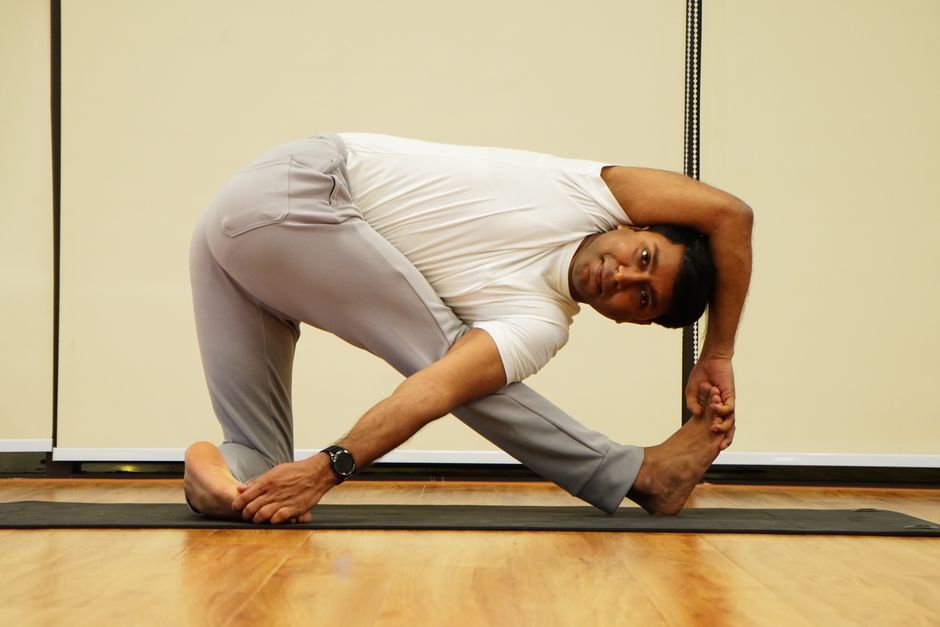
Your hip joint can rotate inward, outward, and move in several other directions. Internal rotation is the motion that turns your knee and foot toward the midline of your body. When the muscles that produce this motion become tight, you may notice it during squats, walking, or even sitting cross-legged. Stretching these muscles is possible, but the approach matters more than most people realize.
Hip internal rotators include the gluteus minimus and gluteus medius, along with the tensor fasciae latae. These muscles sit on the outside of your hip and upper thigh. To stretch them effectively, you need to move your hip into external rotation and sometimes abduction. Static stretches held for 15 to 30 seconds, repeated two to four times per side, are a reasonable starting point for most healthy adults. A consistent routine of several days per week tends to produce more change than occasional long sessions.
What follows is a practical guide to the anatomy, the stretches, and the limitations of what stretching can realistically accomplish.
What Are the Hip Internal Rotators and Why Do They Get Tight?
The primary hip internal rotators are the gluteus minimus, the anterior fibers of the gluteus medius, and the tensor fasciae latae. These muscles attach from the pelvis to the upper femur and work together to rotate the thigh inward.
Tightness in this group is common. Prolonged sitting, repetitive running or cycling, and certain strength training patterns can all contribute. When these muscles stay in a shortened position for long periods, they may feel restricted during movements that require the opposite motion.
It is worth separating two ideas that often get merged. Muscle tightness and joint stiffness are not the same thing. The hip is a ball-and-socket joint, and its capsule and labrum can also limit internal rotation. If your restriction comes from the joint itself rather than the muscles, stretching the surrounding muscles will not change it much.
Some research suggests that people with certain hip conditions, including femoroacetabular impingement, show reduced internal rotation range. That does not mean stretching will fix those conditions. It means the muscles are only one piece of a larger picture.
How To Stretch Hip Internal Rotators For Better Mobility
The key principle is simple: to stretch muscles that turn your leg inward, you move your leg outward. This is called external rotation. Several positions accomplish this, and you can choose based on your comfort and flexibility level.
Seated Figure-Four Stretch
Sit on the floor or a firm surface with both legs extended. Bend your right knee and cross your right ankle over your left thigh, forming a figure-four shape. Keep your right foot flexed. Sit tall and lean forward slightly from your hips until you feel a stretch on the outside of your right hip. Hold for 15 to 30 seconds. Repeat two to four times, then switch sides.
This position places the gluteus minimus and medius under tension through external rotation and slight hip flexion. It is one of the most accessible options for beginners.
Supine Figure-Four Stretch
Lie on your back with both knees bent and feet flat. Cross your right ankle over your left knee. Reach through and grab your left thigh with both hands. Gently pull your left thigh toward your chest until you feel tension in your right hip. Hold for 15 to 30 seconds and repeat two to four times per side.
This version gives you more control over the stretch intensity because you can adjust how far you pull.
90/90 Hip Stretch
Sit on the floor with your right leg bent in front of you at roughly 90 degrees and your left leg bent behind you, also near 90 degrees. Your right shin should be parallel to your body’s midline. Sit upright. To emphasize internal rotator stretching on the left side, lean your torso slightly forward and toward your right knee. Hold for 15 to 30 seconds.
The 90/90 position is popular in mobility training because it targets both hips in different directions at once. It requires more hip mobility to enter comfortably. If you cannot get into the position without pain, start with the seated figure-four instead.
Side-Lying External Rotation
Lie on your left side with your hips and knees bent to about 90 degrees. Keep your feet together. Lift your top knee toward the ceiling without letting your pelvis roll backward. This movement comes from your hip, not your lower back. Hold at the top for a few seconds, then lower. This is more of an active mobility drill than a passive stretch, but it can help improve control through the range you already have.
How Long Should You Hold a Hip Internal Rotator Stretch?
Holding a static stretch for 15 to 30 seconds is a widely used standard in flexibility training. Performing two to four repetitions per muscle group per session is also common practice. These ranges appear in general fitness and rehabilitation guidelines, though individual needs vary.
Longer holds are not automatically better. Some evidence indicates that very prolonged static stretching before explosive activity may temporarily reduce power output. For general mobility work done outside of competition or heavy training, this is unlikely to matter.
Frequency matters more than duration. Stretching three to five days per week tends to be more effective than one long session per week. Consistency over weeks and months is what produces measurable change. A single session will not permanently alter your range of motion.




What If Stretching Does Not Improve Your Hip Mobility?
Not all hip tightness responds to stretching. If you have stretched consistently for several weeks with no change, the limitation may not be coming from the muscles.
Possible explanations include:
- Joint capsule restriction. The hip capsule can tighten after injury, surgery, or prolonged immobility. Capsular restriction typically requires different treatment, sometimes including manual therapy or specific joint mobilization techniques.
- Bony anatomy. The shape of your femoral head and acetabulum (the socket) varies from person to person. Some people are born with hip anatomy that limits internal rotation regardless of muscle flexibility.
- Labral issues. The hip labrum is a ring of cartilage that deepens the socket. Tears or degeneration can restrict motion and cause pain, particularly with twisting movements.
- Neurological tension. Sometimes what feels like muscle tightness is actually nerve tension. This is more common in the hamstrings and calves, but it can affect hip motion too.
A physical therapist or physician can help distinguish between these causes. If you have pain with hip movement, a catching or clicking sensation, or a history of hip injury, get an evaluation before pushing further into stretches.
Does Stretching Alone Build Better Hip Mobility?
Stretching alone is often not enough. Research on flexibility and mobility consistently shows that combining static stretching with strengthening exercises produces better results than stretching by itself.
For hip internal rotators specifically, this means you should also train the muscles that perform the opposite motion. Your hip external rotators — including the piriformis, obturator muscles, and the posterior fibers of the gluteus medius — need to be strong enough to hold the range you gain through stretching.
Exercises that help include:
- Clamshells with a resistance band
- Side-lying hip abduction
- Standing hip external rotation against light resistance
- Single-leg balance work
The principle is straightforward. Stretching creates temporary changes in tissue length and nervous system tolerance. Strengthening makes those changes more permanent by teaching your body to control the new range.
When Should You Avoid Stretching Your Hip Internal Rotators?
Stretching is generally safe for healthy adults. But there are situations where it can make things worse.
Avoid aggressive hip stretching if you have:
- A known hip labral tear
- Recent hip surgery or replacement
- Femoroacetabular impingement that has been diagnosed by a physician
- Sharp pain, pinching, or catching in the front of the hip during movement
- Hip osteoarthritis with active inflammation
In these cases, the direction of the stretch matters. Some positions that feel like a good stretch can actually pinch the front of the hip joint. A healthcare provider or physical therapist can tell you which positions are safe for your specific situation.
Mild discomfort during a stretch is normal. Sharp pain is not. If a stretch causes pain that lingers after you stop, that is a signal to back off and get it checked.
Frequently Asked Questions
How often should I stretch my hip internal rotators?
Three to five days per week is a reasonable target for most people working on hip mobility. Daily stretching is also fine if the intensity stays moderate and you do not have pain.
Can I stretch hip internal rotators without any equipment?
Yes. The seated figure-four, supine figure-four, and 90/90 positions all require nothing more than floor space. A yoga mat or towel underneath you can make it more comfortable.
How long does it take to see improvement in hip mobility?
Some people notice a difference within two to four weeks of consistent stretching. Lasting changes in range of motion typically take longer, often several weeks to a few months, depending on your starting point and how often you practice.
Is it bad if I feel a pinch in the front of my hip during a stretch?
A pinching sensation in the front of the hip is not a normal stretch feeling and may indicate joint compression. Stop the stretch and consider having a healthcare provider evaluate your hip before continuing.
