
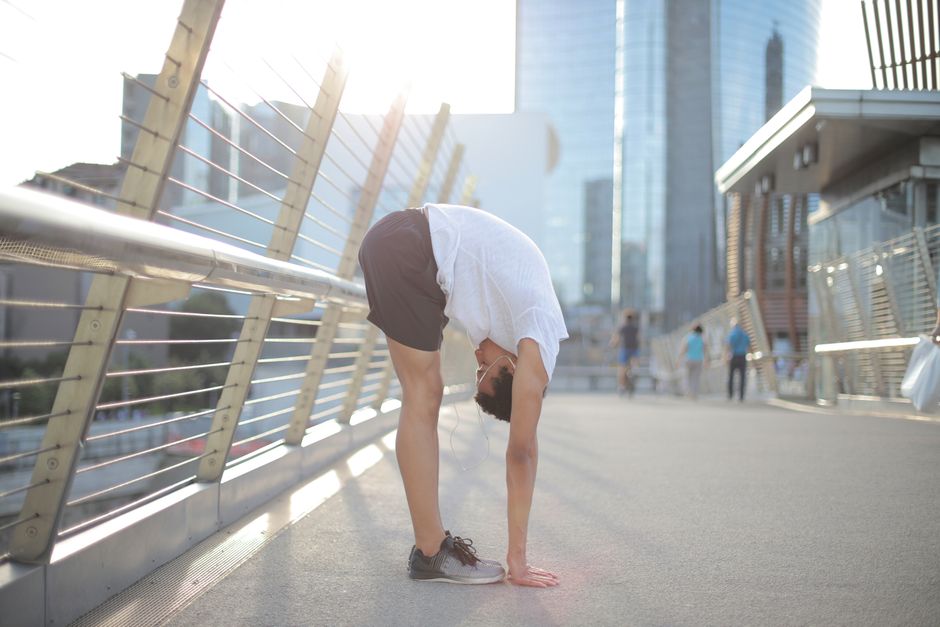
You can stretch your hamstrings while sitting in a chair or on the floor without any special equipment. The chair version works best for people with tight hamstrings or limited mobility, while the floor version gives you more control over intensity. Both are safe for most people when done slowly and without bouncing.
The hamstrings are the three muscles that run down the back of your thigh, from your sit bone to just below your knee. They bend your knee and extend your hip. Sitting for long periods shortens them over time. Stretching them regularly helps maintain their length and can ease the stiffness many people feel after long hours in a chair.
Why Do Hamstrings Get Tight When You Sit a Lot?
Your hamstrings adapt to the position you hold most often. When you sit, your knees stay bent and your hips stay flexed. The hamstrings are held in a shortened position for hours at a time. Over months and years, the muscle tissue and surrounding connective tissue gradually accommodate to that length.
This is a normal adaptation, not a disease. The muscle does not permanently shrink. It becomes accustomed to a shorter resting length, and it feels tight when you ask it to lengthen. That sensation of tightness is often the first thing people notice when they stand up or try to touch their toes.
Prolonged sitting is also associated with reduced hip mobility and increased stiffness in the lower back. The hamstrings are part of that chain. Stretching them is one piece of a broader approach that includes standing up regularly and moving your hips through their full range.
How To Stretch Hamstrings While Sitting in a Chair
The seated chair stretch is the gentlest option and works well for beginners, older adults, and anyone recovering from a strain. You stay supported the whole time, which makes it easier to relax into the stretch rather than force it.
Seated Single-Leg Stretch
- Sit toward the front edge of a sturdy chair with both feet flat on the floor.
- Straighten one leg in front of you and rest your heel on the floor with your toes pointing up.
- Keep your back straight and hinge forward slightly from your hips until you feel a gentle pull behind your thigh.
- Hold for 20 to 30 seconds while breathing normally. Do not bounce.
- Return to the start and repeat on the other leg.
If you feel nothing, tilt your pelvis forward slightly before hinging. The stretch comes from hip flexion with a straight knee, so the pelvis position matters more than how far you lean.
Seated Two-Leg Stretch
Extend both legs in front of you with heels on the floor. Keep your spine tall and hinge forward from the hips. This version stretches both hamstrings at once and is useful if you have limited time. It is also more demanding on the lower back, so keep the hinge small if your back is sensitive.
A common mistake is rounding the spine to reach further. That moves the stretch into your back rather than your hamstrings. A smaller hinge with a straighter spine gives a better hamstring stretch.
How To Stretch Hamstrings on the Floor
Floor stretches let you use gravity and body weight to control how much stretch you get. They generally allow a deeper stretch than the chair version, so start gently.
Seated Floor Stretch
Sit on the floor with one leg extended and the other bent, with the sole of your foot against your inner thigh. Keep your back straight and hinge forward over the extended leg. Hold for 20 to 30 seconds and switch sides. This is the classic hamstring stretch most people picture.
Lying Hamstring Stretch With a Strap
Lie on your back and loop a towel or strap around the sole of one foot. Keep the other leg flat on the floor or bent with the foot planted. Straighten the raised leg toward the ceiling until you feel a stretch behind the thigh. This version is easy on the lower back because you are supported by the floor the whole time.
Some clinicians recommend this lying version for people with back pain, since it removes the spinal loading that comes with hinging forward while seated. The evidence comparing one hamstring stretch to another is limited, but the lying version is widely used in physical therapy settings for this reason.
Standing Forward Fold (Floor Alternative)
Stand with feet hip-width apart and hinge forward from the hips, letting your hands reach toward the floor or your shins. Keep a soft bend in the knees. This stretches both hamstrings and the calves. It is not a floor stretch strictly speaking, but it is a common alternative when floor sitting is uncomfortable.
How Long Should You Hold a Hamstring Stretch?
Hold each stretch for 20 to 30 seconds and repeat two to four times per leg. This range is widely used in clinical practice and reflects general flexibility training guidance. Static stretching held for this duration is the most studied approach for improving hamstring flexibility.
Do the stretches most days of the week. Flexibility gains come from repeated exposure, not from one long session. A few minutes daily is more useful than a longer session once a week.
Do not push into pain. You want a mild to moderate pulling sensation, not a sharp or burning feeling. If a stretch causes pain, numbness, or tingling down the leg, stop. Those symptoms can point to nerve involvement rather than muscle tightness, and a clinician should evaluate them.
What Mistakes Make Hamstring Stretches Less Effective?
Bouncing is the most common mistake. Ballistic, bouncing movements trigger a reflex that makes the muscle tighten rather than lengthen. Slow, steady holds work better.
Rounding the back to reach further is another frequent error. It shifts the stretch away from the hamstrings and loads the spine. Keep the back long and accept a smaller range.
Holding your breath is subtle but common. Breathing normally helps the muscle relax into the stretch. If you notice yourself tensing, slow your exhale.
Stretching cold is not dangerous, but a few minutes of light movement first, such as walking or marching in place, can make the stretch feel easier. Some evidence suggests that dynamic warm-up before activity and static stretching after are a reasonable pairing, though the research on timing is not definitive.
When Should You Not Stretch Your Hamstrings?
Skip hamstring stretching if you have an acute strain, a recent hamstring tear, or sharp pain in the back of the thigh. Stretching an injured muscle can delay healing. Rest and gradual return to activity guided by a clinician is the standard approach.
Talk to a doctor before stretching if you have sciatica, a history of disc problems, or recent hip or knee surgery. Some hamstring tightness is actually nerve tension rather than muscle tightness, and stretching can worsen it. A physical therapist can tell the difference.
Pregnant women and people with osteoporosis should use extra care with forward folds and check with their clinician about which stretches are appropriate. No clinical guidelines currently exist for hamstring stretching during pregnancy specifically, so individualized advice from a clinician is the safer path.
Does Stretching Actually Make Hamstrings Longer?
Stretching improves how much range of motion you can tolerate, and that is a real change. Whether it physically lengthens the muscle tissue is more debated. Some studies suggest that much of the early gain in flexibility comes from increased stretch tolerance, meaning your nervous system allows you to go further before signaling tightness.
Longer-term studies do show structural changes in muscle and connective tissue with consistent stretching, but the effect is modest. The practical takeaway is that stretching helps you move more comfortably, even if the underlying tissue change is smaller than people assume.
Strength training for the hamstrings, such as Romanian deadlifts or hamstring curls, is also supported by evidence for improving flexibility and reducing injury risk. Stretching and strengthening are complementary, not competing. For people who sit a lot, both are worth doing.
Frequently Asked Questions
How often should you stretch hamstrings?
Most days of the week is a reasonable target, with each stretch held for 20 to 30 seconds. Consistency matters more than session length.
Can you stretch hamstrings while sitting at a desk?
Yes, the seated single-leg stretch works at a desk and needs no equipment. Straighten one leg, hinge slightly forward from the hips, and hold.
Why do my hamstrings feel tight even after stretching?
Tightness that persists despite regular stretching may come from nerve tension, hip or lower back issues, or weak hamstrings rather than short muscle tissue. A clinician can help identify the cause.
Is it better to stretch hamstrings before or after exercise?
Static hamstring stretching is generally done after activity or as a separate session. Before exercise, dynamic movement is usually preferred, though the evidence on timing is not definitive.
