
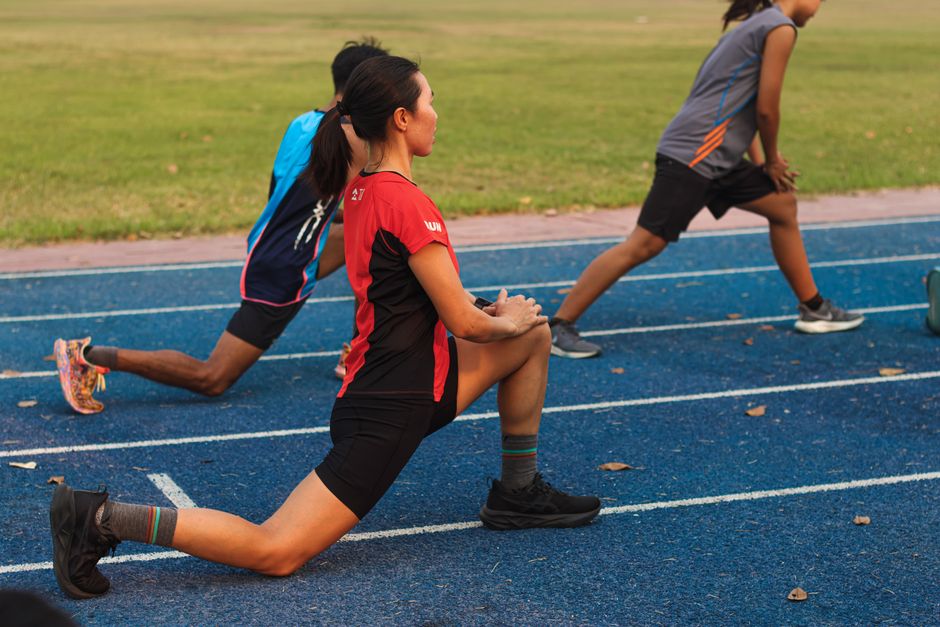
Running tightens your muscles with every stride. Stretching after a run helps your body return to a calm state and can reduce next-day soreness. The best approach is simple: hold gentle static stretches for 20-30 seconds each, focusing on your calves, hamstrings, quads, and hips. You should feel a mild pull, never sharp pain, and you should start within 10 minutes of finishing your run while your muscles are still warm.
Why Stretching After Running Matters
Your muscles shorten and contract thousands of times during a run. This repetitive motion leaves them feeling tight and tense. Stretching after exercise helps signal to those muscles that the work is done.
When you stretch, you increase blood flow to the area. That fresh blood brings oxygen and nutrients that support muscle repair. It also helps flush out metabolic waste products that build up during exercise.
Post-run stretching does more than relax muscles. It helps restore your normal range of motion. Over time, tight muscles can pull on your joints and change how you move. Regular stretching keeps your stride smooth and your body aligned.
Research consistently shows that static stretching after exercise reduces muscle soreness in the days following a workout. The effect is modest but real. It also feels good, which matters more than people often admit.
When To Stretch After A Run
Timing matters more than most runners realize. Stretch too soon and your muscles are still contracting and firing. Stretch too late and some of the tension has already set in.
The ideal window is within 5-10 minutes after you stop running. Your muscles are warm and pliable at this point. They respond better to stretching and are less likely to resist the movement.
If you ran in cold weather, take a few minutes to walk first. Walking keeps blood flowing and helps your body temperature stay elevated. Then stretch. If you ran in hot weather, drink some water first and find a shaded spot.
Never stretch cold muscles. Stretching before warming up increases injury risk because cold muscle tissue is less elastic. Post-run is the right time because your body is already warm from exercise.
The Best Stretches To Do After Running
These five stretches cover the major muscle groups that running works hardest. Hold each one for 20-30 seconds. Breathe normally and relax into the stretch rather than forcing it.
Standing calf stretch. Place both hands on a wall. Step one foot back and press the heel into the floor. Keep the back leg straight. You should feel the stretch in the back of your lower leg. Switch legs.
Standing quad stretch. Stand on one leg. Bend the other knee and grab your ankle behind you. Pull your heel toward your buttock. Keep your knees close together. Use a wall for balance if needed. Switch legs.
Hamstring stretch. Sit on the ground with one leg extended straight. Bend the other leg so the sole of that foot touches the inner thigh of the extended leg. Reach toward your toes on the extended leg. Keep your back straight. Switch legs.
Hip flexor stretch. Kneel on one knee with the other foot flat on the floor in front of you. Push your hips forward gently until you feel a stretch in the front of the hip on the kneeling side. Switch sides.
Glute stretch. Lie on your back with both knees bent. Cross one ankle over the opposite knee. Reach through and pull the uncrossed leg toward your chest. Switch sides.





Static vs. Dynamic Stretching For Recovery
There are two main types of stretching, and they serve different purposes. Dynamic stretching involves movement. Static stretching involves holding a position still.
Dynamic stretching belongs before a run. It prepares muscles for activity by mimicking the movements you will perform. Leg swings, walking lunges, and high knees are examples.
Static stretching belongs after a run. This is when you hold a stretch without bouncing. It helps lengthen muscles that have shortened from repetitive motion. Static stretching before exercise can actually reduce power output temporarily.
Some research suggests that static stretching before a run may slightly decrease performance. The effect is small and short-lived, but it is one more reason to save holding stretches for after your run.
For recovery purposes, static stretching is the right choice. Your goal after running is relaxation and restoration, not preparation for more activity.
Common Stretching Mistakes To Avoid
Many runners stretch incorrectly without realizing it. These mistakes can reduce the benefits or cause injury.
Bouncing. Ballistic or bouncing stretches force muscles to stretch further than they want to. This triggers the stretch reflex, which causes muscles to contract instead of relax. Hold still instead.
Stretching through pain. A mild pulling sensation is normal. Sharp pain means you have gone too far. Back off to a comfortable level. Pushing through pain can tear muscle tissue.
Holding your breath. Stretching should be relaxing. Holding your breath creates tension throughout your body. Exhale as you ease into the stretch and breathe slowly while holding it.
Skipping the hips. Many runners focus on calves and hamstrings but ignore hip flexors. Running keeps your hips in a flexed position. Tight hip flexors can cause lower back pain and poor running form.
Stretching for too long. Holding a stretch for several minutes provides no additional benefit. Studies have found that 20-30 seconds per stretch is sufficient. Longer holds do not increase flexibility further for most people.
How Long Should You Stretch After Running?
You do not need to spend a long time stretching to get benefits. A focused session of 5-10 minutes is enough.
Plan to hold each stretch for 20-30 seconds. That means each stretch takes less than a minute per side. Five stretches covering both sides of the body adds up to roughly 8-10 minutes.
Some runners benefit from repeating each stretch twice. If a particular muscle group feels especially tight, repeat that stretch. Listen to your body and give extra attention where it is needed.
Consistency matters more than duration. Stretching for 5 minutes after every run produces better results than stretching for 20 minutes once a week. Make it a regular part of your routine.
What Stretching Does Not Do
Stretching has real benefits, but it does not do everything. Some claims about stretching go beyond the evidence.
Stretching does not prevent injuries entirely. Research shows that stretching reduces muscle soreness but has limited effect on preventing overuse injuries like stress fractures or tendonitis. Those injuries relate more to training load and form.
Stretching does not remove lactic acid from your muscles. Lactic acid clears from your body within an hour of exercise regardless of what you do. The soreness you feel a day or two after a run comes from microscopic muscle damage, not lactic acid.
Stretching does not make you faster. Flexibility alone does not improve running economy or speed. Strength training and proper running form play larger roles in performance.
Stretching after running is one tool in your recovery toolbox. It works best alongside other recovery practices like adequate sleep, proper nutrition, and appropriate rest days between hard runs.
Foam rolling is a separate practice that can complement stretching. Some evidence suggests foam rolling reduces soreness similarly to stretching. Many runners use both, but they are not interchangeable. Foam rolling targets fascia and trigger points while stretching targets muscle length.
Stretching When You Are Injured
If you have a running injury, stretching requires caution. Stretching an injured muscle can make the problem worse.
A muscle strain or pull needs rest first, not stretching. Stretching a torn muscle delays healing. Wait until the acute pain subsides before introducing gentle stretching.
If stretching causes pain that persists after the stretch ends, stop. That is a sign that something is wrong. See a healthcare provider for a proper diagnosis.
For chronic tightness related to conditions like plantar fasciitis or IT band syndrome, specific stretches may help. But these conditions respond best to a comprehensive treatment plan that includes strengthening and load management.
No clinical evidence currently confirms that stretching alone resolves running injuries. Consult a physical therapist or sports medicine doctor for personalized guidance if you are injured.
Frequently Asked Questions
How long should I hold each stretch after running?
Hold each stretch for 20-30 seconds without bouncing. This duration is sufficient to lengthen muscles that have tightened during your run.
Is it better to stretch before or after running?
Stretch after running, not before. Dynamic warm-up movements work better before a run, while static stretching is most effective after exercise when muscles are warm.
Can stretching after running prevent muscle soreness?
Stretching can reduce the severity of next-day muscle soreness, but it cannot prevent it entirely. Some soreness after hard runs is a normal response to muscle stress.
Should I stretch if my muscles are already sore from a previous run?
Gentle stretching of sore muscles is safe and can feel relieving. Avoid intense stretching of very sore muscles, and stop if you feel sharp pain rather than a mild pull.
