
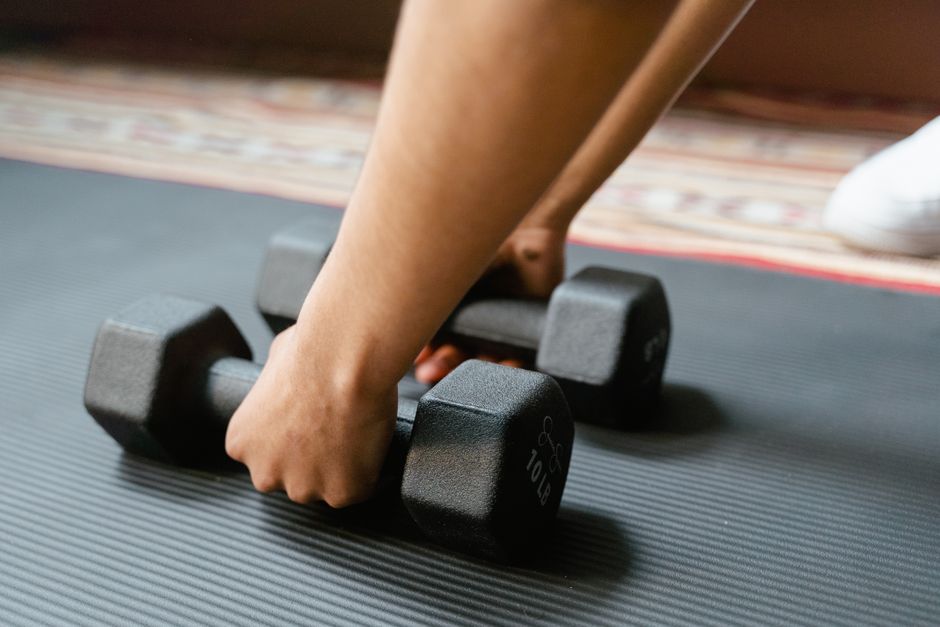
Strengthening a patellar tendon means loading it progressively, letting it recover, and repeating that cycle for months, not days. The patellar tendon connects your kneecap to your shinbone and transfers the force your thigh muscles generate. To make it stronger, you start with controlled exercises your tendon can handle, add load gradually over weeks, and include rest days so the tissue can adapt. The single most important rule is patience: tendons adapt more slowly than muscle.
How To Strengthen Your Patellar Tendon Step By Step
This is the backbone of any tendon program. Tendons respond to mechanical load by gradually remodeling their collagen structure, but that process takes far longer than the muscle soreness-and-growth cycle most people are used to. A sensible step-by-step path looks like this:
- Step 1 — Establish a pain-free baseline. Find exercises you can do with mild discomfort at most. If pain climbs during or after, the load is too high for now.
- Step 2 — Start with isometric holds. These are contractions where the muscle fires but the joint does not move, such as a wall sit or a seated leg extension held steady. They are a common starting point because they load the tendon with relatively little joint movement.
- Step 3 — Move to slow, controlled heavy resistance. Once holds are comfortable, progress to slow squats, leg presses, or Spanish squats. Slow tempo (around three seconds down, three seconds up) is often used because it keeps the tendon under tension without jerky force.
- Step 4 — Add explosive and sport-specific loading. Only after weeks of strength work should you introduce jumping, hopping, or running loads. This is where the tendon learns to handle fast force.
- Step 5 — Manage the load week to week. Increase difficulty gradually rather than in big jumps. A rough guide many clinicians use is to add load in small increments and only when the previous level felt manageable.
Each stage can take weeks. There is no shortcut that compresses tendon adaptation into a few days. This is a months-long project, not a two-week fix.
Why Do Tendons Need Slow, Progressive Load?
Tendons are built to transmit force, and they get stronger when that force is applied repeatedly and recovered from. Unlike muscle, tendon has a limited blood supply and a slow turnover of collagen. That means the tissue adapts, but on a slower clock.
When you load a tendon, the collagen fibers experience small amounts of stress. Given adequate recovery, the body reinforces those fibers over time. Load too much too soon, and the tendon can become irritated rather than stronger. This is the core reason progressive loading beats “push through it” approaches.
Some research suggests that tendons respond to load in a way that is dose-dependent — meaning the amount and frequency matter. The practical takeaway is not a magic number but a principle: apply enough load to stimulate change, then allow recovery before applying it again. Most strengthening programs use two to three loading sessions per week with rest between, though the ideal frequency for any one person is not firmly established.
What Are Isometric Exercises and Do They Help?
Isometric exercises are contractions where you hold a position without moving the joint. For the patellar tendon, common examples include wall sits, Spanish squats (holding against a strap), and straight-leg raises held at the top.
Isometrics are popular as a starting point because they load the tendon while keeping joint movement minimal, which many people find more comfortable than dynamic exercise. Some studies suggest isometric holds can temporarily reduce pain in patellar tendinopathy, though the evidence is mixed and the pain-relief effect, when present, tends to be short-lived. The strength-building benefit comes from the loading itself, not from any special property unique to isometrics.
Treat isometrics as a doorway, not the whole house. They help you begin loading when dynamic exercise is uncomfortable, but long-term tendon strength generally requires progressing to heavier, more dynamic resistance.
Which Exercises Actually Load the Patellar Tendon?
The patellar tendon is loaded whenever your knee extends against resistance, especially under body weight or more. The table below groups common exercises by how much demand they place on the tendon. These are general categories, not precise measurements — individual tolerance varies widely.
| Exercise | Relative Tendon Load | Typical Role |
|---|---|---|
| Wall sit / isometric hold | Low to moderate | Starting point, pain management |
| Straight-leg raise | Low | Early rehab, quad activation |
| Slow bodyweight squat | Moderate | Building baseline strength |
| Spanish squat | Moderate to high | Heavier loading with knee support |
| Leg press / weighted squat | High | Progressive strength |
| Box jump / hopping | Very high (impact) | Late-stage, return to sport |
Notice the jump from strength work to impact work. That gap is where many people get hurt — they go from comfortable squats straight to jumping without a gradual bridge. The bridge is slow, controlled plyometric work introduced only after solid strength is established.
How Much Pain Is Acceptable During Tendon Strengthening?
Some discomfort during loading is common, but the amount that is “acceptable” is a genuine area of debate. A widely used clinical approach allows mild pain during exercise as long as it settles within a day or so and does not worsen over the following days. This is a rule of thumb from clinical practice, not a strict evidence-based threshold.
What matters more than any single number is the trend. If pain is steadily decreasing over weeks and function is improving, you are likely on the right track. If pain is increasing week over week, or lingering into the next day consistently, the load is probably too high. Sharp pain, swelling, or pain that wakes you at night are reasons to back off and, if it persists, to see a clinician.
This is where honesty matters: no guideline can tell you the exact right load for your tendon. The signal comes from how your knee responds over days, not from a formula.
How Long Does It Take to Strengthen a Patellar Tendon?
Tendon adaptation is measured in months, not weeks. Most structured programs run for at least twelve weeks before meaningful strength changes are expected, and many people need longer. This is not a reason for discouragement — it is simply how the tissue works.
For someone with patellar tendinopathy (tendon pain and dysfunction, often from repetitive jumping or running), recovery timelines are often quoted in the range of several months, and some people experience lingering symptoms. The evidence does not support a quick fix, and programs that promise fast results are not aligned with tendon biology.
Consistency matters more than intensity. A moderate program followed for months will generally outperform an aggressive program abandoned after two weeks because it caused a flare-up.
What Mistakes Slow Tendon Strengthening Down?
The most common mistake is loading too aggressively too early. Tendons do not send the same immediate “too much” signals that muscles do, so people often overshoot without realizing it until pain appears days later.
Other frequent problems include:
- Skipping rest days and loading the same tendon every day
- Jumping straight to impact exercise without a strength base
- Stopping completely at the first sign of discomfort, which removes the load the tendon needs
- Changing programs constantly instead of following one for long enough to judge it
- Ignoring sleep and overall recovery, which affect how tissue repairs
Complete rest is rarely the answer for a tendon that needs to get stronger. Relative rest — reducing load while keeping some — is usually more useful than stopping altogether. That said, if you have significant pain, swelling, or a recent injury, a proper assessment by a clinician comes before any self-directed program.
When Should You See a Professional?
See a doctor or physical therapist if pain is severe, if you cannot bear weight, if there is obvious swelling or a change in how the knee looks, or if symptoms are not improving after several weeks of sensible loading. A sudden sharp pain with a pop during activity warrants prompt evaluation.
A physical therapist can assess your specific situation and tailor loading to your tolerance. General programs like the one outlined here are a reasonable framework, but they are not a substitute for individual assessment when something is clearly wrong.
Frequently Asked Questions
How often should I train my patellar tendon?
Most strengthening programs use two to three loading sessions per week with rest days between. The ideal frequency for any one person is not firmly established, so adjust based on how your knee responds.
Can I strengthen my patellar tendon without equipment?
Yes. Wall sits, slow bodyweight squats, and straight-leg raises load the tendon using only your body weight. Heavier resistance usually requires added weight or gym equipment as you progress.
Should I keep exercising if my knee hurts?
Mild discomfort that settles within a day is often considered acceptable in clinical practice. Sharp pain, swelling, or pain that worsens over days means you should reduce load and consider seeing a clinician.
How long before I notice a difference?
Expect at least twelve weeks of consistent work before meaningful strength changes, and often longer. Tendons adapt more slowly than muscles, so patience is part of the program.
