
Strong hips are the foundation of nearly every movement you make. Walking, climbing stairs, getting out of a chair, and even standing still all depend on the muscles around your pelvis. Weak hips don’t just limit athletic performance; they are a common driver of lower back pain, knee problems, and balance issues as you age. Strengthening your hips involves targeting the glutes, the hip flexors, and the muscles on the sides of your pelvis, and a simple weekly plan of two to three focused sessions can build the stability you need.
Why Hip Strength Matters More Than You Think
Your hip joint is a ball-and-socket joint. It is designed for both mobility and stability. The muscles surrounding it act as the control system. When those muscles are weak, other parts of your body compensate.
The lower back often takes over the job of the hips. The knees can cave inward during squats or stairs. This compensation pattern is a primary reason why hip weakness shows up as pain in other areas. Research consistently shows that strengthening the hip abductors and extensors—the gluteus medius and gluteus maximus—can reduce knee pain and improve function in people with arthritis.
For older adults, hip strength is directly tied to fall risk. A strong hip allows you to catch your balance when you trip. It also helps you stand up from a low chair without using your hands. This is not just about fitness; it is about maintaining independence.
The Key Muscles You Need To Target
You cannot strengthen your hips effectively without knowing what you are working. The hip is controlled by four main muscle groups.
The Gluteus Maximus is the largest muscle in your body. It extends the hip, which means it pushes your leg backward. It powers climbing stairs, running, and standing up.
The Gluteus Medius sits on the side of your pelvis. It abducts the leg, moving it away from your body. More importantly, it stabilizes your pelvis when you stand on one leg. If this muscle is weak, your pelvis drops to the opposite side when you walk, which stresses the lower back and the knee.
The Hip Flexors are the muscles at the front of your hip. They lift your knee toward your chest. Sitting for long hours shortens these muscles. While you do not usually need to strengthen them, you do need to stretch them to allow the glutes to work fully.
The Adductors are the inner thigh muscles. They pull the leg inward and help stabilize you during side-to-side movements.
How To Strengthen Your Hips: Exercises And A Weekly Plan
A good hip routine does not require equipment. Bodyweight exercises are enough to build meaningful strength if you do them with control and proper form. The goal is not to lift heavy weight but to activate muscles that are often dormant.
Here are the most effective exercises for hip strength.
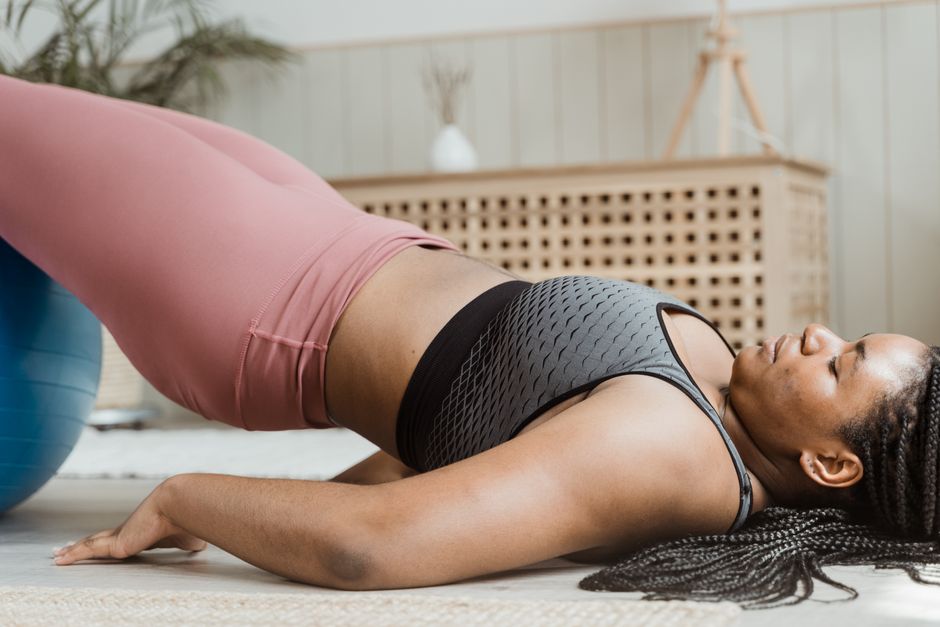
Glute Bridge: Lie on your back with your knees bent and feet flat on the floor. Push through your heels to lift your hips toward the ceiling. Squeeze your glutes at the top. Lower slowly. This targets the gluteus maximus.
Clamshell: Lie on your side with your knees bent at a 45-degree angle. Keep your feet touching and open your top knee like a clam shell. Do not let your pelvis roll backward. This isolates the gluteus medius.
Side-Lying Leg Raise: Lie on your side with your bottom leg bent for stability. Keep your top leg straight and lift it to about 45 degrees. Lower slowly. This works the gluteus medius with a different range of motion.
Fire Hydrant: Start on your hands and knees. Keeping your knee bent at 90 degrees, lift your leg out to the side like a dog at a fire hydrant. Keep your back flat. This targets the gluteus medius and the deep rotators.
Standing Hip Abduction: Stand tall and hold onto a wall for balance. Lift your leg straight out to the side without leaning your torso. This is a functional move that mimics real-life balance reactions.
Reverse Lunge: Step backward into a lunge position. Push through your front heel to return to standing. Reverse lunges place more emphasis on the glutes than forward lunges and are easier on the knees.
Chair Squat: Stand in front of a chair. Sit back as if lowering into the chair. Touch the seat lightly, then stand up. This teaches your glutes to control a sitting motion without loading the spine.


Your Weekly Hip Strengthening Plan
You do not need to do these exercises every day. Muscles need time to recover. Two to three sessions per week is enough to see improvement.
Perform each exercise for 10 to 15 repetitions. Complete 2 to 3 sets. Rest for 60 seconds between sets. The movement should be slow and controlled.
Here is a simple structure you can follow on Monday, Wednesday, and Friday.
- Glute Bridge — 3 sets of 12 repetitions
- Clamshell — 3 sets of 15 repetitions per side
- Side-Lying Leg Raise — 3 sets of 12 repetitions per side
- Reverse Lunge — 3 sets of 10 repetitions per leg
- Chair Squat — 3 sets of 10 repetitions
If you only have ten minutes, pick three exercises and do them well. Consistency matters more than volume. A short session done twice a week beats a long session done once.
As you get stronger, you can add resistance. A resistance band around your thighs makes clamshells and side-lying leg raises harder. Holding a dumbbell across your chest makes the glute bridge more challenging. Progress slowly to avoid tendon irritation.
Common Mistakes That Stall Your Progress
Many people do these exercises incorrectly without realizing it. The most common mistake is using momentum instead of muscle. Swinging your leg quickly does not strengthen the hip; it just moves the limb.
Another frequent error is arching the lower back during glute bridges. If your lower back arches, you are not using your glutes. You are using your spine. Keep your ribs down and your pelvis tucked slightly.
During side-lying leg raises, people often roll their body backward. This shifts the work from the gluteus medius to the hip flexors. Keep your body stacked in a straight line from your head to your heels.
Breathing is also important. Exhale on the effort phase of the movement. Inhale as you return to the starting position. Holding your breath increases blood pressure and reduces the oxygen available to your muscles.
When To Expect Results
Muscle strength changes happen faster than most people think. Neurological adaptation—your brain learning to recruit the muscle—begins within a few sessions. Visible muscle growth takes longer, usually around 8 to 12 weeks of consistent training.
You will likely notice functional improvements sooner. Climbing stairs may feel easier. You may notice that your lower back does not ache after standing for long periods. These changes can appear within two to four weeks.
Do not expect pain that has been present for years to disappear overnight. Hip strengthening addresses the root cause of many movement problems, but chronic pain often involves multiple factors. If you have sharp pain during any of these exercises, stop and consult a physical therapist or physician.
Stretching Matters More Than You Think
Strength and flexibility work together. If your hip flexors are tight, they pull your pelvis into an anterior tilt. This position puts your glutes in a lengthened, weakened state. You cannot effectively strengthen a muscle that is being constantly stretched.
Add a simple hip flexor stretch to your routine. Kneel on one knee with the other foot flat in front of you. Squeeze your glute on the kneeling side and gently push your hips forward. You should feel a stretch in the front of your hip and thigh. Hold for 30 seconds on each side.
Perform this stretch after your strength session or on your rest days. Stretching before lifting can temporarily reduce power output. Save the stretching for the end of your workout.
How This Plan Fits Into Daily Life
You do not need to block out an hour to strengthen your hips. The exercises in this plan take about 20 minutes to complete. You can do them in front of the television, in your living room, or even in a hotel room while traveling.
The key is consistency. Your hip muscles respond to regular, repeated stimulus. A single intense session every two weeks will not produce change. A moderate session three times per week will.
You can also weave hip strength into your daily routine. Stand on one leg while brushing your teeth to train your gluteus medius. Squeeze your glutes while waiting for the kettle to boil. These small habits add up over time.
Frequently Asked Questions
How often should I do hip strengthening exercises?
Two to three times per week is enough to build strength.
Muscles need at least 48 hours to recover between sessions.
Can weak hips cause lower back pain?
Yes, weak hip muscles force the lower back to compensate during movement.
This compensation pattern is a common contributor to chronic back pain.
How long does it take to strengthen weak hips?
Most people notice functional improvements within two to four weeks.
Visible muscle growth typically requires 8 to 12 weeks of consistent training.
Do I need weights to strengthen my hips?
No, bodyweight exercises are effective for beginners.
Resistance bands or dumbbells can be added later to continue progressing.
