
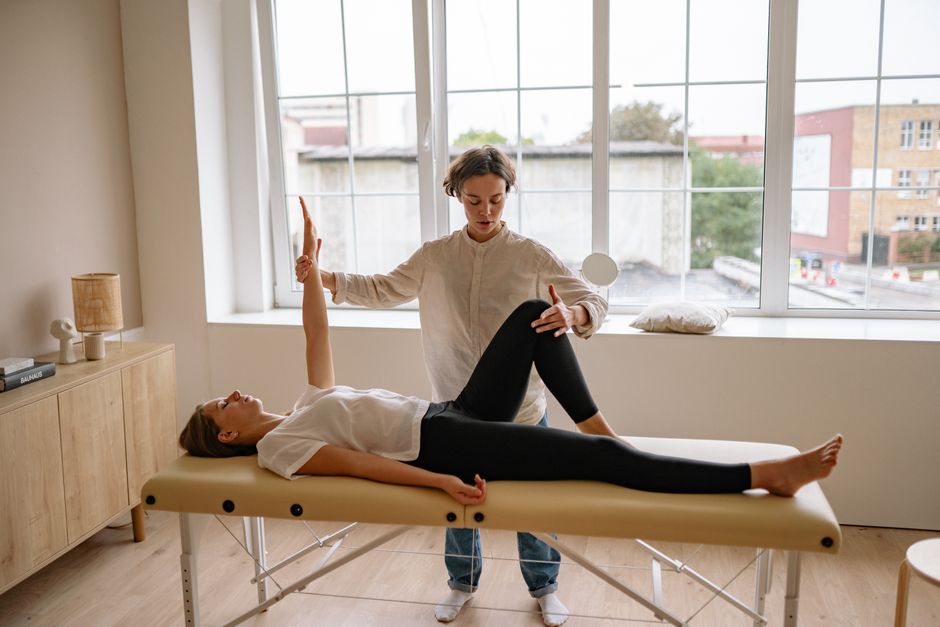
The quadratus lumborum, or QL, is a deep muscle in your lower back that connects your pelvis to your lowest ribs and spine. When it is weak, tight, or overworked, it can contribute to low back pain and stiffness. Strengthening it safely — through controlled exercises, gradual loading, and attention to the muscles around it — can improve lower back support and reduce pain for many people.
The QL is not the only muscle involved in back pain, and no single exercise fixes every case. But building its strength and endurance, while also addressing hip and core muscles that work alongside it, is a reasonable and well-supported approach for many types of chronic low back pain.
What Is The QL Muscle And What Does It Do?
The quadratus lumborum sits deep in the back of your abdominal wall, on both sides of your lumbar spine. You cannot see it or touch it easily from the surface. It runs from the top of your pelvis (the iliac crest) up to your lowest rib and to the side of your lumbar vertebrae.
Its jobs are specific. On one side, it helps bend your trunk sideways. When both sides work together, they help extend your lower back and stabilize your spine and pelvis during movement. It also plays a role in hiking up one hip when you stand on one leg, which is why it gets used constantly during walking.
Because of where it sits and what it does, the QL is active almost any time you are upright. That constant demand is part of why it can become tight or fatigued. It is also why it is often blamed for low back pain — sometimes correctly, and sometimes not.
Why Does A Weak Or Tight QL Cause Back Pain?
Pain from the QL usually comes from one of two situations: the muscle is overworked and tight, or it is weak and not providing enough support. Both can produce similar symptoms, which is why the two are often confused.
When the QL is tight, it can pull on the pelvis and lower ribs. This can create a deep ache on one side of the lower back that sometimes spreads to the hip or buttock. When it is weak, the spine and pelvis lose some of their side-to-side stability, and other muscles have to compensate. That compensation can itself become a source of pain.
It is worth being honest about one thing. Most low back pain is not caused by a single muscle. Research consistently shows that nonspecific low back pain — the most common type — usually involves a mix of factors including muscle weakness, deconditioning, poor movement patterns, and sometimes stress or sleep problems. The QL is often part of the picture, but rarely the whole picture.
This matters because it changes what helps. Chasing one muscle in isolation tends to produce disappointing results. Strengthening the QL as part of a broader core and hip program tends to work better.
How To Strengthen The QL Muscle And Relieve Back Pain?
Strengthening the QL means loading it in a controlled way and gradually increasing the challenge. The key is to start easy and progress slowly. Doing too much too soon is one of the most common reasons people make their back pain worse instead of better.
A reasonable starting point is a small set of exercises done a few times per week, with rest days in between. The muscle needs recovery time, just like any other muscle.
Here are exercises commonly used to target the QL and the muscles around it:
- Side plank. Lie on your side and lift your hips so your body forms a straight line. Start on your knees if a full side plank is too hard. Hold for a short time, then switch sides.
- Bird dog. On hands and knees, extend one arm and the opposite leg, keeping your back flat. This builds stability without heavy loading.
- Standing side bend. Stand tall and slowly bend to one side, then the other. Keep the movement small and controlled. This is a gentle way to engage the QL.
- Single-leg standing. Stand on one foot and hold a stable surface for balance. This lightly challenges the QL and hip stabilizers.
- Hip hikes. Standing on a step, let one hip drop slightly, then lift it back up by tightening the side of your hip and lower back.
Two things matter more than the specific exercises. The first is control — move slowly and avoid jerking or bouncing. The second is progression — once an exercise feels easy, make it slightly harder rather than doing many more repetitions of the same thing.
If any exercise sharply increases your pain, stop. Mild discomfort during effort is common. Sharp or shooting pain is not something to push through.
Should You Stretch The QL Or Strengthen It?
For most people, the answer is both, but the order and emphasis depend on what is actually going on. A tight, overworked QL often benefits from gentle stretching first. A weak QL needs strengthening.
The problem is that many people assume their QL is tight when it is actually weak and fatigued. Stretching a weak, tired muscle can make things feel worse, not better. If stretching gives you short-term relief that fades within an hour, the muscle may be more overworked than short.
Some gentle stretching approaches include lying on your back and pulling one knee across your body, or a standing side stretch held for a short time. These should feel mild, not sharp.
A useful way to think about it: stretching buys comfort, strengthening builds capacity. Comfort without capacity tends to be temporary. This is a general principle, not a rule that applies identically to everyone.
What Other Muscles Matter For Lower Back Pain?
The QL does not work alone. It shares the job of stabilizing your lower back and pelvis with several other muscle groups, and weakness in any of them can increase the load on the QL.
The most relevant ones are:
- Deep abdominal muscles, including the transversus abdominis, which help brace the spine.
- Glutes, which stabilize the pelvis during walking and standing.
- Hip flexors and hip rotators, which affect how the pelvis tilts and moves.
- Spinal erectors, the muscles running along your back that help you extend and hold posture.
This is why programs that only target the QL often fall short. A well-rounded routine that includes core stability, hip strengthening, and general movement tends to produce better and longer-lasting results for low back pain.
When Should You See A Doctor For Back Pain?
Most low back pain improves on its own within a few weeks, and exercise is generally helpful. But some symptoms need medical attention rather than self-directed strengthening.
See a healthcare provider if you have:
- Pain that follows a fall or injury
- Numbness or weakness in your legs
- Loss of bladder or bowel control
- Pain that is worse at night or does not change with position
- Unexplained weight loss along with back pain
- Fever with back pain
These signs can point to causes other than a muscle problem. They should be checked rather than worked through with exercise.
For garden-variety low back pain without these warning signs, a physical therapist can help you build a program matched to your specific weaknesses. That is often more effective than following a generic routine, because the QL is only one piece of a larger system.
How Long Does It Take To See Results?
Strength changes take time. Noticeable improvements in pain and function from a structured exercise program often take several weeks, and meaningful strength gains typically take longer. This is normal and not a sign that something is wrong.
Consistency matters more than intensity. A few sessions per week done steadily for a couple of months will usually do more than an aggressive program abandoned after a week. Progress is rarely linear — some days will feel better than others, and that is expected.
If pain is not improving after several weeks of consistent, appropriate exercise, or if it is getting worse, that is a signal to get it looked at rather than push harder.
Frequently Asked Questions
Where is the QL muscle located?
The quadratus lumborum is a deep muscle in your lower back that connects your pelvis to your lowest rib and lumbar spine. You cannot feel it directly from the surface because other muscles and tissue sit over it.
Can a weak QL cause lower back pain?
Yes, a weak QL can reduce side-to-side stability in the lower back and pelvis, which may contribute to pain. However, most low back pain involves multiple factors, not just one muscle.
Is it better to stretch or strengthen the QL?
It depends on whether the muscle is tight or weak, and often both approaches help. Stretching can ease tightness, while strengthening builds lasting support — but stretching a weak, fatigued muscle may not help.
How often should I train the QL?
A few sessions per week with rest days in between is a reasonable general approach for most people. Start gently and increase difficulty gradually rather than adding more repetitions.
