
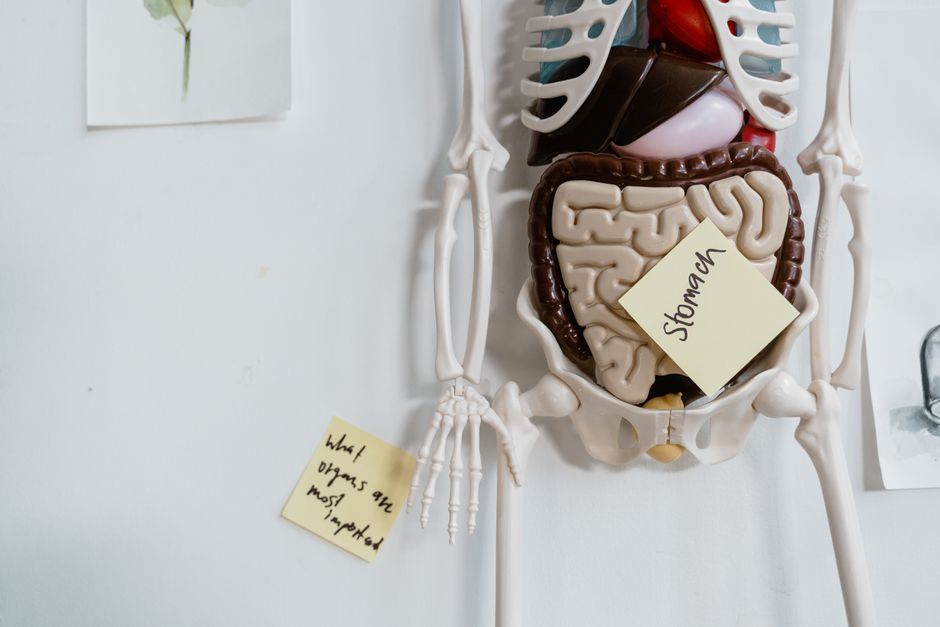
Your stomach is a muscular organ, and its walls contract in coordinated waves to churn food and move it along. You cannot train it with situps or planks the way you train your arms. The muscles that matter most for digestion — the stomach wall and the gut’s muscular layer — respond to eating habits, physical activity, stress, and hydration, not to spot exercises. Strengthening digestion means supporting that muscular system, not flexing your abdomen.
What Muscles Actually Move Food Through Your Digestive Tract?
Digestion is powered by a type of muscle you never consciously control. The stomach wall contains three layers of smooth muscle, and the entire digestive tract from the esophagus to the colon is lined with a muscular layer that contracts in waves.
This movement is called peristalsis. Those waves push food down the esophagus, mix it in the stomach, and move it through the small and large intestine. The muscle is smooth muscle, not the skeletal muscle in your abs. That distinction matters because smooth muscle does not grow bigger when you lift weights.
Your abdominal muscles do play a supporting role. They help create pressure inside your belly during a bowel movement and support your core. But they do not churn your food. The stomach handles that on its own.
Here is a point many people miss: you cannot directly strengthen the smooth muscle of your stomach through exercise. What you can do is create the conditions where it works well — steady blood flow, adequate hydration, regular meal patterns, and a nervous system that is not stuck in fight-or-flight mode.
How To Strengthen Stomach Muscles For Digestion Through Daily Habits
There is no exercise that isolates your stomach muscle. The practical approach is to support the whole digestive system through habits with real evidence behind them.
Move your body regularly. Physical activity increases blood flow to the gut and stimulates the muscles of the intestines. Research consistently shows that regular moderate exercise helps keep bowel movements regular and reduces the time food spends in the colon. Walking after a meal is a simple, low-risk habit some studies suggest can speed stomach emptying.
Eat enough fiber. Fiber gives your gut muscles something to work against. It adds bulk to stool, which the colon muscles then push along. Official dietary guidance in the United States recommends about 25 to 30 grams of fiber a day for adults, though most people eat far less. Fiber from vegetables, fruit, beans, and whole grains supports regular contractions.
Stay hydrated. Water helps keep stool soft so the muscles do not have to strain. The amount each person needs varies with body size, activity, and climate. There is no single official number for everyone, but pale yellow urine is a reasonable everyday sign of adequate fluid.
Eat on a consistent schedule. Your digestive system runs partly on a biological clock. Eating meals at roughly the same times each day helps regulate the migrating motor complex — a wave of muscular activity that sweeps the gut between meals. Grazing constantly can blunt this process in some people.
Chew well and eat slowly. Digestion starts in the mouth. Slower eating gives your stomach less work to do at once and may reduce swallowed air, which contributes to bloating.
Can Exercise Help or Hinder Your Digestion?
Moderate exercise helps digestion. Intense exercise can temporarily disrupt it. The difference is worth understanding.
Light to moderate activity — brisk walking, cycling, swimming — supports gut motility and blood flow. Some research indicates that regular exercise is associated with fewer symptoms of constipation and better overall digestive comfort.
Very intense exercise is a different story. During hard training, blood is redirected away from the digestive tract toward working muscles. This can slow stomach emptying and contribute to nausea or cramping, especially if you eat right before a strenuous workout. Some endurance athletes experience digestive distress during long events for this reason.
Timing matters. A large meal close to vigorous exercise is more likely to cause discomfort. A light snack beforehand is usually better tolerated. This is general guidance, not a rule that fits every person.
Core exercises like planks and crunches strengthen your abdominal wall. They do not strengthen your stomach muscle, but a stronger core can help with posture and with the mechanics of straining during a bowel movement. That is a modest benefit, not a digestive cure.
Does Stress Affect the Muscles of Your Gut?
Stress directly changes how your gut muscles work. The digestive tract is wired into the nervous system, and the “rest and digest” branch is what keeps peristalsis steady and comfortable.
When you are stressed, the body shifts toward a fight-or-flight state. Blood flow to the gut drops, and the normal rhythm of contractions can change. Some people get diarrhea from faster transit. Others get constipation from slower transit. Both are common stress responses, and neither means your stomach muscle is weak.
This connection is sometimes called the gut-brain axis. It is well established that psychological stress can trigger or worsen symptoms in conditions like irritable bowel syndrome. The evidence for stress management improving everyday digestion is more modest, but practices like slow breathing, regular sleep, and relaxation techniques are low-risk and widely used.
One practical point: eating while rushed or distracted can work against digestion. Sitting down, slowing your breathing, and giving a meal ten minutes of attention is a simple habit many clinicians suggest, though large trials on this specific practice are limited.
Which Foods and Habits Support Gut Muscle Function?
No food directly “strengthens” your stomach muscle. Certain foods and habits support the environment in which those muscles work.
- Fiber-rich foods — vegetables, fruit, beans, lentils, oats, and whole grains give the colon muscles bulk to move.
- Fermented foods — yogurt with live cultures, kefir, and sauerkraut may support gut bacteria, though the evidence for specific digestive benefits is still developing.
- Water and fluids — keep stool soft and help the gut move contents along.
- Regular meal times — support the natural rhythm of digestive contractions.
- Limited ultra-processed food — diets heavy in these foods tend to be low in fiber, which works against regular bowel function.
Some people find that very large meals, high-fat meals, or carbonated drinks trigger discomfort. That varies by person. There is no single diet that strengthens gut muscle for everyone.
When Should You See a Doctor About Digestion Problems?
Most digestive complaints are manageable with lifestyle changes. Some symptoms need medical attention rather than self-care.
Seek medical advice if you have persistent changes in bowel habits lasting more than a few weeks, blood in your stool, unexplained weight loss, ongoing abdominal pain, or difficulty swallowing. These can have many causes, and only a clinician can sort out which one applies to you.
It is also worth being clear about what “weak stomach muscles” usually means in practice. People who describe slow digestion, bloating, or heaviness often have functional symptoms rather than a measurable muscle weakness. Conditions like gastroparesis — delayed stomach emptying caused by impaired stomach muscle function — do exist, but they are diagnosed by medical testing, not self-assessment. They are also uncommon and usually linked to specific causes such as diabetes or certain medications.
No exercise program has been shown to reverse gastroparesis. If you suspect a real problem with how your stomach empties, that is a conversation for a doctor, not a workout plan.
Frequently Asked Questions
Can you strengthen your stomach muscle with exercise?
No. The stomach is made of smooth muscle, which does not grow with exercise the way skeletal muscle does. Physical activity supports digestion indirectly by improving blood flow and bowel regularity.
What are the signs of a weak stomach muscle?
True stomach muscle weakness is uncommon and usually diagnosed through medical testing. Symptoms like bloating, slow digestion, or feeling full quickly have many possible causes and do not reliably indicate weak stomach muscle.
Does walking help digestion?
Some studies suggest a gentle walk after eating can help speed stomach emptying and support regular bowel function. It is a low-risk habit with reasonable supporting evidence.
How much fiber do you need for healthy digestion?
US dietary guidance recommends about 25 to 30 grams of fiber a day for adults. Most people eat less than this, and increasing fiber gradually with enough water is the usual approach.
