
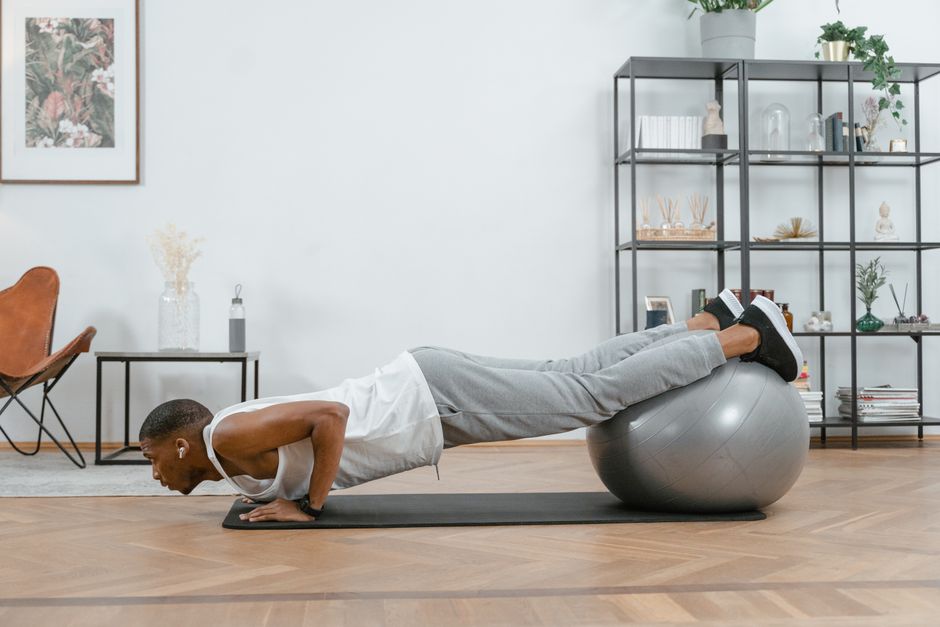
Strengthening your lower abs means learning to control your pelvis and lower spine through specific, controlled movements. The key is not to chase the burn with endless crunches, but to master exercises like leg lowers, reverse crunches, and hollow-body holds with perfect form. Technique matters more than reps, because the lower abs are part of your deep core system that stabilizes your entire body.
What Are the Lower Abs and Why Are They Different?
The rectus abdominis is one long muscle that runs from your pubic bone to your ribcage. It is not actually two separate muscles, but it has tendinous intersections that create the appearance of “upper” and “lower” sections. When you see a six-pack, you are seeing those sections.
Even though it is one muscle, you can emphasize the lower portion by changing the movement. Upper-ab exercises like crunches pull your ribcage toward your pelvis. Lower-ab exercises do the opposite — they pull your pelvis toward your ribcage or stabilize your pelvis while your legs move. This distinction matters for targeting.
Why Lower Abs Are Hard to Engage
Many people struggle to feel their lower abs working. The most common reason is that their hip flexors take over. The hip flexors attach to the same area — the front of your pelvis and lower spine — and they are often tight and overactive from sitting all day.
When you do leg raises or flutter kicks, your hip flexors do most of the work. Your lower abs stay quiet. The fix is not more effort. It is better positioning. You need to create a posterior pelvic tilt — tucking your tailbone slightly under — and maintain that position throughout the movement. This “switches on” the lower abs and keeps the hip flexors from dominating.
Another issue is breathing. People hold their breath during ab exercises. That creates intra-abdominal pressure and makes the movement feel harder, but it also prevents the deep core muscles from working properly. Exhale during the hard part of the movement.
How To Strengthen Lower Abs Exercises And Technique
The most effective lower-ab exercises are those that involve moving your legs while keeping your lower back pressed into the floor. This is called “neutral spine” or a slight posterior tilt. Here are the foundational movements and the technique details that make them work.
Dead Bug
Lie on your back with your arms pointing straight up and your knees bent at 90 degrees over your hips. Press your lower back into the floor. Slowly lower your right arm overhead and your left leg toward the floor at the same time. Stop when your lower back starts to lift. Return to the start and switch sides.
The dead bug is the safest starting point because it trains coordination between your arms, legs, and core. It teaches you to move your limbs without letting your spine move. That is the exact skill you need for all other lower-ab work.
Reverse Crunch
Lie on your back with your knees bent and your feet off the floor. Place your hands by your sides or under your lower back for support. Exhale and curl your pelvis toward your ribcage, lifting your hips a few inches off the floor. Your knees stay bent at the same angle throughout. Lower with control.
The reverse crunch is more effective than a standard crunch for lower-ab emphasis because the movement originates from the pelvis. Do not swing your legs. The motion is small and controlled.
Leg Raises
Lie flat with your legs straight. Press your lower back into the floor. Raise your legs to vertical, then lower them slowly. The lower you go, the harder your lower abs work. Stop when your lower back lifts off the floor.
If your lower back lifts early, you are not ready for full leg raises. That is not a failure — it is information. Shorten the range of motion until you can keep your back down.
Hollow-Body Hold
Lie on your back with your arms overhead and your legs straight. Press your lower back into the floor. Lift your shoulders and legs off the floor a few inches. Hold this position while breathing normally.
The hollow-body hold is the gold-standard exercise for lower-ab strength. It is also the position gymnasts use for their core work. If it is too hard, bend your knees or keep your arms at your sides. Progress slowly.
Flutter Kicks
Lie on your back with your legs straight and your lower back pressed into the floor. Lift your heels about six inches and alternate kicking your legs up and down in small, quick movements. Keep your back glued to the floor.
Flutter kicks are an endurance exercise. They do not build maximal strength, but they build the stamina your lower abs need for daily activities and other exercises.





Common Technique Mistakes and How To Fix Them
Most lower-ab exercises fail because of one of three mistakes. The first is arching the lower back. If your lower back lifts off the floor, your hip flexors are doing the work and your lower abs are off. Fix it by reducing your range of motion or bending your knees.
The second mistake is using momentum. Swinging your legs uses gravity and hip-flexor power, not core strength. Every rep should be slow and controlled, especially on the lowering phase. Count to three on the way down.
The third mistake is holding your breath. Your core works with your breath, not against it. Exhale as you lift or curl. Inhale as you lower. If you cannot breathe during an exercise, the exercise is too hard for your current level.
How Often Should You Train Lower Abs?
Your abdominal muscles recover quickly. Research consistently shows that training the abs two to three times per week is enough for most people. More frequent training does not produce better results and can lead to poor form from fatigue.
That said, you do not need a separate “ab day.” You can add 10 to 15 minutes of lower-ab work to the end of your regular workout. The exercises are low-impact and do not interfere with recovery from larger muscle groups.
Progressive overload applies here just like anywhere else. If an exercise feels easy, make it harder. Add a hold at the top of a reverse crunch. Slow down the lowering phase of a leg raise. Increase the length of a hollow-body hold. Do not add more reps indefinitely — that builds endurance, not strength.
What About Spot Reduction and Visible Results?
You cannot reduce belly fat by doing ab exercises. Spot reduction is a myth. The fat over your lower abs is the last to go for many people, and no amount of crunches will change that. Visible abs come from lowering your overall body fat through nutrition and full-body exercise.
Strength training your lower abs still matters. A strong core improves posture, protects your lower back, and makes everyday movements easier. The visible definition is a side effect of low body fat, not the goal of the exercise itself.
If you want to see your lower abs, the evidence points to a combination of resistance training, a modest calorie deficit, and patience. No exercise targets fat loss in a specific area of your body.
When Lower-Ab Pain Is Not Muscle Soreness
Muscle soreness after a new exercise is normal and usually peaks 24 to 72 hours later. But sharp pain, pain that radiates to your groin or back, or pain that worsens with movement is not normal. Stop exercising and consult a healthcare provider.
Lower-ab pain can come from many sources. It could be a muscle strain, a hernia, or something involving the digestive or urinary systems. Do not assume it is just soreness. If the pain is severe, sudden, or accompanied by fever, nausea, or changes in bowel habits, seek medical attention.
This is especially important for pregnant women. Diastasis recti — the separation of the abdominal muscles — is common during and after pregnancy. Some traditional ab exercises can worsen it. If you are pregnant or postpartum, work with a physical therapist who specializes in pelvic health before starting any core program.
How To Build a Lower-Ab Routine
A simple routine can be done in under 15 minutes. Start with the dead bug for two sets of 10 reps per side. Move to the reverse crunch for three sets of 12 reps. Finish with a hollow-body hold for three sets of 20 to 30 seconds.
As you get stronger, swap the dead bug for leg raises and add flutter kicks at the end. Aim for two to three sessions per week with at least one rest day between sessions. Consistency beats intensity.
Your lower abs are part of a system. They work with your pelvic floor, diaphragm, and deep back muscles to stabilize your spine. Training them in isolation has a place, but you will get more benefit from exercises that challenge the whole system. Planks, bird dogs, and carries all build core strength that carries over to lower-ab function.
Frequently Asked Questions
How long does it take to strengthen lower abs?
Most people notice improved control and endurance within 4 to 6 weeks of consistent training. Visible changes depend on your starting point and body fat levels.
Can you get lower abs without equipment?
Yes, all the most effective lower-ab exercises use only your body weight. Equipment like an ab roller or captain’s chair adds variety but is not required.
Why do my hip flexors hurt during lower-ab exercises?
Your hip flexors are taking over because your lower abs are not strong enough to control the movement. Shorten your range of motion, bend your knees, or start with the dead bug until your core catches up.
Is it safe to do lower-ab exercises every day?
Daily training is not necessary and can lead to poor form from fatigue. Two to three focused sessions per week is enough for most people.
