
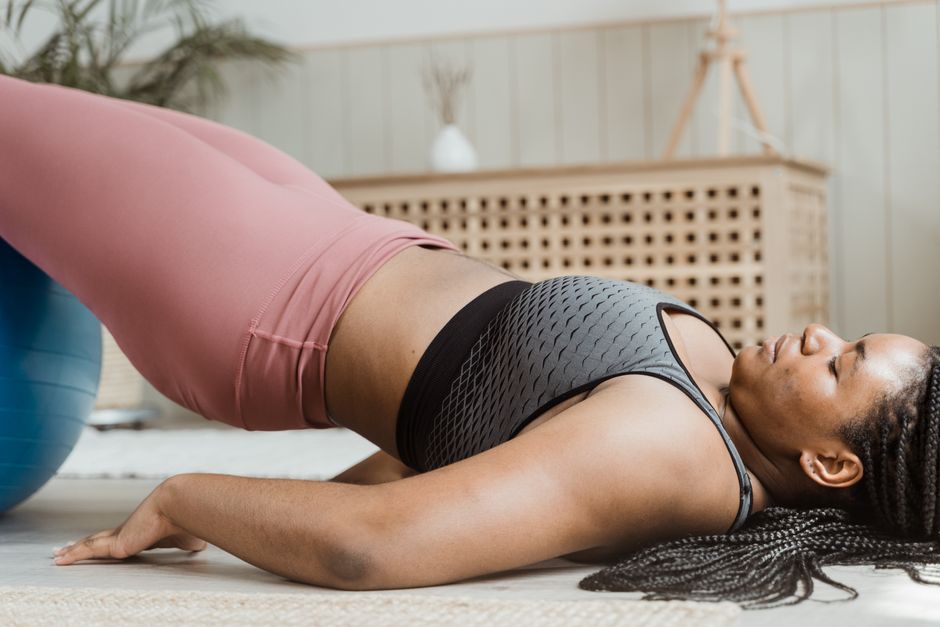
Hip strength comes down to three muscle groups that do different jobs: the gluteus maximus (hip extension), the gluteus medius and minimus (hip abduction and stability), and the deep external rotators (rotation and joint control). Exercises rank by how much load they place on these muscles, and the hip thrust and its variations load the gluteus maximus most heavily, while side-lying abduction and lateral band walks target the gluteus medius. Squats and lunges work the hips too, but they share the load with the knees and quads, so they rank lower for isolated hip strength.
Most people train the hips as if one muscle does all the work. It does not. The hip is a ball-and-socket joint driven by muscles that move the leg in several directions, and a well-built program trains each direction. What follows is a practical ranking, grouped by which muscles each exercise actually loads and how much evidence supports the movement.
Which Muscles Actually Make Up Hip Strength?
The hips are powered by a set of muscles with distinct jobs, and strength means something different for each one. The gluteus maximus is the largest muscle in the body and the main driver of hip extension — pushing the leg backward and standing up from a chair. The gluteus medius and gluteus minimus sit on the side of the hip and handle abduction (lifting the leg out to the side) and pelvic stability during walking. The deep external rotators are a group of small muscles behind the joint that control rotation and help keep the hip stable.
There is also the hip flexor group at the front, including the iliopsoas, which lifts the knee and is often tight rather than weak in people who sit a lot. Training the hips means loading all of these, not just the ones you can feel burning.
One clarification worth making: the gluteus medius does far more work during single-leg stance than most people realize. Every time you stand on one leg while walking, it holds the pelvis level so you do not tip sideways. That is why hip stability training matters for gait and balance, not just for appearance.
How To Strengthen Hips Exercises Ranked By Muscle Use
The ranking below groups exercises by the muscle they load most and how much load they place on it. Heavier, more demanding movements rank higher for building strength; lighter isolation movements rank lower for load but are useful for targeting the gluteus medius and rotators, which are harder to challenge with big compound lifts.
| Exercise | Primary muscles loaded | Relative load |
|---|---|---|
| Barbell hip thrust | Gluteus maximus | Highest |
| Romanian deadlift | Gluteus maximus, hamstrings | High |
| Split squat / lunge | Gluteus maximus, medius (single-leg) | High |
| Step-up | Gluteus maximus, medius | Moderate to high |
| Back squat | Gluteus maximus, quads | Moderate (shared) |
| Side-lying hip abduction | Gluteus medius | Low, targeted |
| Lateral band walk | Gluteus medius | Low to moderate |
| Clamshell | Gluteus medius, external rotators | Low, targeted |
This is a ranking of muscle demand, not a prescription. The right exercise for any person depends on their training history, joint health, and goals. A beginner does not start with a loaded barbell hip thrust.
Why Do Hip Thrusts Rank Highest For Glute Strength?
The hip thrust loads the gluteus maximus through its full range with the torso supported, which lets you add weight progressively without loading the spine as much as a squat does. Research using electromyography — measuring electrical activity in the muscle — has repeatedly found high gluteus maximus activation during hip thrusts, and some studies suggest it exceeds activation during back squats. That is a meaningful finding because the ability to load a muscle heavily and progress over time is what drives strength gains.
The hip thrust is not automatically better than every other lift. Its advantage is that it isolates hip extension and lets you load it directly. A squat trains the hips alongside the quads and requires more total-body coordination. Both have a place. If your goal is gluteus maximus strength specifically, the hip thrust gives you the most direct route to loading that muscle.
The Romanian deadlift ranks just behind because it loads the gluteus maximus through hip extension under a heavy barbell or dumbbell, with a strong hamstring contribution. It teaches the hip hinge — bending at the hips while keeping the back flat — which carries over to lifting and daily movement.
Which Exercises Best Target The Gluteus Medius?
The gluteus medius responds to movements that lift the leg out to the side or resist it collapsing inward. Side-lying hip abduction, lateral band walks, and clamshells all target it, but they rank lower than compound lifts because the load is light. That does not make them useless. The gluteus medius is hard to challenge with heavy weights, so these movements fill a gap the big lifts leave.
Single-leg work bridges the two categories. Split squats, lunges, and step-ups load the gluteus maximus on the working leg while the gluteus medius on that side works hard to keep the pelvis stable. This is why single-leg exercises rank higher than side-lying isolation for overall hip function — they train strength and stability together under real load.
Some studies suggest the gluteus medius is best challenged with exercises performed in single-leg stance rather than lying on the floor, because standing demands it stabilize the pelvis against gravity. The evidence here is not as strong as for the gluteus maximus, so treat it as a reasonable principle rather than a settled rule.
Do Squats And Lunges Strengthen The Hips?
Squats and lunges strengthen the hips, but they share the load across several muscle groups, so they rank lower for hip-specific strength than movements that isolate hip extension. In a back squat, the gluteus maximus works alongside the quadriceps and the muscles of the lower back. The hips get trained, but they are not the only muscle doing the work.
Lunges and split squats change this. Because you are on one leg, the working hip has to produce more force relative to the load, and the gluteus medius on that side works to keep you balanced. That is why lunges rank higher than squats for hip strength even though both are valuable.
Depth matters. A deeper squat places the hip in more flexion and changes which muscles contribute. But depth should be limited by your mobility and joint comfort, not by a target someone else set. There is no single correct depth that applies to everyone.
How Often Should You Train The Hips?
Training the hips two to three times per week is a reasonable general starting point, but this is a general principle rather than a fixed rule, and it depends on how hard each session is and how well you recover. The core principle in strength training is progressive overload — gradually increasing the load, repetitions, or difficulty over time. Without that progression, the muscles have no reason to get stronger.
For the gluteus maximus, heavier loads with fewer repetitions tend to build strength, while moderate loads with more repetitions build muscular endurance. Both are legitimate. For the gluteus medius and rotators, lighter loads with controlled movement and higher repetitions are common because these muscles are hard to load heavily without losing position.
Rest between sessions matters. Muscles adapt during recovery, not during the workout itself. If you train the hips hard every day, you limit the recovery that strength gains depend on.
What Should A Balanced Hip Program Include?
A balanced program trains hip extension, abduction, and rotation, and includes both heavy compound work and lighter targeted work. A simple structure:
- One heavy hip-extension movement (hip thrust or Romanian deadlift)
- One single-leg movement (split squat, lunge, or step-up)
- One or two targeted gluteus medius movements (lateral band walk, side-lying abduction, or clamshell)
- Optional rotation work, such as controlled hip rotation against light resistance
Warm up before loading. Start with bodyweight or light resistance and add load gradually. If an exercise causes sharp hip pain, stop and get it assessed rather than pushing through — pain during exercise is a signal worth listening to, not a sign of progress.
There is no single best exercise. The best program is one that loads each muscle group, progresses over time, and fits your body and schedule well enough that you keep doing it. Consistency beats perfection.
Frequently Asked Questions
What is the single best exercise to strengthen the hips?
The barbell hip thrust loads the gluteus maximus most directly and ranks highest for glute strength, but no single exercise trains all the hip muscles. A program that combines hip thrusts, single-leg work, and gluteus medius exercises covers the full picture.
Can you strengthen your hips at home without equipment?
Yes. Bodyweight hip thrusts, glute bridges, split squats, step-ups, and side-lying abduction all strengthen the hips without equipment. Progress by adding repetitions, slowing the movement down, or using a resistance band as you get stronger.
How long does it take to see hip strength gains?
Strength gains can begin within a few weeks of consistent training, but noticeable changes depend on your starting point, how hard you train, and how well you recover. There is no fixed timeline that applies to everyone.
Are squats enough to strengthen the hips?
Squats train the hips but share the load with the quads and lower back, so they are not enough on their own for hip-specific strength. Adding hip thrusts, single-leg work, and gluteus medius exercises gives the hips more direct training.
