
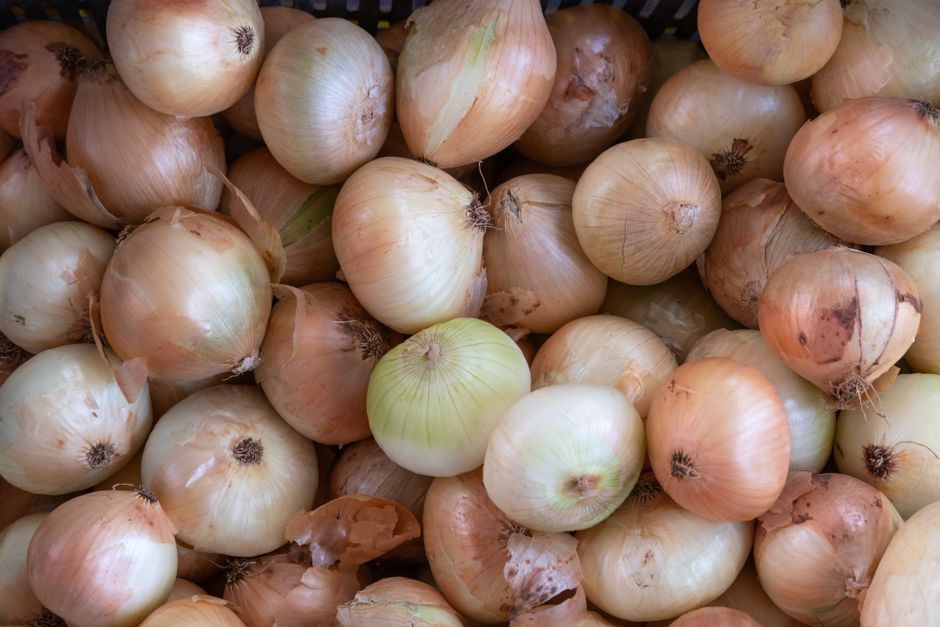
Onions from your own garden can keep for months if you cure them properly and store them in the right conditions. The process has two stages: curing, which dries the outer layers and seals the neck, and storage, which keeps them cool, dark, and dry. Rush either stage and the bulbs will rot, sprout, or turn soft within weeks. Do both well and many storage varieties hold for six months or longer.
Why Curing Matters More Than Where You Put Them
A freshly pulled onion is not ready for storage. Its neck is still thick and moist, and that moisture is an open door for rot organisms.
Curing is the step that closes that door. As the bulbs dry, the outer skin tightens, the neck shrinks and seals, and a few layers of dry, papery skin form around the bulb. That papery layer is the actual storage container. Without it, the onion has no protection.
Skip curing or cut it short and you get the same result every time: soft necks, mold, and onions that collapse in a few weeks. This is the single most common reason homegrown onions fail in storage.
How Do You Cure Onions Step by Step?
Cure onions in a warm, dry, well-ventilated spot out of direct sun for two to three weeks. The goal is fast, thorough drying, not slow drying in a humid garage.
Here is the sequence:
- Stop watering your onions about a week or two before harvest if conditions allow. This helps them begin drying in the ground.
- Harvest when the tops have fallen over and begun to dry, usually in late summer. Do not bend the tops over yourself to force this — that can reduce storage life.
- Lift the bulbs gently with a fork rather than pulling by the neck, which can bruise or tear the stem.
- Leave the tops attached for now. They help the bulb dry.
- Lay the onions in a single layer on a screen, rack, or dry surface. Do not pile them.
- Keep them warm and dry with good airflow. A shaded porch, a dry shed, or a garage with ventilation works if humidity is low.
- Turn them occasionally so all sides dry.
- Wait two to three weeks. The necks should be completely dry and papery, and the outer skins tight. When you can rub the dried roots off with your fingers and the neck shows no moisture, curing is done.
If you cure onions in a humid climate, this step is harder. High humidity slows drying and invites rot. In that case, a fan, a dehumidifier, or a warm indoor space with airflow can help. Some gardeners in wet regions accept shorter storage and use their onions faster.
One non-obvious point: sun curing is a myth worth dropping. Direct sun can scald and soften the bulbs. Shade with airflow is better.
How To Store Onions From The Garden After Curing
Once cured, trim the tops to about an inch above the neck and clip the roots. Then move the onions into storage conditions that stay cool, dark, and dry.
Ideal storage is cool but not cold, with low humidity and darkness. A few key rules:
- Keep them dark. Light encourages sprouting.
- Keep them dry. Moisture causes rot and mold.
- Keep them cool. Warmth pushes them to sprout.
- Keep air moving. Stagnant air traps moisture.
Do not store onions in a sealed plastic bag. Plastic traps moisture and the bulbs will rot. Use a mesh bag, a net, a basket, a cardboard box with holes, or clean pantyhose with knots between bulbs. Hanging mesh bags let air circulate and keep onions off cold floors.
Do not store onions next to potatoes. Potatoes release moisture and a gas that speeds sprouting in onions, and onions can make potatoes sprout too. Keep them apart.
Check stored onions every few weeks. Remove any that feel soft, smell off, or show mold. One rotting onion can spread problems to its neighbors, so pulling the bad ones early protects the rest.





What Temperature and Humidity Do Onions Need?
Onions store best in two different temperature ranges, and the range matters more than most people realize.
The classic range is cool and dry, roughly 32 to 40 degrees Fahrenheit with low humidity. A refrigerator is too humid for long-term onion storage, but a cold, dry root cellar or a cool garage in winter can work.
The other option is a consistently cool but not cold space, around 45 to 55 degrees Fahrenheit. The problem is the middle. Temperatures that drift between cold and cool, or that warm up and cool down repeatedly, push onions to sprout faster than either steady range. Steady beats perfect.
Humidity should stay low. High humidity softens the skins and encourages rot, even at good temperatures. If your storage space is damp, airflow and a dehumidifier help.
Which Onions Store Best?
Not all onions keep equally well, and variety matters as much as your storage method.
Long-day storage onions — the pungent, thick-skinned types grown in northern climates — generally store the longest. Sweet onions, which have thinner skins and more water, store poorly and are best eaten within a few weeks.
Bunching onions and most scallions are not storage onions at all. They are meant to be eaten fresh.
Here is a rough comparison of how different onion types typically hold up:
| Onion Type | Typical Storage Life | Notes |
|---|---|---|
| Pungent storage varieties | Several months, up to about 6 months or more | Thick skins, low water content |
| Sweet onions | A few weeks | Thin skins, high water content |
| Scallions and bunching onions | Days to a couple of weeks | Best eaten fresh |
If your onions are a sweet variety, no storage trick will turn them into long keepers. Plan to use them first.
What About Freezing, Drying, and Other Options?
If your onions start to soften or you have more than you can store, preserving them extends the harvest.
Freezing works well for cooking. Chop onions, spread them on a tray to freeze individually, then bag them. Frozen onions lose their crisp texture but cook fine. They keep for several months in a freezer.
Dehydrating or drying produces onion flakes or powder that store for a long time in an airtight container away from heat and light.
Canning onions is possible but requires a pressure canner and tested recipes. Do not water-bath can low-acid vegetables like onions. Follow established canning guidance for safety.
These methods are not the same as fresh storage. They change the texture and, in some cases, the flavor, but they prevent waste when fresh storage is not working.
Common Mistakes That Ruin Stored Onions
Most storage failures trace back to a handful of avoidable errors.
- Harvesting too early, before the necks have begun to dry, which shortens storage life.
- Skipping or shortening curing, leaving moisture in the neck.
- Storing in plastic, which traps moisture.
- Storing in light, which triggers sprouting.
- Storing near potatoes or other moisture-releasing produce.
- Leaving damaged or thick-necked bulbs in the batch, which rot and spread problems.
- Letting storage temperatures swing up and down.
Bruised, cut, or thick-necked onions should be set aside for eating first, not stored. They will not keep.
How Long Do Homegrown Onions Last?
Properly cured storage onions in good conditions commonly last several months, and pungent varieties can hold for around six months or more. Sweet onions and any onion with a thick or soft neck will not last nearly as long.
The honest answer is that storage life depends on variety, growing conditions, how well you cured them, and your storage environment. There is no single number that fits every garden. If you cure carefully and store cool, dark, and dry, you give your onions the best realistic chance.
Frequently Asked Questions
How long do you cure onions before storing?
Cure onions for about two to three weeks in a warm, dry, well-ventilated spot out of direct sun. They are ready when the necks are completely dry and papery and the outer skins are tight.
Can you store onions in the refrigerator?
Refrigerators are too humid for long-term onion storage and can make them soft and moldy. A cool, dark, dry space with airflow is better for cured storage onions.
Why are my stored onions getting soft and moldy?
Soft, moldy onions usually mean curing was incomplete or storage was too humid. Moisture in the neck or a damp, poorly ventilated space lets rot organisms take hold.
Should you wash onions before storing them?
No, do not wash onions before storage. Washing adds moisture that encourages rot; instead, brush off loose dirt and let the dry outer skins stay intact.
