
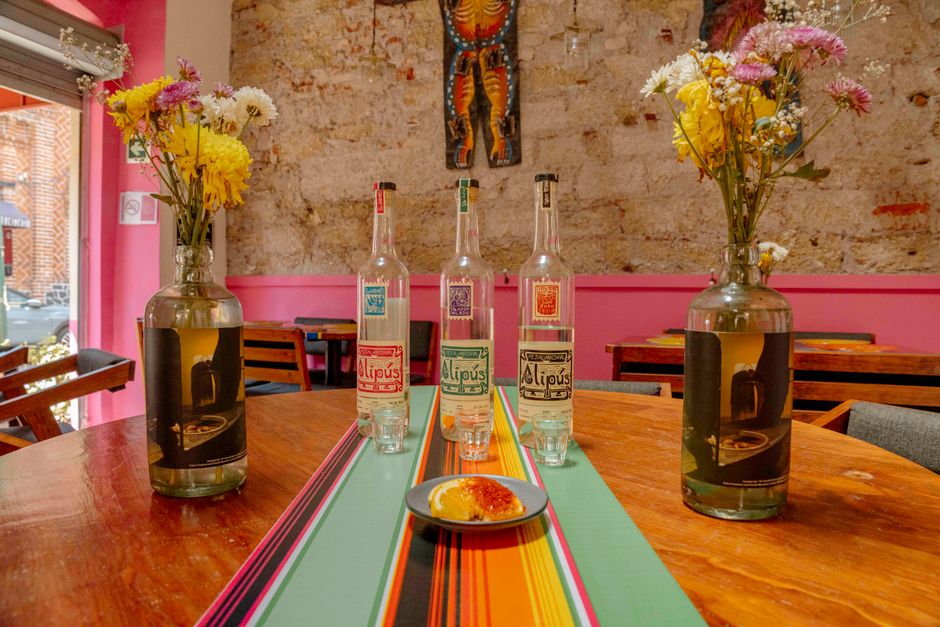
Mezcal is a distilled spirit, and distillation is itself a form of preservation. An unopened bottle kept upright in a cool, dark place will hold its character for years. Once you break the seal, oxygen slowly begins changing the spirit, so an opened bottle is best finished within a year or two if you want it tasting close to the day you opened it.
How To Store Mezcal Opened And Unopened Bottles
The short version: unopened bottles want cool, dark, and upright. Opened bottles want the same things, plus less air in the bottle and a tighter seal. That is the whole game.
Mezcal is roughly 40% alcohol by volume in most commercial bottlings, though it ranges from around 40% up into the 50s for some expressions. That alcohol content is high enough to discourage microbial growth, which is why the spirit does not spoil the way wine or beer does. What changes mezcal over time is chemistry, not biology: oxygen reactions, light exposure, heat, and evaporation.
Think of storage as slowing four things down:
- Oxidation — oxygen reacting with aroma and flavor compounds
- Light damage — ultraviolet light breaking down delicate molecules
- Heat — accelerating every chemical reaction, including the ones you do not want
- Evaporation — alcohol and water escaping through a poor seal or a partly empty bottle
Every storage decision you make is really a decision about one of those four.
Does Mezcal Go Bad Once It Is Opened?
Mezcal does not spoil, but it does change. There is no point at which an opened bottle becomes unsafe to drink because of bacterial or fungal growth — the alcohol content prevents that. The change is about quality, not safety.
What happens is gradual. Oxygen reacts with aromatic compounds, and the bright, fresh notes that define many mezcals — citrus, green herb, floral, smoke — tend to fade first. Some drinkers describe an opened bottle as becoming flatter or more muted over time. Others find certain mezcals soften in a way they like. Both reactions are real, and which one you notice depends on the bottle and your palate.
The pace depends heavily on how much is left. A nearly full bottle has little headspace, meaning little oxygen in contact with the liquid. A bottle that is one-quarter full has a large volume of air above the spirit, and that air keeps working on it. This is the single biggest factor most people overlook.
As a practical matter, many enthusiasts aim to finish an opened bottle within a year or two. That is a rough working guideline, not a rule backed by controlled trials. No one has published a definitive timeline for how fast a given mezcal degrades, because it varies by spirit, seal, temperature, and how much air is in the bottle.
Why Does Light Matter So Much For Mezcal?
Ultraviolet light is chemically active. It carries enough energy to break molecular bonds, and in a distilled spirit those bonds hold the aroma compounds that make one mezcal smell different from another.
This is well established in the broader world of spirits and beverages. Clear glass offers essentially no protection from UV light. That is why so many wines and beers are sold in brown or green glass — the tint filters some of the damaging wavelengths. Many mezcal bottles, by contrast, are clear, and some are deliberately striking pieces of glasswork. Attractive on a shelf. Vulnerable to light.
The fix is simple: keep bottles out of direct sunlight and away from strong artificial light. A closed cabinet, a pantry, or a box works. If you keep mezcal on open display because you enjoy looking at it, that is a legitimate choice — just know you are trading some aroma longevity for the view.
A detail worth knowing: the damage from light is cumulative. A bottle that sits in sun for a few hours a week, over months, accumulates more change than one exposed once. Consistent shade beats occasional darkness.




Does Temperature Really Change How Mezcal Ages In The Bottle?
Yes, and more than most people expect. Chemical reaction rates generally increase as temperature rises. A warmer bottle is a bottle where oxidation, evaporation, and light-driven reactions all move faster.
What counts as a good temperature? There is no official standard set specifically for mezcal storage. The general guidance used across distilled spirits is to keep bottles at a stable, moderate room temperature and to avoid swings. A closet or cabinet inside a climate-controlled home is usually fine. A garage, attic, or windowsill in a hot climate is not.
Stability matters as much as the number. Repeated heating and cooling causes the liquid to expand and contract, which can work against the closure and let more air exchange in and out. A bottle stored at a steady moderate temperature generally fares better than one stored at a slightly cooler average but subjected to daily swings.
One thing that does not help: the freezer. Some people chill spirits before serving, which is reasonable for a drink you are about to pour. Long-term freezer storage is a different matter, and there is no good evidence it protects mezcal better than a cool cupboard. It mostly adds moisture and temperature cycling.
Should You Store Mezcal Upright Or On Its Side?
Upright. Always upright for spirits.
The reason is the closure. High-alcohol liquids are harsh on cork. Storing a spirit bottle on its side keeps the liquid in constant contact with the cork, and over long periods that contact can degrade the cork and leach cork flavor into the spirit. Wine is stored on its side to keep the cork moist so it does not dry out and let air in. Spirits do not need that, and the trade-off runs the other way.
Upright storage also keeps the liquid surface area exposed to air at a minimum, since the neck is narrow. Lay a bottle down and you increase the surface area in contact with whatever air is inside.
If your bottle has a cork, check it periodically. A cork that has dried, cracked, or shrunk will let air in no matter how well you store the bottle. Screw caps and synthetic closures generally seal more reliably over time, which is one reason they are common on spirits.
What Is The Best Way To Store A Partly Empty Bottle?
Reduce the air. That is the whole strategy.
When a bottle gets down to a small amount of liquid, the headspace is large and the oxygen in it has plenty of surface to work on. A few practical options:
- Transfer to a smaller bottle. Moving the remaining mezcal into a clean, smaller glass bottle with a tight seal cuts the headspace dramatically. This is the most effective step.
- Use an inert gas blanket. Products sold for wine preservation spray a layer of inert gas, typically argon, over the liquid. Argon is heavier than air and does not react with the spirit. This can help, though evidence specific to mezcal is limited.
- Keep the cap tight and the bottle upright. Basic, but it matters. A loose cap lets vapor escape and air enter.
- Skip the vacuum pump. These are marketed for wine, and pulling a vacuum can also pull volatile aroma compounds out of the spirit. It is not a good trade for a high-alcohol drink.
One more point: a bottle that is nearly empty and stored warm will change faster than the same bottle stored cool. If you plan to keep a small pour for a special occasion, put it somewhere cool and dark and accept that it will still drift over time.
Does The Bottle Or Closure Type Affect Storage?
Yes, and it is often overlooked because people focus on the liquid.
Closure quality determines how much air exchange happens. A well-fitted cork or a good screw cap limits it. A loose natural cork, or one that has dried out, allows more. Natural cork is also variable — no two corks seal identically, which is part of why bottle-to-bottle variation exists even in the same release.
Bottle color matters for the light question covered above. Clear glass lets more UV through than amber or dark glass. Some producers use dark glass specifically for this reason.
Bottle shape and headspace matter too. A bottle with a wide body and a lot of empty space above the liquid exposes more surface area than a narrow one. This is a minor factor compared to temperature and light, but it is real.
Common Storage Mistakes Worth Avoiding
Most mezcal storage problems come from a short list of habits.
- Keeping bottles on a sunny windowsill or open shelf in bright light
- Storing above the refrigerator, in an attic, or in a hot garage
- Laying bottles on their side, which degrades corks
- Leaving a nearly empty bottle open to the air for months
- Assuming a sealed bottle is immune to heat and light — it is not, just slower to change
None of these will make mezcal unsafe. They will make it taste less like what the producer intended. For a spirit where aroma is the whole point, that is the loss that matters.
Frequently Asked Questions
How long does opened mezcal last?
It stays safe to drink indefinitely because of its alcohol content, but aroma and flavor quality typically decline over months to a couple of years. Many enthusiasts aim to finish an opened bottle within about a year or two.
Should mezcal be refrigerated after opening?
No. Refrigeration is not necessary and offers no clear advantage over a cool, dark cupboard. The main risks to mezcal are light, heat, and air, not spoilage.
Can you store mezcal in the freezer?
There is no good evidence that freezing protects mezcal better than cool cupboard storage. It mainly adds temperature cycling and moisture, so a stable, moderate spot is the better choice.
Does mezcal expire if unopened?
Unopened mezcal does not expire in the food-safety sense, and a well-stored bottle can hold its character for years. Heat, light, and a poor seal will still gradually change it over time.
