
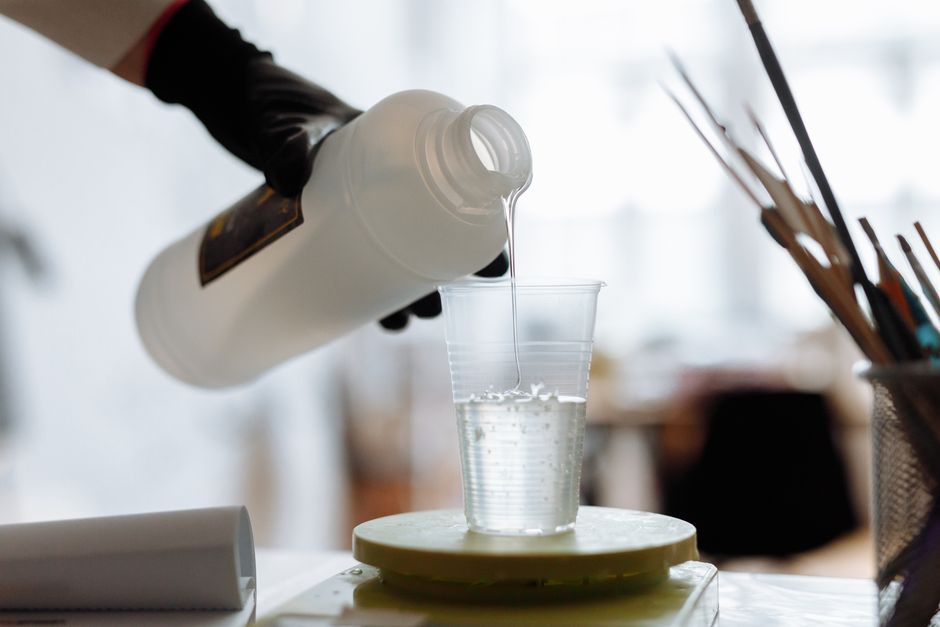
Epoxy resin does not really “go bad” on a calendar date. It degrades when it is exposed to oxygen, moisture, and temperature swings, so the way you store it matters more than how long you have owned it. Keep unopened containers sealed and upright in a cool, dark, dry place, and keep opened containers tightly closed with as little air inside as possible. Stored that way, most epoxy resins hold their working properties for well over a year, and many manufacturers print a shelf life of 12 to 24 months from the date of manufacture.
How To Store Epoxy Resin And Extend Its Shelf Life
Epoxy is a two-part system. The resin and the hardener are separate liquids that only begin reacting when you mix them. As long as they stay apart, the clock is mostly paused. The enemies are the ones you would expect: air, water, heat, and light.
The resin side is usually the more forgiving of the two. The hardener side is where shelf life tends to run out first, because many hardeners are more sensitive to moisture and to the carbon dioxide in air. That is why a kit can sometimes have a resin that still pours fine while the hardener has thickened, darkened, or started to crystallize.
Here is what actually happens as epoxy ages:
- Moisture absorption. Resin and hardener both pull water from humid air. Water reacts with the hardener and can throw off the mix ratio, leading to a soft or sticky cure.
- Oxidation. Oxygen reacts slowly with the liquids, causing color shift and a gradual rise in viscosity.
- Carbon dioxide exposure. Hardeners, especially amine-based ones, can react with CO2 in air to form a surface film or cloudiness.
- Heat. Warmer temperatures speed up every one of these reactions. Cooler storage slows them down.
- UV light. Sunlight can degrade both parts and is a major cause of yellowing over time.
The practical takeaway: store cool, store dark, store sealed. That is the whole game.
What Temperature Should You Store Epoxy Resin At?
Aim for a stable, moderate temperature rather than a cold one. Most manufacturers recommend storing epoxy between roughly 60°F and 75°F (about 15°C to 24°C). The exact range varies by product, so the label on your kit is the number that matters most.
Stability matters as much as the number. Repeated warming and cooling is harder on epoxy than sitting at a consistent temperature, because temperature swings cause the container to expand and contract, which pulls air in and pushes moisture around. A garage that hits 95°F in summer and 40°F in winter is a poor storage spot even if the average looks reasonable.
Cold is a common source of confusion. Many epoxy resins will thicken, cloud, or crystallize when stored below about 60°F. This is usually not permanent damage. Warming the sealed container gently — a warm room, or a water bath of warm (not hot) water — often returns it to a normal, clear liquid. Do not use a microwave or open flame, and do not overheat it, because excessive heat can damage the chemistry. If warming does not restore it, the product may be past recovery.
Do You Need To Store Epoxy Resin In A Sealed Container?
Yes, and the seal is the single most important factor for an opened kit. Once you break the factory seal, the clock starts. Air and humidity get in every time you open the lid.
A few habits make a real difference:
- Wipe the rim and threads clean before closing. Dried resin on the threads prevents a tight seal.
- Press or squeeze out as much air as you can before sealing a partially used container, or transfer the liquid to a smaller container that leaves less headspace.
- Use the original lid if it still seals. If it does not, a layer of plastic wrap under the lid, or a tight secondary container, helps.
- Keep the two parts in their own labeled containers. Never mix leftovers back into the main supply — a trace of hardener in the resin jug will slowly ruin the whole batch.
One detail people miss: a “sealed” container is not truly airtight once the factory seal is gone. Plastic squeeze bottles and pails let a small amount of moisture vapor pass through over months. For long-term storage of an opened kit, a secondary sealed container or a desiccant pack in the storage box can help, though the evidence that desiccants meaningfully extend epoxy shelf life is limited. It is a reasonable precaution, not a proven fix.
Should You Store Epoxy In The Fridge Or Freezer?
No. Cold storage is a common myth, and it causes more problems than it solves.
Refrigeration and freezing push epoxy below the temperature where many resins thicken or crystallize, and they introduce condensation. When you pull a cold container into a warm room, moisture condenses on and inside it — exactly the water you are trying to keep out. Freezing can also separate the components in some formulations.
The better move is a cool, dark cabinet or box in a temperature-stable room. If your only space is a hot garage, a small insulated cabinet or a cooler with a temperature buffer is a more sensible choice than the refrigerator.
How Long Does Epoxy Resin Last?
Most manufacturers list a shelf life of about 12 to 24 months from the date of manufacture for an unopened kit. Opened kits typically have a shorter working window, but “shorter” is not a fixed number. How long your specific epoxy lasts depends on the formulation, the hardener chemistry, and how well you store it.
Two things are worth separating here. Shelf life is how long the unmixed product stays usable. Pot life is how long the mixed product stays workable before it starts to gel. These are different numbers, and confusing them leads people to blame storage for a problem that is really about working time.
Signs that epoxy is past its useful life include:
- Hardener has darkened significantly or turned cloudy.
- Liquid has thickened noticeably or formed lumps or crystals that will not clear with gentle warming.
- A strong, sharp, or ammonia-like smell that was not there before.
- A test batch cures soft, sticky, cloudy, or unevenly, or does not fully harden.
If any of these show up, do a small test pour before committing a project to it. A test batch is the only reliable way to know whether aged epoxy will still cure correctly.
Does Epoxy Resin Ever Actually Expire?
Yes, but the date on the label is a guideline, not a hard cutoff. Epoxy degrades gradually, and the changes are usually about performance rather than a sudden failure. A resin stored well past its printed date may still work fine. A resin stored badly can fail well before it.
The most common failure from age is a cure that does not fully harden, or a finish that stays tacky or discolors. This happens because the hardener has absorbed moisture or partially reacted, throwing off the balance between the two parts. When the ratio is off, the chemistry cannot complete, and the result is a weak or sticky cure.
This is also why you should never “fix” old epoxy by adding extra hardener. Adding more of one part does not correct an off-ratio mix. It usually makes the cure worse. Follow the manufacturer’s ratio exactly, by weight if the label specifies weight.
Practical Storage Checklist
If you want one simple routine, this covers most of it:
- Store at a stable 60°F to 75°F (15°C to 24°C), away from direct sun.
- Keep containers upright and tightly closed, with minimal air inside.
- Keep resin and hardener separate and clearly labeled.
- Wipe rims clean before sealing to protect the seal.
- Avoid the fridge, freezer, and temperature-swinging garages.
- Do a small test batch before using older product on a real project.
None of this is complicated. The reason epoxy fails in storage is almost always one of three things: too much heat, too much moisture, or too much air. Control those, and your epoxy will stay usable far longer than most people expect.
Frequently Asked Questions
How long does unopened epoxy resin last?
Most manufacturers list a shelf life of 12 to 24 months from the date of manufacture for an unopened kit. Stored cool, dark, and sealed, many resins remain usable beyond that window.
Can you store epoxy resin in the refrigerator?
No, refrigeration is not recommended because cold causes thickening or crystallization and creates condensation when the container warms up. A cool, dark, temperature-stable cabinet is a better choice.
What happens if epoxy resin freezes?
Freezing can thicken or crystallize the resin and may separate components in some formulations. Gentle warming of a sealed container sometimes restores it, but if it stays cloudy or lumpy, test a small batch before using it.
How can you tell if epoxy resin has gone bad?
Warning signs include darkened or cloudy hardener, thickened or lumpy liquid, an unusually sharp smell, and a test batch that cures soft, sticky, or uneven. A small test pour is the most reliable check.
