
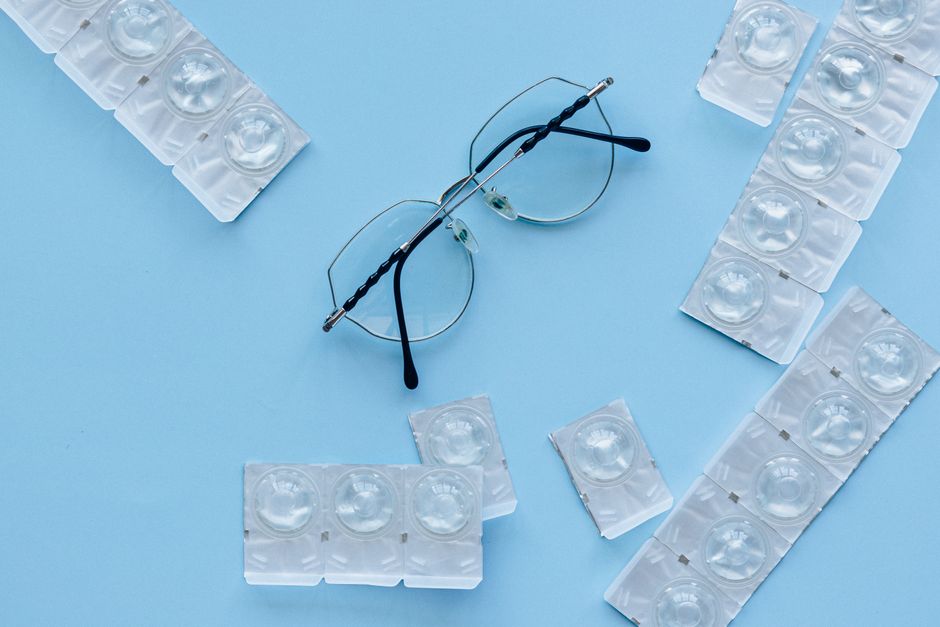
Storing contact lenses overnight is simple once you know the rules: wash and dry your hands, place each lens in its correct case chamber, fill the case with fresh multipurpose solution or the solution your eye doctor prescribed, close the caps, and leave the lenses to soak until morning. Never use tap water, never top off old solution, and never sleep in lenses unless your eye doctor specifically prescribed extended-wear lenses for that purpose.
That is the short version. The details matter more than most people realize, because the habits people pick up around lens storage are a common source of eye infections. This guide walks through each step, explains what the solution actually does, and covers the mistakes that cause the most problems.
How To Store Contact Lenses Overnight Step By Step
The full routine takes under a minute. Doing it in the same order every night is what keeps it reliable.
- Wash your hands with soap and water, then dry them with a clean cloth. Water on your hands can carry organisms you do not want near your eyes.
- Remove one lens at a time. Take out the right lens first if that helps you keep track of which is which.
- Place the lens in the correct chamber. Most cases are marked R and L. Mixing them up is not dangerous, but it can cause discomfort if your prescription differs between eyes.
- Fill the case with fresh solution to the fill line. Use only the solution your eye doctor recommended or a multipurpose solution labeled for storage.
- Close the cap tightly. A loose cap lets the solution evaporate or become contaminated.
- Repeat with the second lens. Use fresh solution in the second chamber too.
- Empty and rinse the case in the morning after inserting your lenses, then leave it open to air dry.
The morning step is the one people skip most often. A case that stays closed and damp all day becomes a place where microorganisms can multiply. Leaving it open to dry is not optional housekeeping; it is part of the disinfection process.
What Does Contact Lens Solution Actually Do?
Multipurpose solution does three jobs at once: it cleans, it disinfects, and it keeps the lens moist. The disinfecting step is the one that protects your eye.
Hydrogen peroxide systems work differently. They use a special case with a neutralizing disc that converts the peroxide to a gentle saline solution over several hours. That is why you cannot put a lens soaked in peroxide directly into your eye — it must complete the full neutralization time first. These systems are effective, but only if you follow the timing the manufacturer specifies.
Saline alone is not a disinfectant. It rinses and stores, but it does not kill organisms. Some people keep a bottle of saline around and assume it works like multipurpose solution. It does not, and using it as your only storage solution leaves lenses unprotected.
One clarification worth making: the solution in your case is doing work while you sleep. By morning, it has been sitting for hours and its disinfecting activity has largely been spent. That is why fresh solution every night matters, and why reusing yesterday’s solution is not the same as storing your lenses.
Why Is Tap Water Dangerous For Contact Lenses?
Tap water is not sterile, and that is the whole problem. It can contain bacteria, fungi, and free-living amoebae that are harmless to drink but harmful to the surface of the eye.
The organism doctors worry about most is Acanthamoeba, a single-celled organism found in water sources including tap water, well water, swimming pools, hot tubs, and lakes. Contact lens wearers who expose their lenses or cases to water are at higher risk of Acanthamoeba keratitis, a rare but serious corneal infection. It is difficult to treat and can cause lasting vision damage.
This is why the rules are strict and why they are not just about the lens itself:
- Do not rinse lenses or cases with tap water.
- Do not store lenses in tap water, even for one night.
- Do not swim or shower while wearing lenses, or if you must shower with them, keep your eyes closed.
- Do not use homemade saline solutions.
Cases matter here too. Rinsing your case under the tap and putting it away damp is a common habit and a real risk. Use fresh solution to rinse the case, or rinse with water and let it dry completely before closing it.
How Often Should You Replace Your Contact Lens Case?
Replace your case at least every three months. This is a widely repeated recommendation in eye care, and it reflects the fact that cases accumulate biofilm over time — a thin layer of organisms that is hard to remove with rinsing alone.
Replace it sooner if you notice any of the following:
- Cracks or chips in the plastic
- A film or residue that will not rinse away
- A cloudy appearance
- A damaged or loose cap
Some clinicians suggest replacing the case more often, and some suggest less. The three-month mark is a reasonable, commonly used standard rather than a hard biological threshold. What matters more than the exact interval is that the case gets emptied, rinsed, and air-dried daily, and that it gets replaced when it shows wear.
Can You Reuse Or Top Off Contact Lens Solution?
No. Topping off means adding new solution to the old solution already in the case. It is one of the most common mistakes, and it undermines the entire point of storing lenses overnight.
Old solution contains organisms and debris that the disinfectant has already neutralized or that have survived. Adding fresh solution to it dilutes the fresh solution’s disinfecting strength and leaves the lens sitting in a contaminated mixture. The correct approach is to dump the old solution out completely, rinse the case, and refill with fresh solution every single night.
The same logic applies to the solution bottle. Do not let the tip of the bottle touch your fingers, your eye, or the case. Contact with any surface can introduce organisms into the bottle. Close the bottle after each use and check the expiration date.
What Happens If You Sleep In Your Lenses By Mistake?
Occasional accidental overnight wear is common. The main concern is that a lens left on the eye overnight reduces oxygen reaching the cornea and traps organisms against its surface, which raises the risk of infection and inflammation.
If it happens, remove the lenses as soon as you can, give your eyes a rest, and watch for symptoms over the next day or two. Warning signs that need prompt attention from an eye doctor include:
- Eye pain that does not go away
- Redness that worsens
- Light sensitivity
- Blurred vision
- A feeling that something is stuck in your eye
- Discharge
Do not wait to see whether symptoms improve on their own. Corneal infections can progress quickly, and early treatment matters. This is not a situation to manage with over-the-counter drops and hope.
Routine overnight wear is a different question from an occasional slip. Only certain lenses are approved for extended or continuous wear, and that decision belongs with your eye doctor based on your eyes and your prescription. Standard daily-wear lenses are not designed to be slept in.
Which Solution Should You Use For Overnight Storage?
Use the solution your eye doctor recommended for your specific lenses. Not all solutions work with all lens materials, and some people develop sensitivity to certain preservatives over time.
A few general points:
- Multipurpose solutions are the most common choice and handle cleaning, disinfecting, and storage in one bottle.
- Hydrogen peroxide systems are effective but require their matching case and full neutralization time.
- Saline is not a disinfectant and should not be your storage solution on its own.
- Never mix solutions from different systems in the same case.
If your eyes sting, itch, or feel irritated after inserting lenses stored in a particular solution, tell your eye doctor. Switching solutions is often straightforward, but the choice should be guided by someone who can examine your eyes rather than by trial and error.
What Are The Most Common Overnight Storage Mistakes?
The same handful of errors show up again and again, and most of them come down to convenience.
- Reusing or topping off old solution
- Storing lenses in tap water
- Skipping hand washing before handling lenses
- Leaving the case closed and damp all day
- Using a cracked or old case
- Switching to saline as a storage solution
- Sleeping in daily-wear lenses
None of these take much effort to fix. The routine is short, and once it becomes habit, it is no harder than the shortcuts it replaces. The payoff is a lower risk of the infections and irritation that send contact lens wearers to the eye doctor in the first place.
Frequently Asked Questions
Can I store my contact lenses in tap water overnight?
No. Tap water is not sterile and can contain organisms that cause serious eye infections, so lenses should never be stored in it. Use only fresh contact lens solution in a clean case.
How often should I change my contact lens solution?
Every night. Discard the old solution completely, rinse the case, and refill with fresh solution each time you store your lenses.
Do I need to replace my contact lens case?
Yes, at least every three months, and sooner if it is cracked, cloudy, or has residue that will not rinse away. Daily emptying and air drying between replacements matters just as much.
What should I do if I accidentally slept in my lenses?
Remove them as soon as possible and give your eyes a rest. If you notice pain, redness, light sensitivity, or blurred vision, see an eye doctor promptly rather than waiting to see if it improves.
