
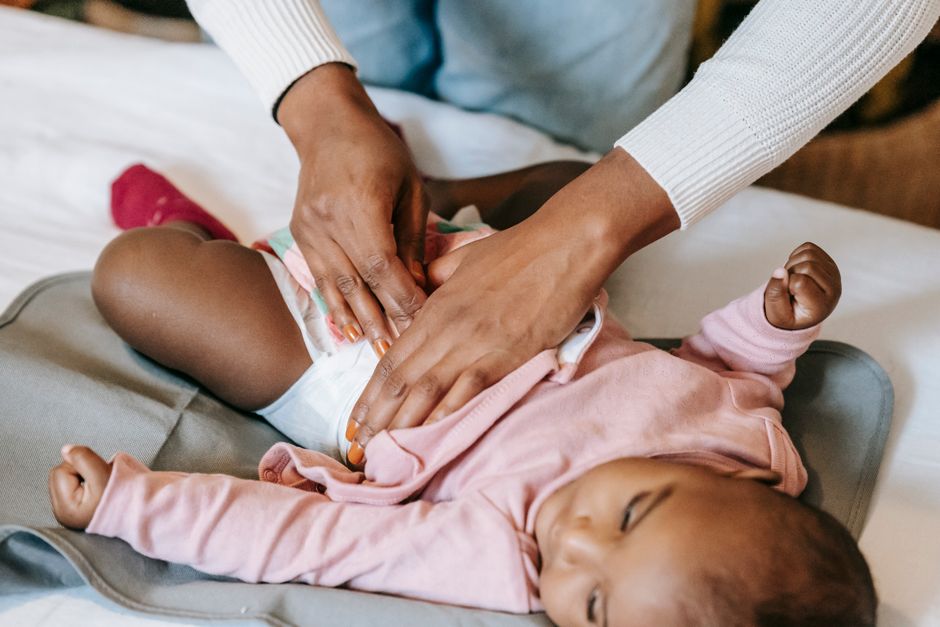
Place your baby on their back for every sleep, and if they roll face down after about 6 months of age, you usually do not need to move them. The risk of sudden infant death syndrome (SIDS) is highest in babies under 6 months. Once a baby can roll both ways on their own, they have the strength and head control to keep their airway clear. Until then, back sleeping is the single most protective thing you can do.
That answer covers the basics. The harder part is what to do at 3 a.m. when your baby keeps flipping onto their tummy and you cannot sit up watching them all night. The rest of this guide walks through why face-down sleep is risky, what the evidence actually shows, and how to handle the gray areas without losing sleep yourself.
Why Is Sleeping Face Down Risky for a Baby?
Stomach sleeping raises the risk of SIDS, and the link is one of the most consistent findings in infant health research. Studies dating back to the early 1990s found that babies who slept on their stomachs died of SIDS at higher rates than babies who slept on their backs. When public health campaigns urged parents to put babies on their backs, SIDS deaths dropped sharply in many countries.
The exact mechanism is not fully settled. Researchers believe several factors may interact. A baby face down may rebreathe their own exhaled air, which can build up carbon dioxide. Their arousal response may be blunted. They may also lose heat less efficiently through the face. None of these alone explains every death, and SIDS is understood as having multiple contributing causes rather than one single trigger.
What matters for you as a parent is simpler. Back sleeping is the position with the strongest evidence of protection. Stomach sleeping is the position with the strongest evidence of added risk.
When Can a Baby Safely Sleep Face Down?
Once your baby can roll from back to tummy and from tummy to back on their own, they can choose their own sleep position. That usually happens somewhere between 4 and 7 months, though every baby is different. The key is both directions, not just one.
When a baby can roll both ways, they have the motor control to lift and turn their head. They can move away from a position that blocks their breathing. At that point, most guidance says you do not need to flip them back onto their back if they roll onto their stomach during sleep.
You should still place them on their back at the start of every sleep. What they do after that is their choice, and interrupting it can actually wake them unnecessarily.
What if my baby rolls onto their tummy but cannot roll back yet?
If your baby can roll onto their tummy but not back again, gently return them to their back. This usually means they are still in the stage where back placement matters most. Keep practicing tummy time during the day to build the strength they need to roll both ways.
How To Stop Your Baby From Sleeping Face Down
You cannot stop a baby from rolling once they have learned how. You can control the sleep environment around them so that if they do end up face down, the risk is as low as possible. This is where most of the practical work happens.
Start with the surface. A firm, flat mattress with a fitted sheet is what you want. Soft mattresses, pillows, bumper pads, and loose blankets all increase the chance that a baby’s face gets pressed into something. Remove them. A crib or bassinet that meets current safety standards is the right place for sleep.
Keep the sleep space bare. No stuffed animals, no positioners, no wedges. Baby sleep positioners were marketed for years as a way to keep babies on their backs, but regulatory agencies have warned against them. They pose a suffocation risk, and no evidence shows they prevent SIDS.
Room-share without bed-sharing. Having your baby sleep in the same room as you, on a separate surface, is associated with lower SIDS risk. The evidence on room-sharing is fairly strong, and it is recommended by major pediatric bodies.
Offer a pacifier at sleep time. Some studies suggest pacifier use during sleep is associated with lower SIDS risk. The effect size is modest and the evidence is not airtight, but the practice is generally considered reasonable. If you are breastfeeding, wait until feeding is well established before introducing one.
Keep the room from getting too warm. Overheating is considered a contributing risk factor. Dress your baby in light layers and check their chest or back rather than their hands or feet to judge temperature.
- Place baby on their back at the start of every sleep, including naps.
- Use a firm, flat sleep surface with a fitted sheet only.
- Keep the crib free of pillows, blankets, bumpers, and toys.
- Room-share for at least the first several months.
- Avoid overheating and heavy clothing.
- Do not use sleep positioners or wedges.
Does Tummy Time Help Prevent Face-Down Sleeping Problems?
Tummy time builds the neck, shoulder, and core strength a baby needs to lift and turn their head. That strength is exactly what protects them once they start rolling. It also helps prevent flat spots on the back of the head, which can develop when a baby spends too much time on their back.
Start with short sessions while your baby is awake and supervised, and build up gradually. A few minutes at a time, several times a day, is a reasonable starting point. Never leave a baby on their tummy unsupervised, and never use tummy time as a sleep position.
Some parents worry that tummy time will teach a baby to prefer sleeping face down. That is not how it works. Tummy time is for awake practice. Sleep position is a separate habit you set by always placing them on their back.
What About Swaddling and Sleep Positioners?
Swaddling can help a young baby feel calm, but it comes with a catch. Once a baby shows signs of rolling, swaddling should stop. A swaddled baby who rolls onto their stomach may not be able to push back over, and the arms are pinned. That combination is a real hazard.
Sleep positioners are a different story. They are marketed as a way to keep a baby on their back or in a certain position, but regulators have issued warnings about them for years. They have been linked to infant deaths, mostly from suffocation. No evidence supports their use for SIDS prevention.
When Should You Talk to Your Pediatrician?
Bring up sleep position at your well-child visits, especially if your baby is rolling early or late compared with what you expected. Ask about your baby’s specific situation if they have reflux, breathing problems, or a developmental condition. Some babies with certain medical needs require individualized guidance, and that guidance should come from your pediatrician, not from a general article.
Also talk to your doctor if your baby seems to struggle to breathe or turn their head, or if you notice unusual stiffness or weakness. These can be signs of something that needs a closer look. Most babies who sleep face down after rolling are fine, but a conversation with your clinician is the right move when something seems off.
What Does Not Work to Keep a Baby on Their Back
Some strategies are widely tried but not supported by evidence. Propping a baby on their side with rolled blankets is one. It does not reliably keep them in position, and the blankets themselves are a suffocation risk. Placing a baby in a car seat, swing, or bouncer for overnight sleep is another. These are not designed for unsupervised sleep and can let a baby’s head slump forward.
Watching your baby all night is not a solution either. It is not sustainable, and it does not remove the risk in the same way that back placement does. The goal is to set up the environment so that safe sleep happens without you hovering.
The Bottom Line
Back sleeping is the strongest protective step you can take, and it matters most in the first 6 months. Keep the sleep space bare, firm, and free of soft items. Use tummy time during the day to build strength. Once your baby can roll both ways, let them choose their position. If something about your baby’s sleep or development worries you, ask your pediatrician rather than guessing.
Frequently Asked Questions
At what age can a baby sleep face down?
Once a baby can roll from back to tummy and from tummy to back on their own, usually between 4 and 7 months, they can choose their own sleep position. Until then, always place them on their back.
Should I flip my baby back over if they roll onto their stomach?
If your baby can roll both ways, you do not need to flip them. If they can roll onto their tummy but not back again, gently return them to their back.
Do baby sleep positioners prevent face-down sleeping?
No. Sleep positioners have been linked to infant suffocation deaths, and regulators have warned against them. They are not a safe way to keep a baby in position.
Can tummy time stop my baby from sleeping face down?
Tummy time builds the neck and core strength a baby needs to turn their head and roll, which helps once they start choosing their own sleep position. It does not change the need to place them on their back for sleep.
