
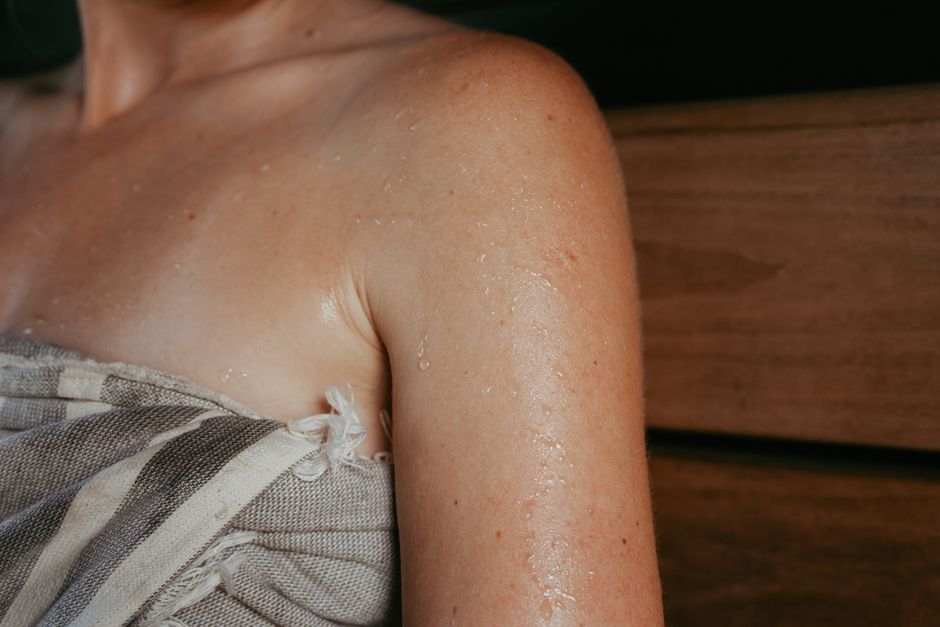
Underarm sweating is normal. Everyone sweats there. But when antiperspirant stops working and you are changing shirts twice a day, it helps to know the full ladder of options — from a better application technique to prescription treatments to botulinum toxin injections. Most people never need to reach the top of that ladder. But knowing where each step sits, and what the evidence actually supports, makes the whole thing less mysterious.
Why Do My Underarms Sweat So Much?
Your underarms contain a dense concentration of eccrine sweat glands — the same type found across your body — plus apocrine glands that become active at puberty. Eccrine glands produce the watery sweat that cools you down. Apocrine glands produce a thicker fluid, and while they are not the main source of visible wetness, bacteria on the skin break down their contents and create odor.
Sweating is controlled by the sympathetic nervous system, which is part of your autonomic (automatic) nervous system. That is why you can sweat when you are anxious, when you are hot, and sometimes when you are neither. The signal is not something you consciously control.
Some people simply have more active sweat glands or a more responsive nervous system. This runs in families. When sweating is excessive and interferes with daily life, doctors call it hyperhidrosis. Primary focal hyperhidrosis — sweating that concentrates in specific areas like the underarms, palms, or feet — is a recognized medical condition, not a personality flaw or a sign of poor hygiene.
It is also worth ruling out secondary causes. Some medical conditions and medications can increase sweating. If your sweating started suddenly in adulthood, is accompanied by other symptoms, or happens mostly at night, that warrants a conversation with a doctor rather than a stronger antiperspirant.
Does Antiperspirant Actually Work — And Are You Using It Right?
Yes, antiperspirants work, and most people use them wrong. The active ingredients — typically aluminum-based compounds such as aluminum chloride, aluminum chlorohydrate, or aluminum zirconium complexes — work by forming a temporary plug at the opening of the sweat gland. They reduce the amount of sweat reaching the skin surface. This is a well-established mechanism, and antiperspirants are regulated as over-the-counter drugs in the US for that reason.
Deodorants are different. They do not reduce sweat. They address odor, usually through antimicrobial ingredients and fragrance. If wetness is your concern, you need an antiperspirant, not just a deodorant. Many products combine both.
The application mistake is timing. Antiperspirant works best applied to clean, completely dry skin at night, before bed. Sweat gland activity is lower while you sleep, which gives the aluminum salts time to form their plugs. Washing it off in the morning is fine — the plug stays in place. Applying it in the morning to skin that is already slightly damp is far less effective.
Give any antiperspirant a fair trial of a couple of weeks of correct nighttime use before deciding it does not work for you.
What About Prescription-Strength Antiperspirants?
When over-the-counter products are not enough, doctors commonly recommend prescription-strength aluminum chloride preparations. These contain a higher concentration of the active ingredient than drugstore products. They are widely used in clinical practice, though individual response varies.
These products can irritate skin, especially at first. Applying them to dry skin at night, and washing them off in the morning, reduces irritation for many people. Some clinicians suggest starting with less frequent use and building up. If irritation is significant, a doctor can advise on alternatives.
Prescription antiperspirants are usually the first step beyond drugstore products, and for a good number of people with mild to moderate excessive sweating, they are enough. For others, they are a bridge to the treatments below.
How To Stop Underarm Sweating From Basics To Botox?
The ladder runs roughly like this: correct antiperspirant use, then prescription antiperspirant, then other prescription options, and finally procedures including botulinum toxin injections. Each step trades convenience for effectiveness, and each has trade-offs worth understanding before you climb.
Botulinum toxin injections (often called Botox, though other brands exist) are approved in the US for severe underarm sweating that has not responded to topical treatment. The toxin blocks the nerve signal that tells sweat glands to produce sweat. In clinical trials, injections reduced underarm sweating for many participants, and the effect typically lasts several months before repeat treatment is needed. It is not a permanent fix, and it requires a clinician to administer it. Common side effects include temporary pain, bruising, and in some cases compensatory sweating elsewhere.
Oral medications called anticholinergics are sometimes prescribed. They reduce sweating across the whole body by blocking the nerve signals involved. Because the effect is body-wide, side effects like dry mouth, dry eyes, and constipation are common. Some clinicians use them for hyperhidrosis, but they are not without drawbacks, and response varies.
Procedures that target the sweat glands directly — including microwave-based treatments and surgical approaches — exist for severe cases. These are less common, carry more risk, and are generally reserved for people who have not found relief elsewhere. A specialist can explain what is appropriate for a given situation.
What Non-Medical Steps Actually Help?
Some practical measures genuinely reduce the problem, though none of them stop excessive sweating on their own.
- Choose breathable fabrics. Cotton and moisture-wicking materials trap less heat than synthetic fabrics that do not breathe.
- Keep the underarm area dry and clean. Regular washing reduces the bacteria that cause odor.
- Manage stress where you can. Since sweating is partly triggered by the nervous system, calming strategies can reduce anxiety-driven episodes, though they will not eliminate a physiological condition.
- Avoid tight, layered clothing in hot conditions when possible, since trapped heat increases sweating.
What does not work: antiperspirant applied to damp skin, deodorant used as a substitute for antiperspirant, and the belief that excessive sweating means you are out of shape or unclean. None of those hold up.
When Should You See a Doctor?
See a doctor if sweating interferes with your daily life — if you avoid certain clothes, avoid shaking hands, or feel self-conscious in social situations. That level of impact is a legitimate reason to seek help, and it is exactly what hyperhidrosis treatment is for.
Also see a doctor if the sweating is new or changed. Excessive sweating that appears suddenly in adulthood, occurs mostly at night, or comes with symptoms like weight loss, fever, or palpitations can sometimes point to an underlying condition. That does not mean something is wrong — but it is worth checking rather than assuming.
Primary focal hyperhidrosis, the kind that starts in childhood or adolescence and concentrates in specific areas, is generally not dangerous. It is a quality-of-life issue, and a treatable one. A primary care doctor or dermatologist can help you work through the options in order, starting with the basics.
Frequently Asked Questions
Does Botox permanently stop underarm sweating?
No. Botulinum toxin injections reduce underarm sweating for a limited time, typically several months, and repeat treatment is needed to maintain the effect. It is not a permanent solution.
Can I use regular deodorant to stop sweating?
No. Deodorants address odor, not sweat production. You need an antiperspirant, which contains aluminum-based ingredients that temporarily block sweat gland openings.
Is excessive underarm sweating a sign of a health problem?
Usually not. Primary focal hyperhidrosis is a common condition that is not dangerous, though sweating that starts suddenly in adulthood or occurs mostly at night should be checked by a doctor.
When is the best time to apply antiperspirant?
At night, on clean, completely dry skin. Sweat gland activity is lower during sleep, which lets the active ingredient form its plug more effectively.
