
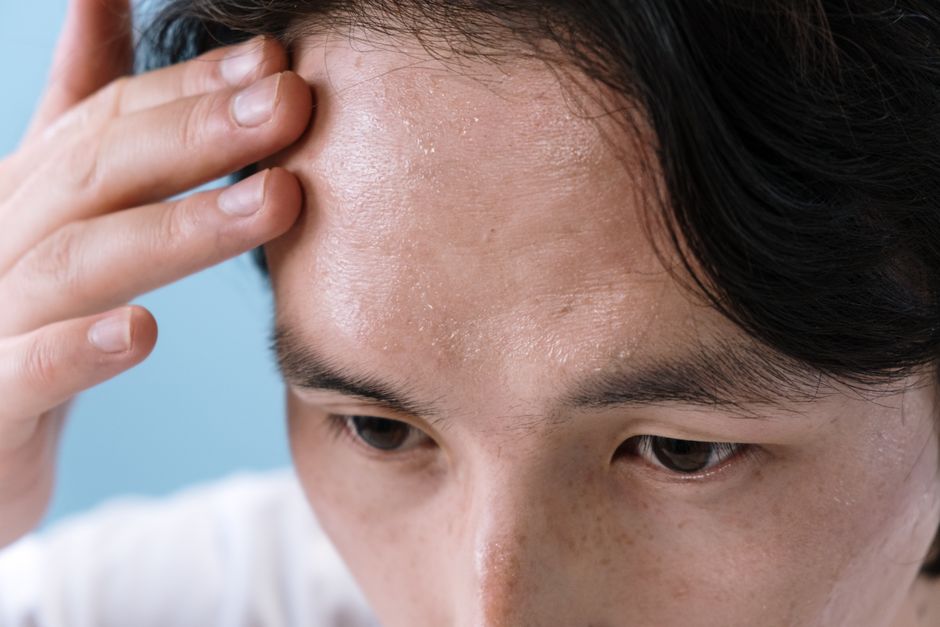
Facial sweating is controlled by a different nerve system than sweating on your palms or underarms, which is why the face needs its own approach. The most effective natural steps are avoiding triggers like spicy food, alcohol, and heat; using a cool compress or cool shower to lower skin temperature; and trying clinical-strength aluminum chloride applied at night, which is the most studied topical option for facial sweating. No natural remedy has been shown in large trials to stop facial sweating completely, but several can reduce how often and how intensely it happens.
Why Does Your Face Sweat So Much?
Facial sweating is normal. Your face has a dense network of eccrine sweat glands, and they respond to heat, emotion, and physical effort. For most people this is just ordinary thermoregulation — the body cooling itself.
What surprises many people is that facial sweating runs on a different circuit than underarm sweating. The nerves that drive sweating on your face come from the sympathetic chain in your upper chest and neck, and they are wired differently from the ones serving your palms and armpits. That is one reason a treatment that works well under the arms may do very little for the face.
When facial sweating becomes excessive — enough to soak through makeup, drip down the temples, or make you avoid social situations — it may meet the definition of craniofacial hyperhidrosis. This is a recognized medical condition, not a personality flaw or a sign of poor fitness.
Some facial sweating has a clear secondary cause. These include:
- Menopause and perimenopause, driven by changing estrogen levels
- An overactive thyroid (hyperthyroidism)
- Diabetes, particularly when blood sugar swings
- Anxiety and panic responses
- Certain medications, including some antidepressants
- Rare conditions such as Frey’s syndrome, which causes sweating on one side of the face while eating
If your facial sweating started suddenly, is one-sided, happens mostly at night, or comes with weight loss or a racing heart, that pattern deserves a medical evaluation rather than a home remedy.
How To Stop Sweating On Your Face Natural Remedies That Actually Help
No natural remedy has been proven in large clinical trials to eliminate facial sweating. What the evidence does support is a set of steps that reduce triggers and lower skin temperature — and for many people that is enough to make a real difference.
Cooling the skin directly
Your sweat glands respond to skin temperature, not just to your core temperature. That means cooling your face and neck directly can quiet the signal faster than cooling your whole body.
A cool, damp cloth held against the forehead, temples, and back of the neck for a few minutes is the simplest version of this. A cool shower works too. Some people find that running cool water over their wrists helps, though the effect is smaller than direct facial cooling.
Adjusting what you eat and drink
Spicy food is a well-documented trigger for facial sweating. So is alcohol, which dilates blood vessels in the skin and can increase flushing and sweating within minutes of drinking.
Caffeine is more individual. Some people sweat more after coffee; others notice nothing. If you suspect it, cutting back for two weeks is a reasonable test.
Hot drinks raise your core temperature slightly even when the drink itself is not spicy. Iced drinks do the opposite. This is a small effect, but it is real.
Managing emotional triggers
Stress and embarrassment can trigger facial sweating within seconds. This is not imagined — the sympathetic nervous system drives both the emotional response and the sweat glands.
Slow breathing, which means breathing out longer than you breathe in, can reduce sympathetic activity. It will not stop a full sweating episode once it starts, but it can lower how easily one begins.
What about sage, tomato, and other folk remedies?
Sage has been used traditionally for sweating, and a small number of studies have looked at sage extract for menopausal hot flashes and sweating. The evidence is limited and the studies are small. It is not established as an effective treatment for facial sweating specifically.
Tomato juice, apple cider vinegar, and herbal teas are widely shared online as facial sweating remedies. No clinical evidence currently confirms any of them work. They are generally harmless, but they should not replace steps with actual supporting evidence.
Does Aluminum Chloride Actually Work On The Face?
Yes — and it is the topical option with the most consistent supporting evidence for excessive sweating, including on the face. This is not a natural remedy in the botanical sense, but it is a topical treatment you apply at home rather than a medication you take.
Aluminum chloride works by blocking the sweat duct at the skin surface. It is not absorbed into the bloodstream in any meaningful amount, and it does not “clog” pores in a harmful way.
The key detail most people get wrong is timing. Aluminum chloride works best applied to dry skin at night, not in the morning. Sweat washes it out of the duct before it can do its job. Apply it before bed, let it dry, and wash it off in the morning.
Facial skin is thinner and more sensitive than underarm skin, so irritation is common if you start with a strong product. Many clinicians suggest starting with a lower concentration and building up, or applying it every other night rather than nightly. Over-the-counter antiperspirants labeled “clinical strength” typically contain aluminum zirconium compounds rather than plain aluminum chloride, and they may be gentler for facial use.
Do not apply aluminum chloride to broken skin, right after shaving, or near the eyes.
Which Medical Treatments Exist When Natural Steps Are Not Enough?
When lifestyle changes and topical antiperspirants do not control facial sweating, several medical options exist. These are not natural remedies, and each carries real trade-offs.
Botulinum toxin injections are used for facial sweating and can reduce sweating in the treated area for several months. The evidence for this use is reasonably strong. The main risk on the face is that the injections can affect nearby muscles, which is why this should be done by a clinician experienced with facial anatomy.
Oral anticholinergic medications reduce sweating across the body. They are sometimes prescribed for generalized sweating. Side effects include dry mouth, dry eyes, constipation, and blurred vision, and they can be difficult to tolerate.
Endoscopic thoracic sympathectomy is a surgical procedure that cuts or clips the nerve chain controlling sweating. It can be effective for facial sweating, but it carries a well-documented risk of compensatory sweating — increased sweating on the back, chest, or legs after surgery. For many people this trade-off is worse than the original problem. This surgery is generally considered a last resort.
If you are considering any of these, a dermatologist is the right starting point.
Everyday Habits That Reduce Facial Sweating
Small changes add up. None of these will stop facial sweating on their own, but together they can lower how often it happens and how much you notice it.
- Dress in light, breathable fabrics, and keep your neck and head uncovered when you can
- Carry a small towel or blotting cloth so you are not caught without one
- Choose water-based makeup and setting powders rather than heavy cream foundations
- Time outdoor activity to cooler parts of the day
- Keep a cool drink nearby in warm rooms
- Talk to a doctor if sweating disrupts your work, sleep, or social life
One thing worth knowing: facial sweating often gets worse in social situations precisely because you are paying attention to it. That feedback loop is real, and it is one reason treating the physical trigger and the anxiety together tends to work better than treating either alone.
When Should You See A Doctor About Facial Sweating?
See a doctor if your facial sweating is new, one-sided, or wakes you at night. Those patterns point toward a secondary cause that needs to be identified.
Also see a doctor if you sweat heavily without an obvious trigger — for example, in a cool room while resting. That pattern is not typical of primary hyperhidrosis and warrants evaluation.
For most people with long-standing facial sweating and no other symptoms, the condition is not dangerous. It is uncomfortable and sometimes socially difficult, but it is not a sign of an underlying disease. That distinction matters, because it changes what kind of help you should look for.
Frequently Asked Questions
Can natural remedies stop facial sweating completely?
No natural remedy has been shown in clinical trials to stop facial sweating completely. Natural steps can reduce how often and how intensely it happens, but complete control usually requires a topical antiperspirant or a medical treatment.
Does sage really help with sweating?
Some small studies have looked at sage extract for menopausal sweating, but the evidence is limited and it has not been established as a treatment for facial sweating. It is not harmful for most people, but it should not replace steps with stronger supporting evidence.
Is it safe to use antiperspirant on your face?
Clinical-strength antiperspirants containing aluminum compounds are used on the face, but facial skin is more sensitive than underarm skin, so irritation is common. Start with a lower concentration, apply at night to dry skin, and avoid the eye area and freshly shaved skin.
When is facial sweating a sign of something serious?
Facial sweating that is new, one-sided, or happens at night should be evaluated by a doctor, as should heavy sweating without a trigger. These patterns can point to thyroid problems, menopause, diabetes, or other conditions that need to be identified.
