
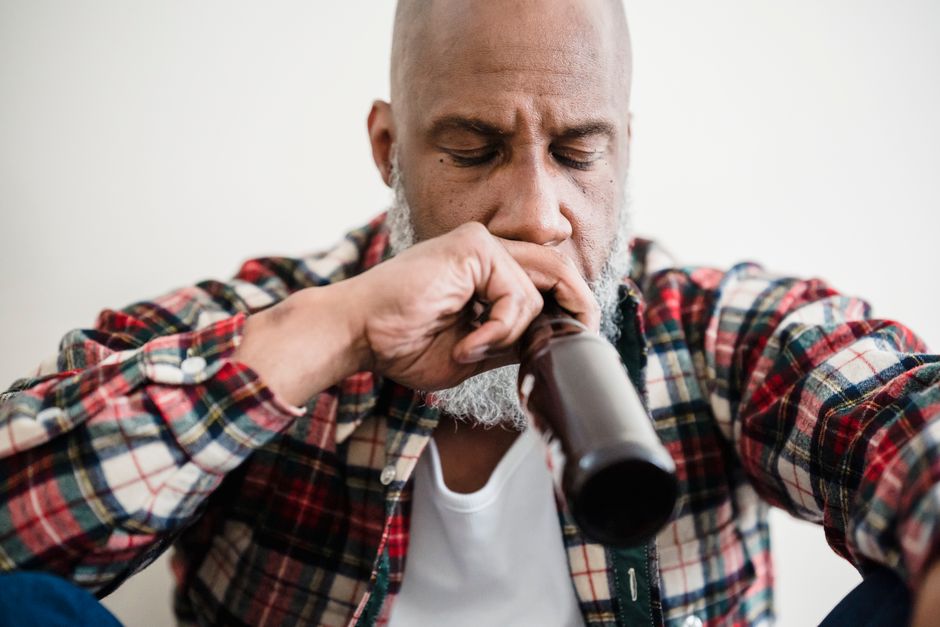
Stress drinking becomes a habit because alcohol and stress get wired together in the brain. The short-term calm from a drink teaches your nervous system that alcohol is the fastest way to feel better. Over time, that lesson becomes automatic — you feel stressed, you reach for a drink, often before you’ve consciously decided to. Breaking the loop means interrupting that automatic link and building other ways to handle stress that don’t involve alcohol.
This isn’t about willpower. It’s about understanding how the habit formed and replacing it methodically. The approach below walks through what’s actually happening in your body and brain, why stress drinking escalates, and practical steps that research and clinical practice support for changing the pattern.
Why Does Stress Make You Want to Drink?
Alcohol acts on the same brain systems that manage stress. When you drink, alcohol boosts the effect of a neurotransmitter called GABA, which slows down brain activity and produces calm. It also dampens glutamate, a chemical that keeps your brain alert and excitable. The result is a short window of relaxation.
Your brain notices this. The next time you feel stress — a hard day, an argument, a deadline — it remembers that alcohol delivered relief quickly. That memory strengthens the connection between stress and drinking.
The problem is what happens next. Your brain works to keep itself balanced. If alcohol keeps boosting GABA and suppressing glutamate, your brain adjusts by reducing its own GABA activity and increasing glutamate. This is called tolerance. Now you need more alcohol to get the same calm, and when you don’t drink, you feel more anxious and on edge than before. The very thing you used to relax starts making stress worse between drinks.
This cycle is well established in addiction research. It’s not a character flaw. It’s a predictable response of a nervous system adapting to a substance.
How Do You Know If Stress Drinking Has Become a Problem?
The line between a habit and a disorder isn’t always obvious. Clinicians use specific criteria to diagnose alcohol use disorder, and those criteria don’t require daily drinking or obvious consequences.
Some signs that stress drinking has moved beyond a casual pattern:
- You drink more or longer than you intended, most times you drink.
- You’ve tried to cut back or stop and couldn’t.
- You spend time thinking about drinking, recovering from drinking, or getting alcohol.
- You have cravings — strong urges to drink — especially when stressed.
- Drinking has caused problems at work, home, or in relationships.
- You’ve given up activities you used to enjoy because of drinking.
- You keep drinking even though you know it’s making anxiety, depression, or a health condition worse.
- You need more alcohol to feel the effect (tolerance).
- You feel shaky, anxious, or unwell when you stop (withdrawal).
Having two or three of these in the past year meets the clinical threshold for mild alcohol use disorder. That’s a diagnosis, not a judgment. It also means the pattern is treatable.
One important note: if you’ve been drinking heavily for a long time, stopping suddenly can be dangerous. Alcohol withdrawal can cause seizures and other serious complications. Medical supervision is strongly recommended in that situation. This is one of the few substance withdrawals that can be life-threatening.
How To Stop Stress Drinking Break The Habit Loop
The habit loop has three parts: a trigger (stress), a behavior (drinking), and a reward (relief). To break it, you work on all three — not just the behavior.
Change the trigger-response gap
Stress will happen. You can’t remove it. What you can change is the space between feeling stressed and reaching for a drink. Even a few minutes of delay weakens the automatic link.
Practical ways to create that gap:
- When a craving hits, set a timer for 15 minutes and do something else. Cravings typically rise, peak, and fall rather than building forever.
- Name what you’re feeling out loud or in writing. “I’m stressed about work” is different from the vague urge to drink.
- Change your physical location. Walk outside, move to a different room, step away from the kitchen.
Replace the reward
Drinking gives your brain a real chemical reward. If you remove it without a substitute, you leave a gap your brain will try to fill. The substitute doesn’t need to feel as strong — it needs to be reliable and repeatable.
Things that genuinely affect stress physiology include:
- Slow breathing — breathing at roughly six breaths per minute activates the parasympathetic nervous system, which calms the body. This is well documented.
- Physical movement. Even a short walk changes stress hormones and mood.
- Social contact. Talking to someone you trust lowers stress reactivity for many people.
- Sleep. Poor sleep amplifies stress and cravings. Protecting sleep is not optional.
These won’t feel as powerful as alcohol at first. That’s expected. The reward pathways need time to rewire. What matters is consistency, not intensity.
Reduce availability and friction
Habits run on cues. If alcohol is visible, easy to reach, and part of your routine, the cue fires constantly. Making it less available adds friction between impulse and action.
This is a behavioral principle, not a moral one. People don’t out-willpower their environment. They change the environment.





What About the Underlying Stress?
Stress drinking is often a symptom of untreated stress. If the source of the stress never changes, the urge to drink keeps returning.
Common drivers that deserve attention:
- Chronic work stress or burnout
- Anxiety disorders, which are highly treatable but often undiagnosed
- Depression
- Relationship problems or social isolation
- Grief, trauma, or unresolved loss
- Financial pressure
Alcohol and anxiety have a particularly tangled relationship. Alcohol can temporarily reduce anxiety, but regular drinking actually worsens anxiety over time. Many people who drink to manage anxiety find that their baseline anxiety climbs the more they drink. This is a well-documented pattern, not a rare exception.
If anxiety or depression is part of the picture, treating that directly often reduces the pull toward alcohol. Therapy approaches such as cognitive behavioral therapy have solid evidence for both anxiety and alcohol use problems.
Can You Cut Back Instead of Quitting?
Some people can. Others can’t, and it’s not always possible to predict who falls into which group.
For mild patterns, reducing frequency and quantity sometimes works. For moderate to severe patterns, or for anyone with withdrawal symptoms, cutting back is often harder than stopping and carries more risk of relapse.
The evidence is clearer for some approaches than others. Medications such as naltrexone and acamprosate have been studied for reducing drinking and supporting abstinence, and both are used in clinical practice. They work best alongside counseling, not alone. If you’re considering medication, that’s a conversation with a doctor, not a self-directed experiment.
Mutual-help groups, including 12-step programs and other peer support models, are widely used. The evidence for them is mixed but generally supportive, particularly for people who engage consistently. They are not the only path, and no single approach works for everyone.
What Makes Breaking the Habit Stick?
Relapse is common and doesn’t mean failure. It means the habit loop is still partly intact and needs more work.
What tends to help:
- Specificity. “I’ll drink less” fails. “I won’t drink on weeknights, and I’ll have a plan for Friday” works better.
- Support. People who tell someone about their goal and check in regularly do better than those who go it alone.
- Tracking. Simply recording when and why you drink reveals patterns you didn’t notice.
- Patience with the timeline. Habit change takes weeks to months, not days. Cravings usually weaken over time but can resurface during high stress.
The goal isn’t to never feel stress. It’s to stop letting stress run straight to alcohol. That shift is learnable, and it holds even when life gets hard.
Frequently Asked Questions
How long does it take to break a stress drinking habit?
Most people notice cravings and automatic urges weakening over several weeks to a few months of consistent change. There’s no fixed timeline, and progress is usually uneven rather than linear.
Is it safe to stop drinking suddenly?
It depends on how much and how long you’ve been drinking. If you’ve been drinking heavily for a long time, sudden stops can cause dangerous withdrawal, including seizures, so medical supervision is strongly recommended.
Can I still drink socially while breaking the habit?
Some people can, but for many, any drinking keeps the stress-alcohol link active. If social drinking reliably triggers the old pattern, it usually works better to pause entirely for a period.
Does stress drinking mean I’m an alcoholic?
Not necessarily. “Alcoholic” isn’t a clinical term. Clinicians diagnose alcohol use disorder based on specific criteria, and a stress drinking pattern may or may not meet that threshold.
