
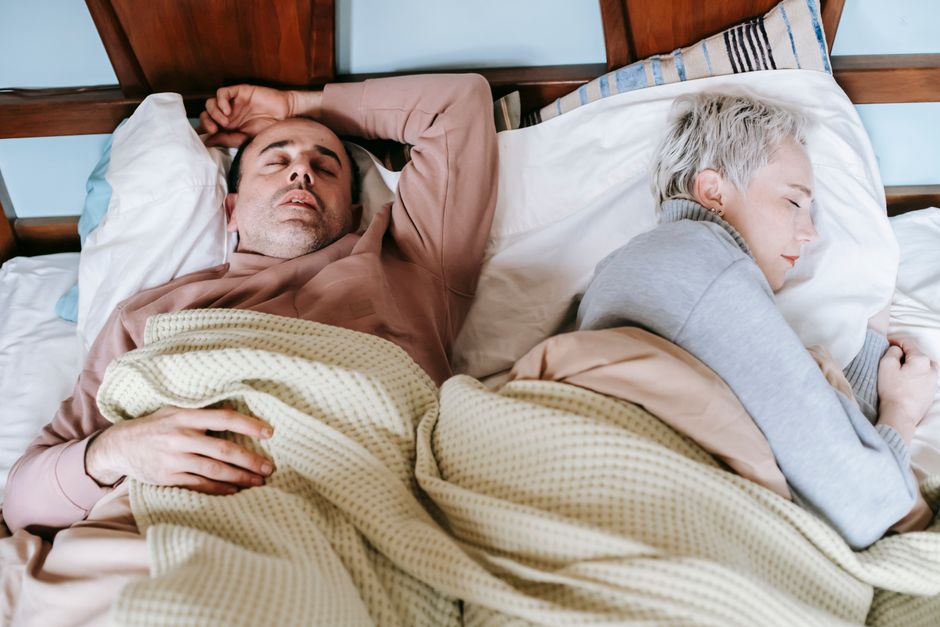
Snoring while awake sounds impossible, but it is real. It is the sound of air squeezing through a partially blocked airway, and it can happen any time you breathe heavily through your mouth. The causes range from nasal congestion to the natural shape of your throat, and the fixes depend on which cause is at work.
What Does Snoring While Awake Actually Mean?
Snoring is a vibration. When you breathe in, air moves past the soft tissues at the back of your throat. If that space is narrow, those tissues flap and vibrate. That vibration is the snore.
During sleep, your muscles relax and the airway narrows further. That is why snoring is mostly a nighttime problem. When you are awake, your muscle tone keeps the airway more open. But if something narrows the passage enough, the same vibration can happen while you are fully conscious.
Awake snoring usually happens during forceful breathing. You might notice it when you breathe in deeply, laugh hard, or exert yourself. Some people hear it when they exhale strongly. The sound is often softer than sleep snoring, but the mechanism is identical.
Why Do Some People Snore While Awake?
Nasal congestion is one of the most common causes. When your nasal passages are swollen or blocked, you switch to mouth breathing. Mouth breathing changes the position of your tongue and soft palate, narrowing the airway behind them. Allergies, colds, sinus infections, and a deviated septum can all create this effect.
Anatomy plays a role too. People with a thick soft palate, a long uvula, large tonsils, or excess tissue around the throat have a naturally narrower passage. That does not cause problems at rest, but any extra narrowing can trigger vibration during active breathing.
Weight is a factor for some people. Excess fat around the neck can press on the airway from the outside. This is the same reason excess weight increases the risk of sleep apnea. The effect is not limited to nighttime.
Less often, awake snoring is linked to a neurological issue. Conditions that weaken the muscles of the throat or palate can make the airway collapsible even when you are awake. This is uncommon, but it is worth knowing that the cause is not always structural.
How To Stop Snoring While Awake: Causes And Fixes
The right fix depends on the cause, so start by identifying yours. If you snore mostly when your nose is stuffy, the solution is different than if you snore during exercise or heavy breathing.
For nasal congestion, the first step is to restore nasal breathing. Saline nasal sprays rinse the passages without medication. Steroid nasal sprays reduce swelling over time but take several days to work fully. Decongestant sprays work quickly but should not be used for more than a few days in a row — prolonged use can make congestion worse.
If allergies are the trigger, antihistamines may help. Identifying and avoiding the allergen is the most reliable approach. If congestion is chronic and one-sided, or if you have facial pain, see a doctor. A deviated septum or nasal polyp may need evaluation.
For anatomy-related snoring, breathing technique matters. Breathe through your nose, not your mouth. Keep your tongue lightly resting on the roof of your mouth, just behind your front teeth. This position opens the airway behind the tongue and reduces vibration.
If you snore during exertion, slow your breathing. Rapid, forceful breaths increase air speed and make soft tissues vibrate more. Paced breathing through the nose often stops the sound within a few breaths.
Weight loss can help if excess neck tissue is the cause. Even modest weight loss can reduce the amount of tissue pressing on the airway. This is not an overnight fix, but it addresses the root problem.
Some people benefit from myofunctional therapy. This is a set of exercises that strengthen the tongue and soft palate. Some studies suggest these exercises reduce snoring intensity, though results vary and more research is needed.
When Awake Snoring Is a Warning Sign
Awake snoring is not always harmless. If you also snore during sleep, wake up gasping, or feel exhausted during the day, you may have obstructive sleep apnea. Sleep apnea is a condition where the airway closes repeatedly during sleep, interrupting breathing.
Untreated sleep apnea is linked to high blood pressure, heart disease, and stroke. It is not something to ignore. A doctor can arrange a sleep study to confirm the diagnosis.
Another warning sign is a voice change. If your voice sounds breathy or weak along with awake snoring, the muscles of your vocal cords or throat may be affected. This can happen with neurological conditions such as myasthenia gravis or certain types of muscular dystrophy.
Difficulty swallowing is another red flag. Swallowing and breathing share the same throat structures. If both are affected, the problem may be more than simple snoring.
Sudden onset of awake snoring in an adult who never snored before deserves medical attention. A new narrowing of the airway can be caused by growths, swelling, or other changes that need evaluation.
Can You Stop Awake Snoring With Breathing Exercises?
Breathing exercises can help in specific cases. If your snoring is caused by mouth breathing or shallow, rapid breaths, retraining your breathing pattern may reduce or stop the sound.
Diaphragmatic breathing is a good starting point. Place one hand on your chest and one on your belly. Breathe in slowly through your nose so that your belly rises more than your chest. Exhale slowly through your mouth or nose. This pattern encourages slower, deeper breaths that create less turbulence in the airway.
Nasal breathing during the day is another habit worth building. If you catch yourself mouth breathing while awake, gently close your mouth and breathe through your nose. Over time, this becomes automatic. It also keeps the nasal passages moist and clear.
Some people find that humming exercises help. Humming forces air through the nose and can improve nasal airflow over time. The evidence for this is limited, but it is harmless and may help if nasal congestion is part of the problem.
What does not work is holding your breath or forcing yourself to stop snoring in the moment. Snoring is a physical response to a narrow airway. You cannot will the tissue to stop vibrating. You can only change the conditions that cause it.
When To See a Doctor About Awake Snoring
Occasional awake snoring during a cold or allergy flare is not usually a concern. It should resolve when the congestion clears. If it persists for weeks without an obvious cause, get it checked.
See a doctor if you have any of these signs:
- Loud snoring during sleep along with daytime sleepiness
- Witnessed pauses in breathing during sleep
- Difficulty swallowing or a change in your voice
- Snoring that started suddenly and has no clear cause
- Snoring accompanied by shortness of breath or wheezing
An ear, nose, and throat specialist can examine your airway directly. They can see whether your nasal passages, palate, or throat are narrowed. They can also check for growths or structural issues that a general exam might miss.
If sleep apnea is suspected, a sleep study is the standard diagnostic test. This can be done in a sleep lab or at home with a portable monitor. The test measures your breathing, oxygen levels, and heart rate during sleep.
Treatment depends on the diagnosis. Nasal obstruction might be treated with medication or surgery. Sleep apnea is often treated with a CPAP machine, which keeps the airway open with gentle air pressure. Oral appliances that reposition the jaw are another option for mild to moderate cases.
What Does Not Cause Awake Snoring
There is a lot of misinformation about snoring. Some claims circulate online without evidence. Being clear about what does not cause awake snoring can save you from unnecessary worry or wasted effort.
Awake snoring is not caused by dehydration. Dry throat can make snoring louder, but dehydration does not narrow the airway enough to cause snoring while awake.
It is not caused by sleeping position, because you are not asleep. Positional changes matter for sleep snoring, not awake snoring.
There is no evidence that dairy products cause snoring. The old claim that milk increases mucus production has been tested and not confirmed. Dairy can make saliva thicker in some people, but this does not narrow the airway.
Alcohol and sedatives can worsen sleep snoring by relaxing the throat muscles. They do not cause awake snoring, because you are not under their influence during the day unless you are actively intoxicated.
Frequently Asked Questions
Is snoring while awake normal?
Occasional awake snoring during nasal congestion or heavy breathing is common and usually harmless. Persistent awake snoring without an obvious cause should be evaluated by a doctor.
Can you snore with your mouth closed?
Yes, but it is less common. Snoring with the mouth closed usually comes from vibration of the soft palate or tongue base, while mouth-open snoring often involves the throat tissues.
Does awake snoring mean I have sleep apnea?
Not necessarily. Awake snoring alone does not diagnose sleep apnea, but if you also snore loudly during sleep and feel tired during the day, sleep apnea is possible and worth testing.
What is the fastest way to stop awake snoring?
Switch to slow nasal breathing and place your tongue lightly on the roof of your mouth. If nasal congestion is the cause, a saline rinse or decongestant spray may provide quick relief.
