
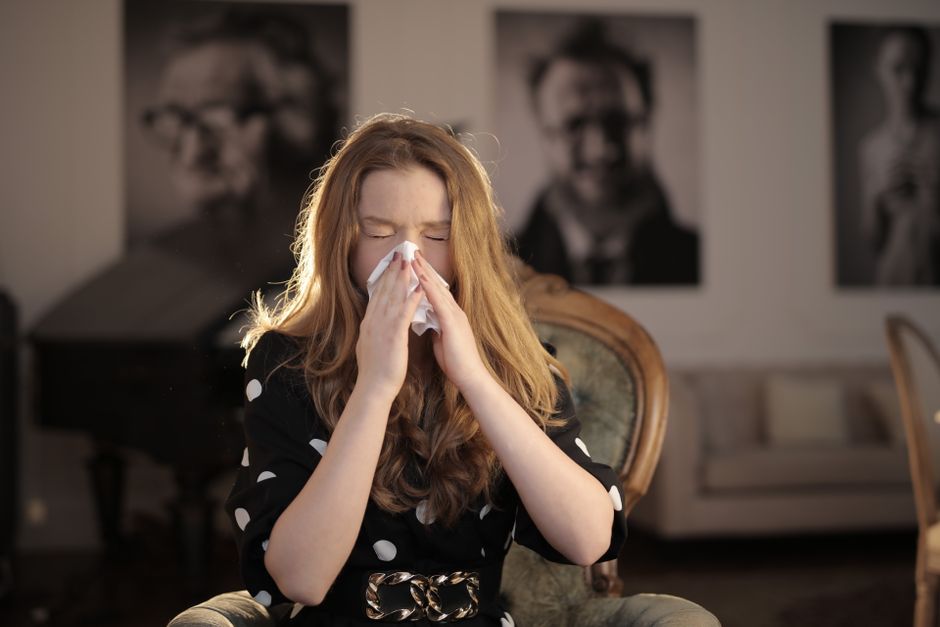
Sneezing during a cold happens because viruses inflame the lining of your nose, and that irritated tissue triggers the sneeze reflex. You cannot switch that reflex off completely while your body fights the infection. What you can do is reduce the triggers, thin the mucus, and calm the irritation so the sneezes become less frequent and less disruptive. Most cold-related sneezing eases as the illness runs its course, which for most adults means somewhere around seven to ten days.
Why does a cold make you sneeze so much?
A sneeze is a protective reflex. Your body detects something irritating the nasal lining and responds by forcing air out at high speed to clear it.
When you catch a cold, a virus infects the cells lining your nose and throat. Your immune system responds with inflammation. The tissue swells, produces more mucus, and becomes more sensitive to anything that touches it. That heightened sensitivity is why a cold can make you sneeze at things that never bothered you before, like a whiff of perfume or a change in air temperature.
This is a useful distinction. The sneezing is not the virus itself acting on you. It is your immune response making your nose hyperreactive. That matters because it tells you what actually helps: reducing the irritation and the mucus, not trying to suppress the reflex directly.
How to stop sneezing from a cold: what actually works
The most reliable approach is to keep your nasal passages moist and clear. Dry, irritated tissue sneezes more. Mucus that sits and thickens causes more irritation. Address both and the reflex quiets down.
Saline nasal rinses or sprays are the most straightforward tool. They flush out mucus and irritants and add moisture to the nasal lining. You can buy sterile saline spray or make a rinse at home. If you make your own, use distilled, sterile, or previously boiled water. Tap water is not safe for nasal rinsing because of the risk of rare but serious infections. This is a genuine safety point, not a formality.
Stay hydrated. Drinking enough fluid keeps mucus thinner, which makes it easier for your nose to clear and less likely to sit and irritate. Water is fine. There is no strong evidence that any specific drink shortens a cold.
Use a humidifier or take a steamy shower. Dry indoor air, especially in winter, dries out nasal tissue and makes it more reactive. Adding moisture to the air you breathe can reduce that irritation. Keep humidifiers clean, since dirty ones can spread mold and bacteria.
Avoid your personal triggers. Smoke, strong fragrances, and sudden temperature changes all provoke sneezing in an already irritated nose. During a cold, your threshold is lower, so things you normally ignore may set you off.
These steps reduce sneezing by addressing its causes. None of them stops the reflex on command, and no product can honestly promise that.
Do antihistamines or cold medicines help sneezing?
Antihistamines are built for allergies, not colds. The sneezing of a cold comes from viral inflammation, not from the histamine release that drives allergic sneezing. That is why standard antihistamines are not a strong match for cold-related sneezing.
Some over-the-counter cold products combine an antihistamine with other ingredients, and older antihistamines like chlorpheniramine or diphenhydramine can dry nasal secretions. That drying effect may reduce sneezing for some people, but it comes with drowsiness and is not targeting the underlying cause. The evidence that antihistamines meaningfully help cold symptoms is weak.
Decongestant sprays can relieve nasal stuffiness, but using them for more than a few days in a row can cause rebound congestion, where the nose becomes more blocked when you stop. Follow the label. Oral decongestants can raise blood pressure and are not appropriate for everyone, so check with a pharmacist or clinician if you have heart disease, high blood pressure, or take other medications.
There is no medication approved specifically to stop cold sneezing. Be skeptical of any product that claims to.
What about sneezing into your elbow and other habits?
You cannot stop the sneeze, but you can stop it from spreading the virus. Cold viruses spread mainly through droplets from your nose and mouth and through contaminated hands.
- Sneeze or cough into a tissue, then throw it away and wash your hands.
- If no tissue is available, sneeze into your upper sleeve or elbow, not your hands.
- Wash hands often with soap and water for at least 20 seconds.
- Keep your hands away from your eyes, nose, and mouth.
- Stay home while you are clearly sick to avoid passing the cold to others.
These habits do not reduce your own sneezing. They reduce the chance you give the cold to someone else, which matters just as much.
When sneezing is not just a cold
Not every bout of sneezing is a cold. Allergies, especially seasonal ones, cause sneezing that can last for weeks and is often accompanied by itchy eyes and a clear runny nose. If your sneezing comes every spring or around pets and dust, allergy is more likely than a cold.
Other possibilities include non-allergic rhinitis, where irritants like smoke or strong smells trigger symptoms without an infection, and, less commonly, other conditions. A cold usually comes with a sore throat, cough, and body aches that allergies do not typically cause.
See a clinician if sneezing and nasal symptoms last more than about ten days without improving, if symptoms get worse after initially improving, or if you have a high fever, severe facial pain, or trouble breathing. These can point to a sinus infection or another problem that needs evaluation.
Does anything shorten a cold?
Most colds resolve on their own. Rest, fluids, and symptom relief are the mainstays. There is no cure, and no product has been shown to reliably shorten a cold in otherwise healthy adults.
Some evidence suggests zinc lozenges may modestly shorten cold duration when started early, but results across studies vary and formulations differ. Zinc nasal sprays have been linked to a loss of smell and should be avoided. If you consider zinc, talk to a pharmacist about the right form and dose, and do not use it in place of medical advice.
Antibiotics do not treat colds because colds are caused by viruses. Taking them for a cold does nothing for your symptoms and adds risk.
The bottom line on cold sneezing
You cannot stop sneezing from a cold on command, but you can reduce it. Keep your nose moist with saline rinses and humidified air, stay hydrated, and avoid smoke and strong irritants. Use cold medicines carefully and know that antihistamines are a weak match for viral sneezing. Cover your sneezes and wash your hands to protect others.
Most colds ease within about a week to ten days. If yours does not, or if symptoms are severe, get medical advice.
Frequently Asked Questions
How long does sneezing from a cold last?
Cold-related sneezing usually eases as the infection clears, often within about seven to ten days. If it lasts longer or keeps getting worse, see a clinician.
Does Benadryl help sneezing from a cold?
Diphenhydramine, the ingredient in Benadryl, is an antihistamine made for allergies and is not a strong match for viral cold sneezing. It may dry nasal secretions and cause drowsiness, but it does not target the cause.
Can you stop a sneeze from coming?
Sometimes pinching your nose or pressing under it can interrupt a sneeze, but this is unreliable and not a treatment. Never hold a sneeze in forcefully, since that can rarely cause injury.
Is sneezing a sign a cold is getting better or worse?
Sneezing alone does not reliably show whether a cold is improving or worsening. Look at the whole picture, including fever, energy, and how your other symptoms are changing.
