
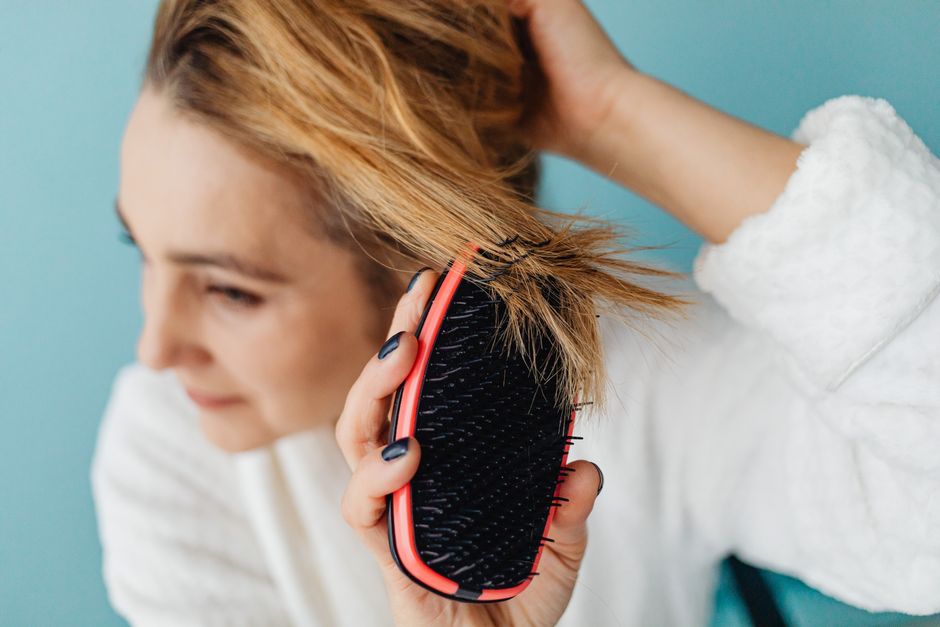
Pulling out your own hair feels impossible to stop because it is not really a willpower problem. The medical name for this behavior is trichotillomania, and it is classified as a body-focused repetitive behavior. People who have it often pull without noticing, which is why trying harder usually fails. The strategies that actually help are behavioral treatments, environmental changes, and sometimes medication — not resolve.
What Is Trichotillomania?
Trichotillomania is a condition in which a person repeatedly pulls out their own hair, most often from the scalp, eyebrows, or eyelashes. It is recognized in the Diagnostic and Statistical Manual of Mental Disorders, the standard reference used by clinicians in the United States.
To meet the diagnostic criteria, the pulling must result in noticeable hair loss, and the person must have tried to stop or cut down. The behavior causes distress or problems in daily life. It is not done to improve appearance or because of a skin condition.
The condition usually begins in childhood or the early teen years. It affects both genders, though it may be diagnosed more often in women, possibly because women are more likely to seek help. Many people live with it for years before telling a doctor.
One detail that surprises people: trichotillomania is not the same as hair loss from a medical cause. The hair loss is self-induced, but the urge is not a choice in the ordinary sense.
Why Willpower Alone Does Not Work
The urge to pull is driven by a habit loop that runs largely outside conscious control. It often happens automatically — while reading, watching television, or lying in bed. By the time a person notices, the pulling has already started.
This is the core reason willpower fails. You cannot out-will a behavior you are not consciously deciding to do in the first place. The brain has linked a specific situation — a certain chair, a certain time of day, the feel of a particular strand of hair — to the pulling action. That link strengthens with repetition.
There is also a sensory or emotional payoff. Some people pull to relieve tension or boredom. Others pull because a specific hair feels “wrong” and removing it brings relief. That relief reinforces the habit, which makes it harder to resist over time.
None of this means the behavior is unstoppable. It means the solution has to target the habit and the triggers, not just the desire to stop.
How To Stop Pulling Out Hair Without Willpower
The most studied approach is a form of cognitive behavioral therapy called habit reversal training. It teaches you to recognize the earliest signals before pulling starts and to replace the action with a competing response.
A competing response is a physical action that is hard to do at the same time as pulling. Common examples include clenching your fists, sitting on your hands, or squeezing a stress ball. The point is not to distract yourself. The point is to interrupt the movement pattern.
Habit reversal training also involves awareness training. This means learning exactly when, where, and how you pull. Many people keep a simple log for a week or two. Patterns often emerge — a specific time of day, a specific activity, or a specific mood.
Another approach is stimulus control, which means changing your environment so pulling is harder to do. This can include:
- Wearing gloves, bandages, or tight-fitting sleeves on your hands
- Cutting hair short or wearing it tied back
- Removing tweezers and other tools from easy reach
- Changing where you sit or what you do during high-risk times
These changes sound minor. In practice, they work because they add friction between the urge and the action. That brief gap is often enough to break the automatic sequence.
Some clinicians also use acceptance and commitment therapy, which focuses on tolerating the urge without acting on it rather than fighting it directly. The evidence for this approach is growing but less established than for habit reversal training.





Does Medication Help?
There is no medication approved by the U.S. Food and Drug Administration specifically for trichotillomania. That is an important fact. Any medication use for this condition is off-label, meaning it is prescribed based on clinical judgment rather than a formal approval for this use.
Some research suggests that a type of antidepressant called an SSRI may help some people, but results have been mixed. Several studies have found limited benefit. A medication called N-acetylcysteine has shown promise in some smaller studies, but the evidence is not strong enough to call it a proven treatment.
This is a case where you should be skeptical of anyone promising a simple pill solution. If a clinician suggests medication, it is reasonable to ask what the evidence is, what the expected benefit is, and what side effects to watch for.
Medication, when used, is usually combined with behavioral therapy rather than used alone.
What Triggers Hair Pulling?
Triggers fall into a few broad categories. Recognizing yours is often the first real step toward change.
Environmental triggers include specific places or objects — a mirror, a desk, a car, a particular chair. Emotional triggers include stress, anxiety, boredom, and even excitement. Sensory triggers involve the feel of a hair that seems coarse, crooked, or out of place.
Many people pull in a trance-like state without any strong emotion at all. Others pull in response to tension and feel relief afterward. These two patterns can require different strategies.
Tracking your own triggers for one to two weeks often reveals more than you expect. You may find that most pulling happens in two or three specific situations, not all day long.
When to Get Professional Help
It is worth talking to a doctor or mental health professional if the pulling causes visible hair loss, if you have tried to stop on your own without success, or if it affects your work, relationships, or self-esteem.
Start with a primary care doctor or a mental health provider who has experience with body-focused repetitive behaviors. Not every therapist is trained in habit reversal training, so it is reasonable to ask directly about their experience with this condition.
Some people also have other conditions alongside trichotillomania, such as anxiety, depression, or skin picking. Addressing these together often makes more sense than treating them separately.
Hair usually grows back once pulling stops, though regrowth can take time and may not be immediate. In some cases where pulling has gone on for years, hair follicles can be damaged. A dermatologist can assess whether regrowth is likely.
What Does Not Work
Simply deciding to stop rarely works on its own. Neither does shaming yourself after each episode. Guilt tends to increase stress, which can increase pulling.
Products marketed as cures for hair pulling — special shampoos, supplements, or devices — generally have no clinical evidence behind them. No study has confirmed these work.
It is also worth knowing that willpower is not a character trait you either have or lack. It is a limited resource, and habits run on a different system entirely. That is why the strategies above focus on changing the situation and the automatic response, not on trying harder.
Frequently Asked Questions
Is trichotillomania a mental illness?
Yes. It is classified as a body-focused repetitive behavior in the DSM, the standard diagnostic reference used by clinicians. It is not a sign of weakness or a bad habit you can simply decide to stop.
Can hair pulling stop on its own?
In some cases, especially in young children, the behavior can fade without treatment. In adults and teens, it more often continues without intervention, which is why behavioral therapy is usually recommended.
Does hair grow back after trichotillomania?
Hair often grows back once pulling stops, but regrowth takes time and varies by person. Long-term pulling can damage hair follicles, so a dermatologist can give a clearer answer for your situation.
What is the best treatment for hair pulling?
Habit reversal training, a form of cognitive behavioral therapy, has the strongest evidence behind it. Medication is sometimes used but no drug is FDA-approved specifically for this condition.
