
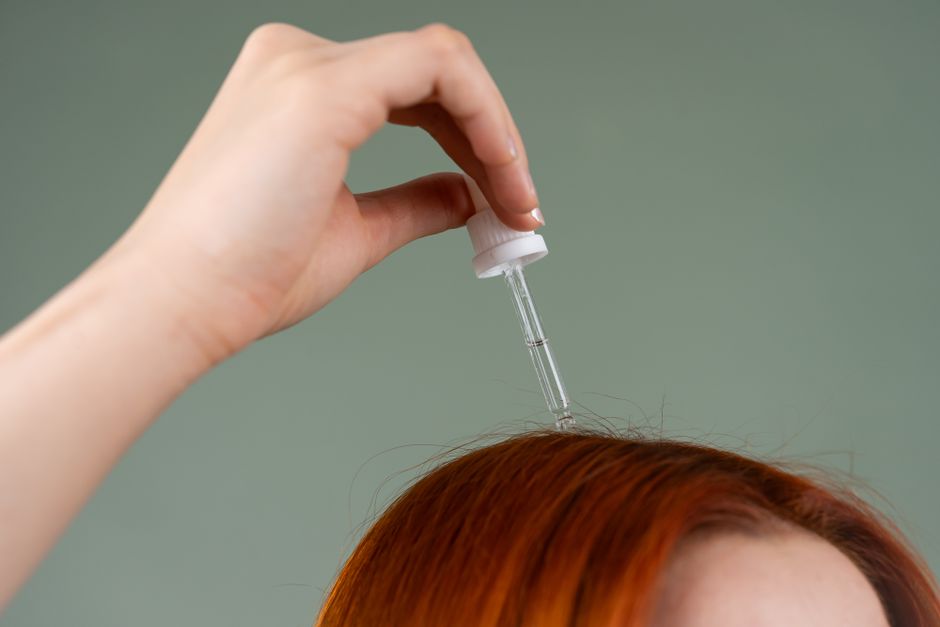
Hair loss from hypothyroidism happens because low thyroid hormone disrupts the normal growth cycle of hair follicles. The fix is not a shampoo or a supplement — it is restoring thyroid hormone levels to normal, which usually requires treatment overseen by a doctor. Once thyroid levels are corrected, hair loss typically slows and regrowth follows, though it takes months rather than weeks.
Why Does Hypothyroidism Cause Hair Loss?
Thyroid hormone influences the growth cycle of every hair follicle on your body. When thyroid hormone levels drop, a large share of follicles get pushed out of the active growth phase and into the resting phase earlier than they should.
Hair grows in cycles. Roughly 90 percent of scalp hairs are in the growth phase (anagen) at any given time, while the rest are in a resting phase (telogen) before they shed and the cycle restarts. Thyroid hormone helps keep that ratio steady. With too little thyroid hormone, more hairs shift into the resting phase at once.
Weeks to months later, those resting hairs fall out together. This is why thyroid-related shedding often shows up gradually and diffusely — thinning across the whole scalp rather than in one patch. It is a shedding pattern, not scarring, and the follicles remain capable of producing hair again once conditions normalize.
One clarification worth making: hair loss from hypothyroidism is usually diffuse and involves the whole scalp. Patchy bald spots, a receding hairline, or a single smooth coin-shaped bald patch are more typical of other conditions — like alopecia areata or pattern hair loss — and should be evaluated separately rather than blamed on the thyroid.
How Do You Actually Stop the Hair Loss?
You stop it by treating the hypothyroidism itself. There is no topical product or supplement that corrects thyroid-driven shedding, because the problem originates in hormone levels, not in the scalp.
The standard treatment for hypothyroidism is thyroid hormone replacement, most commonly levothyroxine. It replaces the hormone your thyroid is not making. When the dose is right and blood levels return to normal, the follicle growth cycle can normalize — and shedding usually settles.
Getting the dose right matters. Too little hormone leaves you under-treated and shedding may continue. Too much can cause its own problems, including palpitations, anxiety, and bone loss over time. Doctors adjust the dose based on blood tests, typically thyroid-stimulating hormone (TSH), and how you feel. This is a process of monitoring and adjustment, not a one-time prescription.
If you are already on thyroid medication and still losing hair, that is worth raising with your doctor. Possible reasons include a dose that needs adjusting, a different cause of hair loss, or — importantly — the timing of the shedding itself, which we cover next.
Do not change your thyroid medication dose on your own. Dose changes are based on lab results and clinical judgment, and self-adjusting can cause real harm.
Why Does Hair Loss Sometimes Get Worse After Starting Treatment?
Starting thyroid treatment can temporarily increase shedding. This surprises people, and it is one of the most common reasons someone stops treatment or assumes it is not working.
Here is the mechanism. Hair that shifted into the resting phase during the under-treated period is already scheduled to shed. Correcting thyroid levels does not instantly reverse that — those hairs still fall out on their own timeline. So shedding can continue or even seem to increase for a while after treatment begins, even though the underlying problem is being fixed.
This is temporary. The new growth cycle has to start from the follicle, and hair grows slowly — roughly half an inch per month on average. That means visible regrowth after correcting thyroid levels generally takes several months, not days. Patience during this window is not passive; it reflects how hair biology actually works.
How Long Until Hair Grows Back?
Expect months, not weeks. Hair growth is slow by nature, and the shedding cycle has to complete before regrowth becomes visible.
Most people notice reduced shedding within a few months of reaching normal thyroid levels, with new growth becoming apparent over the following months. Full recovery of density can take considerably longer. The exact timeline varies widely between people and depends on how long the thyroid was under-treated, how quickly levels normalized, and other factors.
If shedding has not improved after thyroid levels have been normal for several months, that is a signal to look for other causes rather than waiting indefinitely. Thyroid problems are common, but they are not the only reason for hair loss.
What Else Could Be Causing the Hair Loss?
Hypothyroidism is one cause among many, and it frequently overlaps with others. If hair loss continues after thyroid levels are corrected, these deserve consideration.
- Iron deficiency — low iron stores are a well-recognized contributor to diffuse shedding, and iron deficiency is more common in people with thyroid disease. Doctors often check ferritin (stored iron) alongside thyroid tests.
- Other nutrient deficiencies — low vitamin D and low vitamin B12 have been associated with hair loss in some studies, though the evidence is not as strong as for iron.
- Telogen effluvium from other triggers — illness, surgery, significant weight loss, or severe stress can push hair into the resting phase independent of the thyroid.
- Pattern hair loss — androgenetic alopecia, which is genetic and follows a different pattern, is the most common cause of hair loss overall and can occur alongside thyroid disease.
- Medication effects — some medications can contribute to shedding.
- Other hormonal conditions — including issues with other hormone systems that a doctor can evaluate.
This is why a single thyroid test is not always the whole story. A thorough evaluation looks at the full picture rather than assuming one cause explains everything.
What About Supplements and Hair Products Marketed for Thyroid Hair Loss?
No supplement or shampoo has been shown to correct hair loss caused by hypothyroidism. The marketing around “thyroid support” hair products outpaces the evidence considerably.
Some products contain biotin, a B vitamin. Biotin deficiency can cause hair loss, but true biotin deficiency is uncommon in people eating a normal diet, and there is no good evidence that biotin supplements regrow hair in people who are not deficient. There is also a practical safety issue: high-dose biotin can interfere with certain lab tests, including thyroid tests, potentially producing misleading results. If you take biotin, tell your doctor before thyroid blood work.
Other products may contain iodine. This deserves caution. Iodine can affect thyroid function, and in people with certain thyroid conditions, extra iodine can worsen the situation rather than help. Iodine supplements are not a treatment for hypothyroidism and should not be taken for that purpose without medical guidance.
The honest position: if your thyroid is under-treated, no product fixes that. If your thyroid is well-treated and you are still losing hair, the answer lies in identifying the actual cause — not in adding another supplement.
What Can You Do While You Wait for Regrowth?
Focus on the things that genuinely support hair and general health, and skip the things that only claim to.
Take your thyroid medication consistently as prescribed. Many thyroid medications are best taken on an empty stomach, and certain foods and supplements — including calcium and iron — can interfere with absorption if taken at the same time. Ask your pharmacist about timing for your specific medication.
Eat adequate protein and enough overall calories. Severe restriction and rapid weight loss can trigger shedding on their own. If you suspect a nutrient deficiency, get tested rather than guessing with supplements.
Be gentle with your hair. Avoid tight hairstyles, harsh chemical treatments, and excessive heat while your hair is fragile. These do not cause thyroid-related shedding, but they can worsen the appearance of thinning.
And keep perspective. Thyroid-related hair loss is generally reversible once the underlying hormone problem is corrected. That is genuinely good news compared with some other causes of hair loss — but “reversible” still means months of patience, not a quick fix.
Frequently Asked Questions
Does hypothyroidism hair loss grow back?
Yes, in most cases it grows back once thyroid hormone levels are restored to normal with treatment. Regrowth takes months because hair grows slowly, and shedding may continue briefly after treatment starts.
How long does it take to stop losing hair with hypothyroidism?
Reduced shedding is often noticed within a few months of reaching normal thyroid levels, though timing varies by person. Visible regrowth generally takes longer, since hair grows only about half an inch per month on average.
Can I treat thyroid hair loss with supplements?
No supplement has been shown to correct hair loss caused by hypothyroidism. The effective treatment is restoring thyroid hormone levels with medication overseen by a doctor.
Should I take biotin for hair loss?
There is no good evidence that biotin regrows hair in people who are not biotin deficient, which is uncommon on a normal diet. High-dose biotin can also interfere with thyroid lab tests, so tell your doctor if you take it.
