
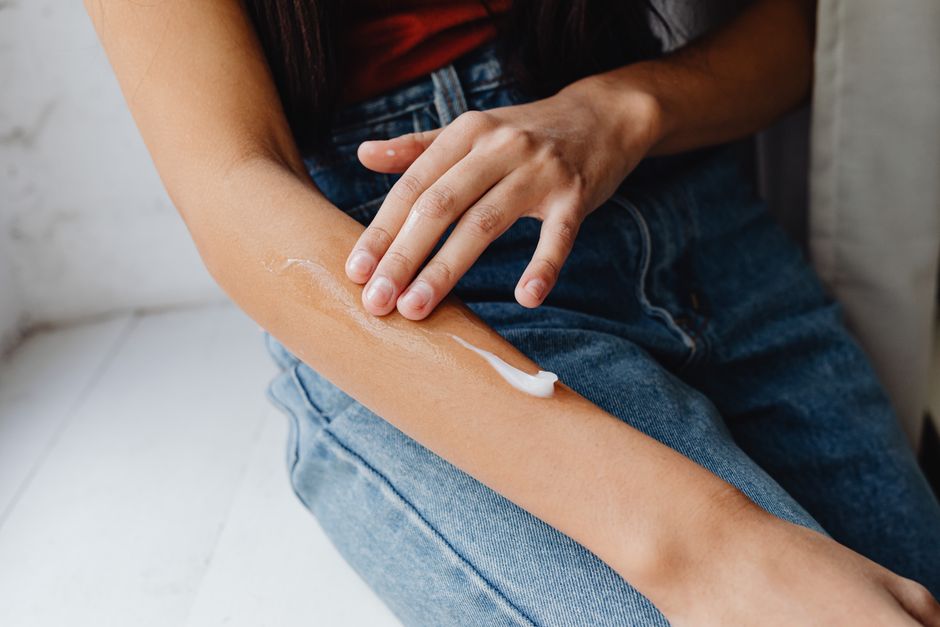
Eczema itching is caused by inflammation in the skin, not just dryness, which is why moisturizer alone rarely stops it. The most effective approach combines breaking the itch-scratch cycle, restoring the skin barrier, and reducing inflammation with treatments your doctor recommends. For most people, that means short, cool compresses, fragrance-free moisturizers applied within minutes of bathing, and prescription or over-the-counter anti-inflammatory treatments when flares start.
Why Does Eczema Itch So Much?
Eczema, also called atopic dermatitis, is a chronic inflammatory skin condition. The itch is not a side effect of dry skin. It is driven by the immune system releasing inflammatory signals in the skin that directly stimulate nerve endings.
Researchers have identified a molecule called IL-31 that plays a central role in eczema itch. It is produced by immune cells in inflamed skin and activates sensory nerves. This helps explain why eczema itch can be intense even when the skin does not look severely inflamed, and why antihistamines often do not help.
There is also a mechanical problem. In eczema, the skin barrier does not hold moisture well and lets irritants and allergens through. That triggers more inflammation, which triggers more itch, which leads to scratching. Scratching damages the barrier further. This is the itch-scratch cycle, and breaking it is the core goal of treatment.
A non-obvious point: eczema itch is often worse at night. This is partly due to natural shifts in body temperature and cortisol levels, and partly because there are fewer distractions. Nighttime scratching is a major reason eczema flares worsen.
What Actually Stops the Itch During a Flare?
During an active flare, the fastest relief comes from reducing inflammation and cooling the skin. Moisturizer alone will not stop a flare. It maintains skin between flares, but it does not treat active inflammation.
Cool compresses are one of the most reliable immediate measures. A damp, cool cloth placed on the itchy area for a short time numbs nerve endings and reduces the urge to scratch. Keep it brief and follow with moisturizer.
Topical corticosteroids are the standard first-line treatment for eczema flares. They reduce inflammation directly in the skin. Over-the-counter hydrocortisone 1% is available without a prescription and is appropriate for mild flares on the body in adults. For flares on the face, in skin folds, or for moderate to severe flares, a doctor may prescribe a stronger corticosteroid or a non-steroid option.
Two non-steroid prescription options are also used:
- Topical calcineurin inhibitors (tacrolimus and pimecrolimus) reduce inflammation without steroids. They are often used on the face and neck where steroid use is more cautious.
- Crisaborole is a topical PDE-4 inhibitor approved for mild to moderate atopic dermatitis.
Oral antihistamines are commonly used at night for their sedating effect, not because they block the itch signal. First-generation antihistamines like diphenhydramine make people drowsy, which reduces nighttime scratching. They do not treat the underlying inflammation. Non-sedating antihistamines generally do not relieve eczema itch because histamine is not the primary driver.
How Do You Break the Itch-Scratch Cycle?
Breaking the cycle means reducing the itch signal enough that the person can stop scratching long enough for the skin to heal. Every scratch restarts the cycle.
Practical steps that help:
- Keep fingernails short and smooth.
- Wear soft, breathable fabrics like cotton. Avoid wool and rough synthetics against the skin.
- Use cool room temperatures and lightweight bedding at night.
- Apply a cool compress instead of scratching when the urge hits.
- Keep the skin moisturized so it is less likely to itch in the first place.
- For children, cotton gloves or long socks over the hands at night can reduce damage from scratching during sleep.
Stress does not cause eczema, but it can worsen itching. The relationship is real but often overstated in popular coverage. Some studies suggest stress management techniques may reduce flare frequency, though the evidence is not strong enough to present stress reduction as a primary treatment.




Which Moisturizers Help and When Should You Apply Them?
Moisturizers are the foundation of eczema care between flares. They do not treat active inflammation, but they reduce the frequency and severity of flares by supporting the skin barrier.
The best time to apply moisturizer is within three minutes of getting out of a bath or shower, while the skin is still damp. This traps water in the skin. Waiting until the skin is fully dry loses most of the benefit.
Not all moisturizers are equal for eczema. Ointments and thick creams generally work better than lotions because they contain fewer preservatives and hold moisture longer. Look for products that are fragrance-free and dye-free.
Ingredients that have some evidence for barrier support include:
- Petrolatum — one of the most effective occlusives for holding moisture in the skin.
- Ceramides — lipids naturally found in the skin barrier that are often reduced in eczema.
- Colloidal oatmeal — has some evidence for reducing itch and irritation.
- Glycerin — a humectant that draws water into the skin.
Products marketed as “natural” or “herbal” are not automatically safer for eczema. Many contain botanical ingredients that can trigger allergic contact dermatitis. Tea tree oil, for example, is a common cause of skin reactions. If a product burns or stings when applied, stop using it.
What Role Do Baths and Showers Play?
Bathing is not the enemy of eczema skin, but how you bathe matters. Short, lukewarm baths or showers help hydrate the skin if they are followed immediately by moisturizer.
Guidance that most dermatologists agree on:
- Keep baths and showers to about 10 minutes.
- Use lukewarm water, not hot.
- Use a gentle, fragrance-free cleanser. Skip harsh soaps and body washes.
- Do not scrub the skin.
- Pat dry gently and apply moisturizer within three minutes.
Some clinicians recommend adding colloidal oatmeal or baking soda to bathwater for itch relief. The evidence for this is limited, but it is generally considered low-risk for adults. Bleach baths — diluted household bleach added to bathwater — are sometimes recommended by dermatologists for people with frequent skin infections, but this should only be done under medical guidance because the dilution matters and getting it wrong can irritate or harm the skin.
When Should You See a Doctor?
See a doctor if the itching is severe enough to disrupt sleep, if the skin is broken, weeping, or showing signs of infection, or if over-the-counter treatments are not controlling flares.
Signs of infection that need prompt medical attention include:
- Yellow or green crusting
- Pus-filled bumps
- Increasing redness, warmth, or pain
- Fever
Eczema that does not respond to first-line treatments may need stronger prescription therapy. Options a dermatologist may consider include:
- Stronger topical corticosteroids or topical calcineurin inhibitors
- Oral corticosteroids for short-term control of severe flares (not for long-term use)
- Phototherapy (controlled ultraviolet light treatment)
- Biologic medications that target specific immune pathways, such as dupilumab
- Oral JAK inhibitors for moderate to severe cases
These treatments are prescribed based on severity, location, age, and other health factors. They are not interchangeable, and they are not appropriate for everyone.
What Does Not Work for Eczema Itch?
Many popular remedies for eczema itch have little or no evidence behind them. It is worth knowing which ones are supported and which are not.
- Non-sedating antihistamines — generally ineffective for eczema itch because histamine is not the main driver.
- Essential oils — no clinical evidence supports them for eczema, and many can cause allergic reactions.
- Apple cider vinegar — no evidence for eczema, and it can burn broken skin.
- Colloidal silver — no evidence for eczema, and it carries real risks with prolonged use.
- “Eczema creams” marketed as natural cures — no study has confirmed these work, and some have been found to contain hidden steroids.
This does not mean everything outside prescription medicine is useless. Some people find relief from cool compresses, oatmeal baths, and consistent moisturizing. The issue is when unproven products are presented as replacements for treatments that have actual evidence behind them.
Can Diet Changes Stop Eczema Itching?
For most people with eczema, diet changes do not stop itching. Food allergies can trigger eczema flares in some young children, but this is less common in adults.
The evidence for elimination diets in unselected eczema patients is weak. Restricting foods without a confirmed allergy can lead to nutritional problems, especially in children. If a food allergy is suspected, testing should be done by a doctor rather than through trial and error.
Some studies suggest that probiotics may reduce eczema severity in infants, but the evidence is mixed and results vary by strain and population. No clinical guidelines currently recommend probiotics as a standard treatment for eczema in adults.
What Is the Outlook for Eczema Itch?
Eczema is a chronic condition. For many people, it improves with age, and some children outgrow it. Others continue to have flares throughout adulthood.
The goal of treatment is not to cure eczema but to control it well enough that itching and flares are manageable. Consistent skin care between flares does more to reduce itching over time than any single treatment during a flare.
If current treatments are not working, that is not a reason to give up. It is a reason to ask about other options. The range of prescription treatments for eczema has expanded in recent years, and what did not work five years ago may not be the full picture today.
Frequently Asked Questions
What is the fastest way to stop eczema itching?
A cool compress applied to the itchy area reduces the urge to scratch within minutes. For lasting relief, a topical corticosteroid treats the underlying inflammation.
Why do antihistamines not stop eczema itching?
Eczema itch is driven mainly by immune signals like IL-31, not histamine. Sedating antihistamines help at night by making you drowsy, but they do not treat the itch itself.
How often should I moisturize eczema skin?
At least twice a day, and always within three minutes of bathing or showering while the skin is still damp. Thick creams or ointments work better than lotions.
Can scratching make eczema worse?
Yes. Scratching damages the skin barrier and triggers more inflammation, which leads to more itching. This is called the itch-scratch cycle, and breaking it is a core treatment goal.
