
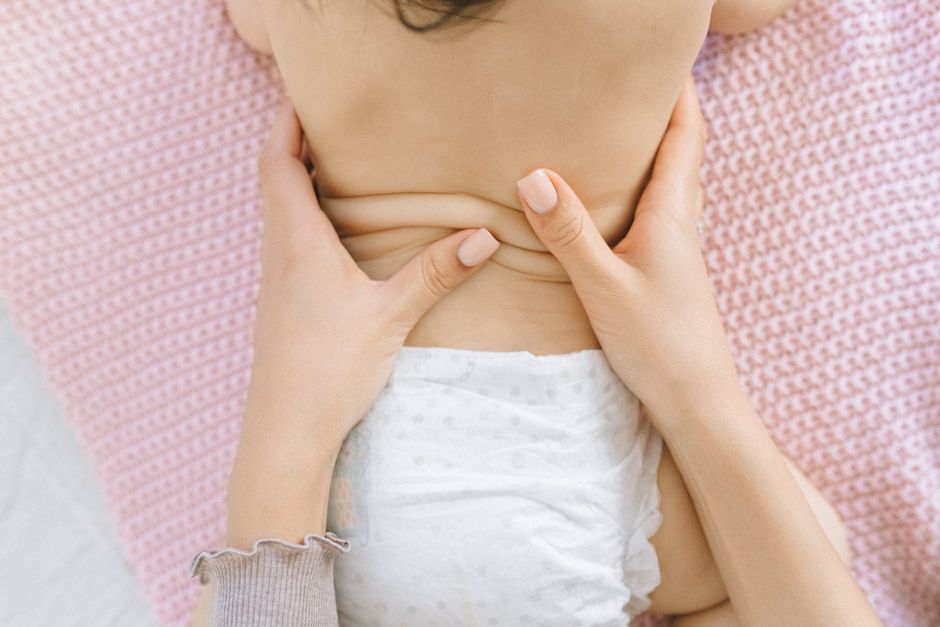
Hiccups in babies are common, usually harmless, and often stop on their own within a few minutes. You cannot reliably “cure” them in the moment, but you can reduce how often they happen by feeding your baby in a calm, upright position, pacing the feed, and burping them partway through and again at the end. If hiccups are frequent, adjusting how and when you feed is more effective than trying to stop them once they start.
Most parents notice hiccups most often in the first few months. They tend to become less frequent as a baby gets older. Knowing what actually causes them — and what does not help — makes the whole thing far less stressful.
What Actually Causes Hiccups in Babies?
A hiccup is a sudden, involuntary contraction of the diaphragm, the dome-shaped muscle that sits below the lungs and does most of the work of breathing. That contraction pulls air in sharply, and the vocal cords snap shut right after. The result is the familiar “hic” sound.
In newborns, this reflex is easy to trigger. The diaphragm and the nerves that control it are still maturing. Feeding stretches the stomach, and a full stomach presses upward against the diaphragm. Swallowed air does the same thing. That is why hiccups so often show up right after a feed.
There is a second factor people rarely mention. Babies spend a large share of their early life lying flat, and they take in air while feeding far more readily than adults do. Both make the diaphragm more likely to fire off on its own.
Hiccups are not a sign that something is wrong. They are not a sign of reflux by themselves, and they are not a sign of illness. They are a normal reflex that most babies outgrow as their nervous system and feeding skills mature.
How Can You Stop Baby Hiccups Before Feeding?
Prevention before a feed is more reliable than anything you can do once hiccups start. The goal is simple: less swallowed air and less pressure on a full stomach.
- Feed before your baby gets frantic. A very hungry baby gulps fast and swallows more air.
- Hold your baby more upright during feeding, not flat.
- Keep the bottle tilted so the nipple stays full of milk, not air.
- Pause every few minutes to burp, rather than waiting until the end.
- Match the nipple flow to your baby’s age. A nipple that is too fast or too slow both increase air intake.
For breastfeeding, a good latch matters as much as anything. If your baby is only taking the nipple and not a good mouthful of breast tissue, they will take in air along with milk. A lactation consultant can check the latch if feeds are consistently noisy or your baby seems to gulp.
One point worth being clear about: there is no evidence that gripe water, sugar water, or any over-the-counter product prevents hiccups in babies. Some traditional remedies are widely used, but that is not the same as being shown to work.
How Can You Stop Baby Hiccups After Feeding?
Once hiccups have started, the honest answer is that most of the common tricks do not reliably stop them. What helps is letting the reflex run its course while keeping your baby comfortable.
Try these steps:
- Keep your baby upright against your shoulder for a while after feeding.
- Burp them gently to release trapped air.
- Give them a pacifier if they use one. Sucking can sometimes settle the rhythm.
- Stay calm and avoid jostling or bouncing, which can add to the irritation.
Hiccups usually resolve on their own within a few minutes. If they last longer, that alone is not a reason to worry. Most episodes simply fade.
A few things do not help and can be risky. Do not try to stop hiccups by startling your baby. Do not press on their belly or their fontanelle. Do not give water, honey, or any home remedy to a baby under one year. Honey is not safe for infants under 12 months because of the risk of infant botulism, and water can interfere with how much milk a young baby takes in.





Does Burping Really Help With Hiccups?
Burping helps release swallowed air, and swallowed air is one of the things that triggers hiccups. So burping is a reasonable step, though it is not a guaranteed fix.
Position matters more than force. Hold your baby upright against your shoulder and pat or rub their back gently. You can also sit them on your lap, support their chin and chest with one hand, and pat their back. Never pat hard, and never shake a baby.
Some babies burp easily and some do not. If your baby is comfortable and not spitting up a lot, you do not need to keep at it for a long time. A few minutes is usually enough.
When Should You Be Concerned About Baby Hiccups?
Hiccups on their own are not a medical problem. They do not need treatment, and they do not harm your baby. That said, a few situations are worth a call to your pediatrician.
- Hiccups that come with feeding problems, poor weight gain, or frequent forceful spitting up.
- Hiccups along with breathing that looks labored, or any change in your baby’s color.
- Hiccups that seem to cause real distress or interfere with feeding.
- Any symptom that worries you. Trust your instincts and ask.
Frequent hiccups can sometimes overlap with reflux, but hiccups alone do not mean your baby has reflux. Reflux is diagnosed based on a pattern of symptoms, not on hiccups by themselves. If you are seeing a lot of spit-up, arching, or discomfort during feeds, that is a conversation to have with your doctor rather than something to solve at home.
Do Home Remedies for Baby Hiccups Work?
Most home remedies for baby hiccups have no evidence behind them. That does not mean they are all dangerous, but it does mean you should not expect them to work.
Common ones include:
- Giving a spoonful of water or sugar water. Not recommended for young infants.
- Pulling on the tongue or pressing on the soft spot. No evidence, and potentially harmful.
- Startling the baby. Not safe.
- Holding the baby upside down. Not safe.
The most reliable approach is the least dramatic: feed calmly, keep your baby upright, burp them, and let the hiccups pass. If they happen often, look at the feeding routine rather than reaching for a remedy.
Will Your Baby Outgrow Hiccups?
Yes, in most cases. Hiccups are most common in the first few months and tend to become less frequent as a baby’s nervous system and feeding coordination mature. There is no fixed timeline, and some babies simply hiccup more than others.
If your baby is feeding well, gaining weight, and seems comfortable, frequent hiccups are not something to lose sleep over. Bring it up at a routine visit if you want reassurance, but it is rarely a sign that anything needs to change.
Frequently Asked Questions
How do I stop my baby’s hiccups quickly?
You usually cannot stop them quickly, because hiccups are a reflex that runs its course. Keep your baby upright, burp them gently, and let the episode pass, which typically takes a few minutes.
Should I feed my baby while they have hiccups?
If your baby is calm and willing to feed, you can continue, but many babies will pause until the hiccups stop. If feeding seems to make them more uncomfortable, wait a few minutes and try again.
Are hiccups a sign of reflux in babies?
Not on their own. Hiccups are common in babies with and without reflux, so they are not used alone to diagnose it. Reflux is identified by a pattern of symptoms such as frequent spit-up, arching, or feeding discomfort.
Can I give my baby water to stop hiccups?
No. Water is not recommended for young infants because it can interfere with how much milk they take in, and it does not reliably stop hiccups. Offer breast milk or formula instead if your baby is hungry.
