
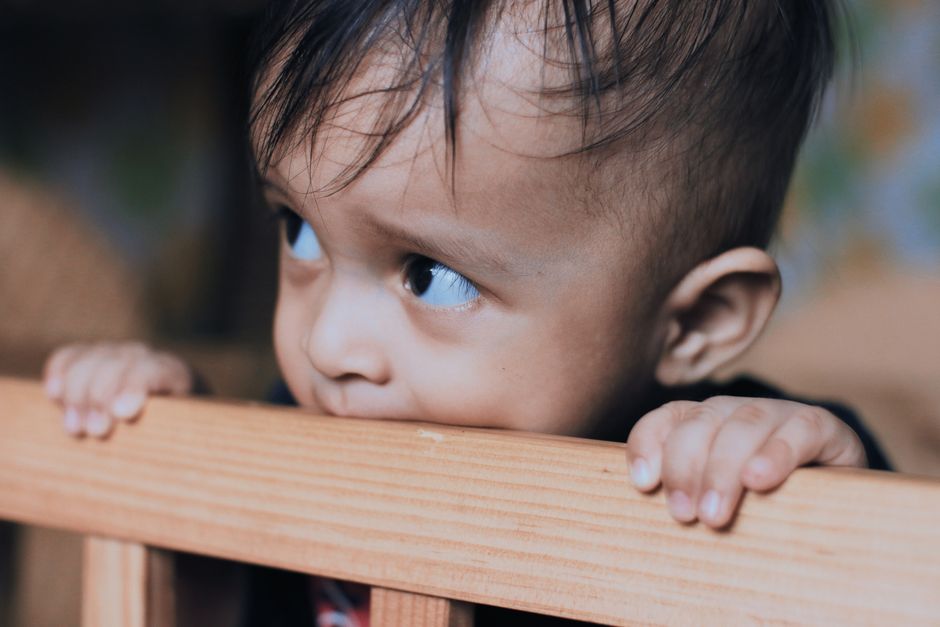
Babies bite for reasons that have nothing to do with aggression. They bite because their gums hurt, because they are exploring how their mouth works, or because they have figured out that biting gets a big reaction. The approach that works is the one that matches the reason. For a teething baby, offer a cold teething ring before the biting starts. For a baby who bites during feeding, end the feeding calmly and immediately. For a toddler who bites in frustration, name the feeling and give a replacement behavior. What does not work is biting back, yelling, or ignoring it and hoping it stops.
Why Do Babies Bite?
Biting in the first year of life is almost always developmental, not behavioral. The mouth is one of the most sensitive parts of a baby’s body, and it is one of the first tools they use to learn about the world. Mouthing and biting are normal parts of that process.
There are a few distinct reasons a baby bites, and they call for different responses.
- Teething discomfort. Gums swell and ache as teeth push through. Counter-pressure from biting feels good. This usually starts around 6 months and can continue on and off through the first two years.
- Hunger or fast milk flow. A hungry baby may clamp down during breastfeeding, especially when milk flow slows or when they are trying to speed it up.
- Exploration. Babies put everything in their mouths. A bite is sometimes just information gathering.
- Cause and effect. Around 8 to 12 months, babies start to understand that an action produces a reaction. A sharp yelp from a parent is a very interesting reaction.
- Frustration or limited language. In toddlers, biting often shows up when they cannot yet say what they want or feel. It tends to peak between 1 and 3 years, when vocabulary lags behind emotion.
Knowing which of these is driving the behavior is the single most useful thing you can do. A response aimed at the wrong cause tends to fail, which is why so much advice about biting does not work for every family.
How To Stop Baby From Biting What Actually Works?
The most effective response depends on the situation, but a few principles hold across almost all of them.
React calmly and immediately. A big reaction — a shout, a gasp, a dramatic face — can accidentally reward the behavior in a baby who is testing cause and effect. A flat, neutral response removes the payoff. This is easier said than done, especially when a bite hurts. It is still the goal.
Separate the baby from the behavior briefly. If a baby bites during play, set them down or move them a short distance away for a moment. You are not punishing. You are breaking the connection between the bite and continued fun.
Give the mouth something appropriate to do. If teething is the driver, a chilled teething ring or a cold washcloth can meet the need. Chilling — not freezing — is the standard advice. A frozen solid object can hurt sore gums.
Teach a replacement. For a toddler, “gentle hands” or “use your words” only works if you also model it and give them the words. “You wanted the truck. Say ‘my turn.'” Over time, the words replace the teeth.
Stay consistent. Biting usually fades as language develops and as the parent’s response becomes predictable. Inconsistency — sometimes laughing, sometimes scolding — tends to prolong it.
What Should You Do When Your Baby Bites While Breastfeeding?
A bite during breastfeeding is common and usually short-lived. It typically happens when milk flow slows and the baby gets impatient, or when a new tooth is coming in and the baby is experimenting with a new sensation.
The standard approach is to break the suction gently with a finger at the corner of the baby’s mouth, then remove the baby from the breast and end that feeding. Do not pull away sharply. Do not yell. Do not continue the feeding right after a bite, because that teaches the baby that biting still leads to milk.
Wait a short while, then offer the breast again. If the baby bites again, end the feeding again. Most babies connect the dots within a few feedings.
A few practical points that many parents do not hear:
- A baby cannot bite and actively nurse at the same time. The tongue is over the lower gum line during active sucking. Biting happens when the baby pauses or pulls back.
- If your nipples are cracked or painful, that is a separate issue from biting and may need a lactation consult. Pain from a poor latch and pain from biting feel different.
- If biting is frequent and severe, or if it is interfering with feeding, talk to a lactation consultant or your baby’s pediatrician. Persistent feeding problems are worth a professional look.
If you are pumping or formula feeding, the same principle applies. End the feeding calmly, take a short break, and try again.





Is Biting Back Ever a Good Idea?
No. Biting a baby back is one of the most common pieces of advice parents hear, and it is not supported.
The idea behind it is that a baby will feel how much it hurts and stop. In practice, it teaches a baby that biting is something people do when they are frustrated — which is the opposite of what you want. It also damages trust and can escalate the behavior rather than reduce it. Pediatric guidance does not recommend it.
The same applies to other physical punishments. They do not teach the replacement behavior a baby needs. A baby who is bitten back learns to be afraid of the person who bit them. They do not learn what to do instead.
When Should You Worry About Biting?
Biting is a normal developmental behavior in babies and toddlers. Most children stop as their language grows and as they learn other ways to get what they want.
Some situations are worth a conversation with your pediatrician:
- Biting that continues past age 3 or 4 and is frequent
- Biting that is severe enough to break the skin or draw blood
- Biting that comes with other developmental concerns, such as limited speech, poor eye contact, or difficulty with social play
- Biting that is directed at one specific person or happens only in one setting in a way that seems unusual
- Biting that is accompanied by self-injury, such as head banging or biting their own hands
None of these automatically means something is wrong. They are simply reasons to check in. A pediatrician can help sort out whether the behavior is within the range of normal development or whether it deserves a closer look.
How Long Does Biting Usually Last?
There is no fixed timeline, and anyone who gives you one is guessing. What is well established is the general pattern. Biting tends to appear in the second half of the first year, often peaks between 1 and 3 years, and fades as children get better at using words.
How long it lasts in any one child depends on the reason behind it, how consistent the response is, and the child’s own temperament and language development. A teething baby may stop once the tooth comes through. A toddler who bites out of frustration may stop once they can say “I’m mad” or “I want that.”
What tends to make it last longer is inconsistency, big reactions that turn biting into a game, and not teaching a replacement behavior. What tends to shorten it is a calm, predictable response paired with giving the child another way to get their needs met.
What About Daycare and Group Settings?
Biting is one of the most common issues in group child care, and it is not a sign that a child is aggressive or that the daycare is doing something wrong. It is a sign that a young child with limited language is in a busy environment with other children.
The most useful thing you can do is work with the caregivers instead of against them. Ask what happens right before a bite, what the response is, and whether the same response is used at home. Consistency across settings helps more than any single strategy.
If biting is happening at daycare, it is reasonable to ask whether the setting is a good fit for your child’s current needs. That is a different question from whether your child is behaving badly. For most children, biting in a group setting is a phase that resolves as language develops.
Frequently Asked Questions
How do I stop my baby from biting me?
React calmly, remove the baby from the situation briefly, and give their mouth something appropriate to do, like a chilled teething ring. If it happens during feeding, end the feeding immediately and try again a short time later.
Does biting a baby back stop them from biting?
No. Biting a baby back is not supported by pediatric guidance and tends to teach that biting is what people do when they are frustrated. It can also damage trust and make the behavior worse.
At what age should a child stop biting?
Most children stop biting as their language develops, often by age 3 or 4. Biting that continues past that age, or that is frequent or severe, is worth discussing with a pediatrician.
Why does my baby bite while breastfeeding?
Biting during breastfeeding usually happens when milk flow slows or when a new tooth is coming in. Break suction gently, end the feeding, and offer again later so the baby learns that biting ends the feeding.
