
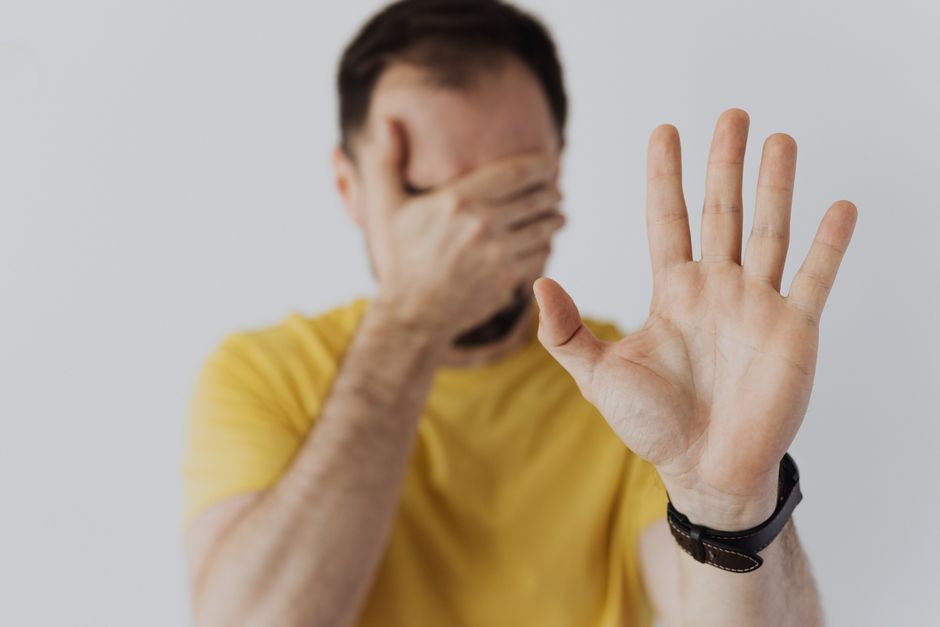
Avoidance coping is when you sidestep the thing that stresses you out instead of facing it. The problem is that the relief is temporary. The stressor stays put, and often grows. The steps that actually work are not about forcing yourself to feel brave. They are about shrinking the task, tolerating the discomfort, and building a pattern of small approach behaviors over time.
How To Stop Avoidance Coping Steps That Actually Work
You stop avoidance coping by making the avoided thing smaller and more concrete, not by waiting to feel ready. Readiness usually follows action, not the other way around.
The core mechanism is straightforward. When you avoid something, your brain registers relief. That relief rewards the avoidance. Over time, the avoided situation becomes more frightening because you never collect evidence that you can handle it. Psychologists call this the avoidance cycle. Breaking it means interrupting the reward.
Steps that tend to help:
- Name the specific thing you are avoiding, in plain words. “The dentist” is vague. “Calling to book the cleaning” is workable.
- Break it into the smallest first action. Opening the calendar counts.
- Set a time limit. Ten minutes of the task, then stop if you want.
- Do the first step before you feel motivated. Motivation is unreliable.
- Track what actually happened, not what you feared would happen.
None of this is a cure. It is a way to reduce the grip avoidance has on your daily choices.
Why Does Avoidance Coping Feel So Good In The Moment?
Avoidance feels good because it works — briefly. When you dodge a stressful call or skip a difficult conversation, your anxiety drops. That drop is real and immediate.
The problem is what your brain learns. It learns that avoidance produced relief. The next time the same situation appears, avoidance looks like the smarter choice. This is a form of negative reinforcement, a well-documented learning process. The behavior gets stronger because it removed something unpleasant.
There is a second cost. Avoidance prevents what therapists sometimes call corrective experience. You never get to find out that the feared outcome was unlikely, or that you could cope if it happened. The fear stays frozen at its original size.
This is why avoidance tends to expand. One skipped task becomes a pile. One avoided conversation becomes a strained relationship. The relief gets smaller and the cost gets larger.
What Is The Difference Between Avoidance And Healthy Boundaries?
Avoidance protects you from discomfort. A boundary protects your time, energy, or values. They can look similar from the outside and feel completely different inside.
Skipping a party because you are exhausted and need rest is a boundary. Skipping it because you are afraid of being judged is avoidance. Declining a project that does not fit your workload is a boundary. Declining it because you fear you will fail is avoidance.
A useful test: does the choice leave you feeling steady or relieved-then-uneasy? Boundaries usually bring a sense of calm. Avoidance often brings a short spike of relief followed by a low hum of dread.
This distinction matters because some people try to fix avoidance by eliminating all limits. That is not the goal. The goal is to stop running from things that matter to you.





How Do You Start When The Task Feels Overwhelming?
You start by shrinking the task until it feels almost too easy. This is sometimes called the smallest first step. The point is not to finish. The point is to begin.
If the avoided task is doing your taxes, the first step is not “do taxes.” It is “find the folder.” If the avoided task is a difficult conversation, the first step is writing one sentence about what you want to say.
There is a reason this works. Large tasks trigger a stress response that pushes you toward escape. Small tasks do not. By keeping the first step below that threshold, you can act without triggering the urge to flee.
Two more things help:
- Attach the step to something you already do. After coffee, before your shower, right after lunch.
- Decide in advance what counts as done. Ambiguity feeds avoidance.
If you complete the step and still feel awful, that is not failure. Discomfort during approach is expected. It usually fades with repetition, though not always quickly.
Can You Practice Tolerating Discomfort Instead Of Avoiding It?
Yes, and this is often the most useful skill in the whole process. Many people avoid not because the task is hard but because the feeling is hard. Learning to sit with the feeling changes what is possible.
One approach is to notice the sensation without acting on it. Where do you feel the anxiety? Chest, stomach, throat? Is it tight, hot, buzzing? You are not trying to make it go away. You are collecting information about it.
Another approach is to delay the avoidance instead of eliminating it. Tell yourself you can skip the task, but not for ten minutes. Often the urge weakens enough to act.
This skill overlaps with what is taught in cognitive behavioral therapy, which is one of the most studied approaches for anxiety-related avoidance. The evidence for CBT in this area is strong. That does not mean it works for everyone, and it does not mean self-help versions match working with a trained clinician.
If your avoidance is tied to trauma, severe anxiety, or depression, self-directed steps may not be enough. That is not a personal failing. It is a signal that professional support is worth considering.
What Makes Avoidance Worse Over Time?
Several things reliably feed the cycle. Knowing them can help you interrupt it.
- Reassurance seeking. Asking others if everything will be fine can reduce anxiety briefly and strengthen the belief that you cannot handle uncertainty alone.
- Alcohol or other substances. Using them to face feared situations can deepen avoidance over time.
- Perfectionism. If the task must be done perfectly, it becomes easier to not start.
- Shame. Berating yourself for avoiding tends to increase avoidance, not decrease it.
- Waiting for motivation. Motivation is a feeling, not a plan.
One less obvious factor is the story you tell about yourself. People who describe themselves as “someone who avoids things” tend to avoid more. Shifting to “someone practicing approach” is not positive thinking. It is a more accurate description of what you are actually doing.
How Long Does It Take To Change Avoidance Patterns?
There is no standard timeline. Some people notice meaningful change within weeks of consistent practice. Others take months. Some patterns, especially those rooted in early experiences or trauma, can take much longer and often benefit from professional help.
What matters more than speed is consistency. A small step taken most days tends to do more than a large step taken once. The point is to accumulate evidence that you can approach difficult things and survive the discomfort.
Relapses are normal. Everyone avoids something sometimes. The goal is not to never avoid. It is to avoid less, and to recover faster when you do.
Frequently Asked Questions
What is avoidance coping in simple terms?
Avoidance coping is when you deal with stress by sidestepping the source of it instead of facing it. It brings short-term relief but usually makes the underlying problem worse.
Is avoidance coping always bad?
Not always. Brief, deliberate delay can be useful when you genuinely need rest or time to plan. It becomes a problem when it is your main strategy and it keeps you from things that matter.
How do I stop avoiding things I know I need to do?
Shrink the task to a first step small enough that you can do it without feeling overwhelmed, then do that step on a set schedule rather than waiting to feel ready. Tracking what actually happened, rather than what you feared, helps weaken the cycle over time.
When should I get professional help for avoidance?
Consider professional support if avoidance is affecting your work, relationships, health, or daily functioning, or if it is tied to trauma, severe anxiety, or depression. Cognitive behavioral therapy has strong evidence for anxiety-related avoidance, though it does not work for everyone.
