
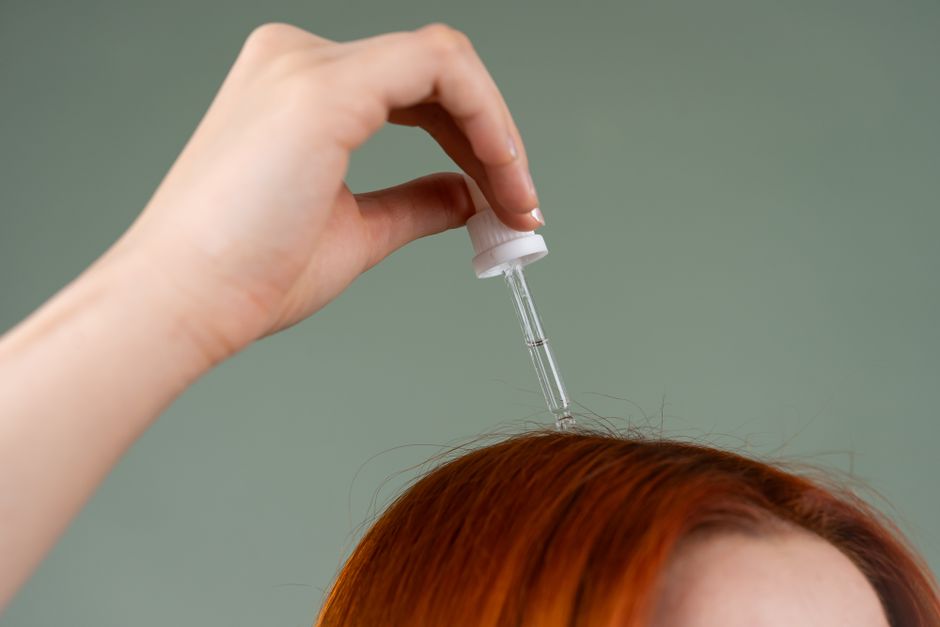
Autoimmune hair loss happens when your immune system mistakenly attacks your own hair follicles. The most common form, alopecia areata, causes sudden round patches of hair loss on the scalp or elsewhere on the body. You cannot stop the immune attack through diet, shampoo, or willpower alone, but you can take steps that support treatment, reduce triggers where possible, and protect the hair you have.
What Is Autoimmune Hair Loss and How Does It Work?
Alopecia areata is the main autoimmune condition that targets hair. The immune system sends white blood cells to the base of the hair follicle, where the hair shaft is built. This causes inflammation around the follicle.
The follicle itself is not destroyed. It goes quiet. Hair stops growing, and the strand can fall out. This is why regrowth is possible — the machinery for making hair is still there. In many people, the attack eventually settles and hair returns.
The course is unpredictable. Some people lose a small patch and regrow within months. Others have repeated episodes. A smaller number develop more extensive loss, including total scalp hair loss (alopecia totalis) or loss of all body hair (alopecia universalis).
Alopecia areata is not the same as traction alopecia, hormonal hair loss, or scarring hair loss. Those have different causes and different treatments. Getting the right diagnosis matters, because the advice that helps one condition can be useless for another.
What Triggers Autoimmune Hair Loss Flares?
Genetics set the stage. About one in five people with alopecia areata have a family member with the same condition. Certain gene variations linked to immune regulation are more common in people who develop it.
Triggers are harder to pin down. People often report that a flare started after a stressful event, an illness, or a major life change. The link between stress and autoimmune flares is widely reported by patients but has not been firmly established in controlled studies. It is reasonable to manage stress for general health. It is not reasonable to blame yourself for a flare.
Some evidence points to a connection between alopecia areata and other autoimmune conditions, including thyroid disease and vitiligo. If you have alopecia areata, your clinician may check thyroid function, especially if you have symptoms like fatigue or changes in weight.
There is no confirmed dietary trigger. Claims that gluten, dairy, or sugar cause autoimmune hair loss are not supported by strong evidence. Some people with celiac disease see hair changes, but that is a specific diagnosed condition, not a general rule.
How to Stop Autoimmune Hair Loss: What Actually Helps
Medical treatment is the only approach with evidence for changing the course of alopecia areata. Everything else is supportive. That distinction matters, because a lot of products are sold as if they can do the job treatment does.
For limited patches, clinicians often use corticosteroid injections into the scalp. Topical corticosteroids are also used. These can help regrow hair in treated areas, but they do not prevent new patches from forming elsewhere.
For more extensive or rapidly progressing disease, treatment options have expanded. Oral corticosteroids are sometimes used short-term but carry side effects and are not a long-term solution. Newer treatments targeting specific immune pathways have shown meaningful results in clinical trials for severe alopecia areata, and some are now used in practice. Availability, cost, and eligibility vary. This is a conversation to have with a dermatologist, not a decision to make from an article.
Minoxidil is sometimes used alongside other treatments. It does not address the immune attack, but it can support hair growth. It works better as an add-on than alone.
What does not have solid evidence: special shampoos marketed for autoimmune hair loss, laser combs for this specific condition, and most supplements. No clinical evidence currently confirms these reverse autoimmune hair loss.





Do Diet and Supplements Help Autoimmune Hair Loss?
No diet has been shown to stop alopecia areata. That is the honest position. Nutrition still matters, because hair growth requires adequate protein, iron, zinc, and other nutrients, and a deficiency can make any hair loss worse.
Correcting a real deficiency is different from taking supplements hoping for a benefit. If blood tests show low iron or low vitamin D, treating that deficiency is reasonable and your clinician can guide it. Taking high-dose supplements without a deficiency has not been shown to help alopecia areata and can cause harm in some cases.
Some small studies have looked at vitamin D levels in people with alopecia areata, and low levels appear more common in this group. Whether correcting vitamin D changes the course of the disease is not established. Low vitamin D being common is not the same as low vitamin D causing the condition.
Elimination diets are popular online. Removing gluten or dairy without a diagnosed reason has not been shown to improve alopecia areata, and restrictive diets carry their own risks. Talk to a doctor before cutting out food groups.
Can Stress Management and Lifestyle Make a Difference?
There is no strong evidence that reducing stress stops autoimmune hair loss. There is reasonable evidence that managing stress supports general health, sleep, and how well you cope with a condition that affects appearance and confidence.
Practical steps that are low-risk and reasonable:
- Protect your sleep. Poor sleep affects immune function and mood.
- Stay physically active. Regular movement supports overall health.
- Use gentle hair care. Avoid tight hairstyles, harsh chemicals, and rough brushing on affected areas.
- Consider sun protection on exposed scalp. Skin that has lost hair burns more easily.
- Talk to someone. Hair loss affects mental health, and support is a legitimate part of care.
These steps will not reverse the immune attack. They help you stay well while treatment does its work.
What About Cosmetic Options and Camouflage?
Cosmetic approaches do not treat the condition, but they can make a real difference in daily life. Many people with alopecia areata use them alongside medical care.
Options include scalp concealers, hair fibers, wigs, and hats. Good-quality wigs and hairpieces have improved a great deal, and some insurance plans help cover them when hair loss is medical. It is worth asking.
Eyebrow loss is common in alopecia areata and often overlooked. Microblading and eyebrow pencils can help. If you have eyelash loss, talk to your eye doctor before using any cosmetic product near the eyes.
One point that gets missed: alopecia areata can affect the nails too. Small pits or ridges in the nails are a known feature and can be an early clue. It is not dangerous, but it can help confirm the diagnosis.
When Should You See a Doctor?
See a doctor for any sudden patchy hair loss. Early diagnosis gives you more options. A dermatologist can usually identify alopecia areata by examining the scalp, sometimes with a small handheld magnifier, and can rule out other causes.
Seek care promptly if hair loss is rapid, widespread, or accompanied by scalp redness, pain, or scaling. Those features point away from typical alopecia areata and toward other conditions that need different treatment.
Also see a doctor if hair loss comes with fatigue, weight changes, or other symptoms that could suggest a thyroid problem or another condition.
Alopecia areata is not curable, and no treatment works for everyone. That is the reality. But many people regrow hair, some without treatment, and the options for severe disease have improved meaningfully in recent years. The most useful step you can take is getting an accurate diagnosis and a treatment plan from a clinician who knows this condition.
Frequently Asked Questions
Can autoimmune hair loss grow back on its own?
Yes, many people with alopecia areata regrow hair without treatment, especially with small patches. Regrowth can take months, and the timing varies widely from person to person.
What is the best treatment for autoimmune hair loss?
There is no single best treatment, and the right choice depends on how much hair is lost and how fast it is progressing. Corticosteroid injections are common for small patches, while more extensive disease may need other treatments prescribed by a dermatologist.
Does diet affect autoimmune hair loss?
No diet has been shown to stop alopecia areata. Correcting a diagnosed nutrient deficiency is reasonable, but eliminating foods without a medical reason has not been shown to help.
Is autoimmune hair loss permanent?
For most people it is not permanent, because the hair follicle is not destroyed. Some people have long-lasting or recurring hair loss, and the course is hard to predict.
