
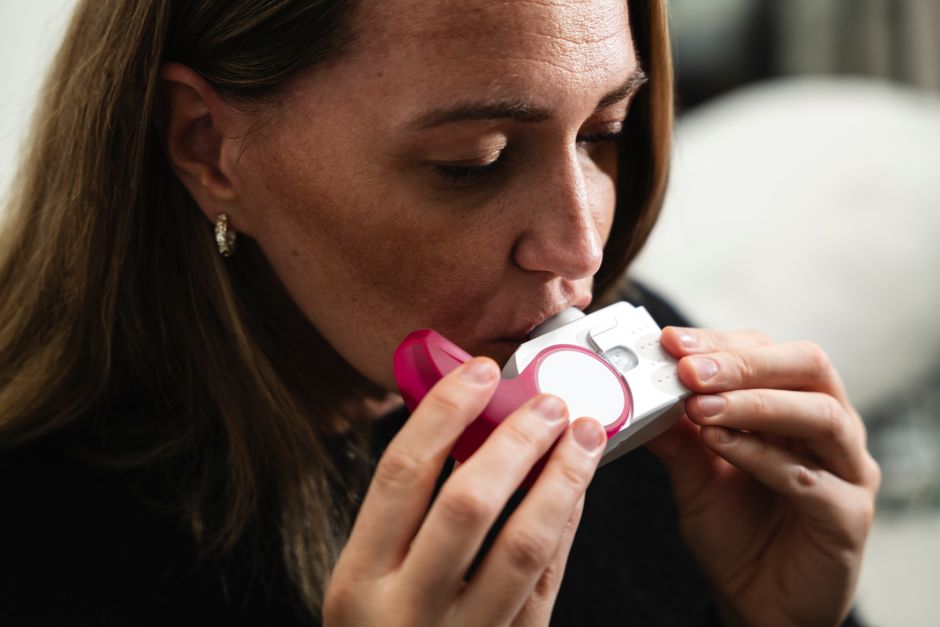
You cannot stop a moderate or severe asthma attack without a bronchodilator inhaler. If someone is struggling to breathe, cannot speak in full sentences, or has blue lips, call 911 immediately. For a mild attack where the chest feels tight but breathing is still manageable, there are steps you can take while you get to your inhaler or wait for help. None of them replace medication. They buy time and reduce panic, and that matters.
How To Stop An Asthma Attack Without An Inhaler
First, be clear about what you are dealing with. An asthma attack happens when the muscles around the airways tighten and the airway lining swells. Mucus also builds up. This narrows the space air moves through. Only a bronchodilator quickly relaxes those muscles. Nothing you do at home does that.
What you can do is reduce the things that make an attack worse: panic, fast shallow breathing, cold air, smoke, and physical exertion. These steps help you stay calm and stable until medication is available.
- Sit upright. Do not lie down. Sitting or leaning slightly forward helps your diaphragm move and makes breathing easier.
- Slow your breathing. Try to breathe in through the nose and out through pursed lips. This does not open the airways, but it can ease panic and keep you from hyperventilating.
- Get away from the trigger. Leave smoke, dust, strong fumes, or cold air if you can.
- Loosen tight clothing around your chest and neck.
- Stay calm and still. Sit quietly. Do not try to push through the attack with activity.
These measures are supportive only. They do not treat the underlying airway narrowing. If your symptoms are not improving within a few minutes, or if they are getting worse, seek emergency help.
When Is an Asthma Attack a Medical Emergency?
Some asthma attacks are life-threatening, and no home remedy is appropriate. Call 911 without delay if you notice any of these signs:
- You cannot speak in full sentences or can only say a few words at a time.
- Your lips, face, or fingernails turn blue or gray.
- You are using your neck and chest muscles hard just to breathe.
- You feel drowsy, confused, or exhausted.
- The attack is not easing and you have no inhaler available.
- You have had a severe attack before and this feels similar.
These are signs of a severe attack that needs emergency treatment. Do not wait to see if it passes. Emergency crews carry oxygen and medications that can open the airways quickly.
Why You Should Not Rely on Home Remedies Alone
There is no home remedy that reverses an asthma attack. This is the part many people get wrong. Steam, coffee, breathing exercises, and herbal teas are sometimes shared online as ways to stop an attack. None of them open narrowed airways.
Steam from a hot shower can feel soothing, but there is no good evidence it treats an asthma attack, and hot steam can sometimes make breathing harder. Caffeine is a mild bronchodilator in laboratory studies, but the amount in a cup of coffee is far too small and too slow to treat an attack. No study has shown that drinking coffee stops an asthma attack.
Breathing exercises can help you stay calm and can be useful for day-to-day asthma control. They do not replace a rescue inhaler during an attack. The risk of relying on them is delay. Delay is dangerous when airways are closing.




What to Do If You Have No Inhaler and No Rescue Medication
If you have asthma and no inhaler, the priority is to get medical help, not to manage at home. Call your doctor, an urgent care clinic, or 911 depending on how bad the attack is. Do not drive yourself if you are struggling to breathe.
While you wait, sit upright, stay calm, and keep away from triggers. If someone is with you, tell them what is happening and ask them to stay with you and call for help if you get worse.
After the attack is over, treat it as a warning. An attack that needed emergency care, or one that happened because you had no inhaler, means your asthma plan needs attention. See a doctor. Running out of a rescue inhaler is a preventable problem, and it is worth setting reminders to refill before you run low.
How to Be Prepared So You Are Never Caught Without an Inhaler
The best way to handle an asthma attack without an inhaler is to make sure you always have one. Most asthma attacks are manageable when a rescue inhaler is on hand. Preparation is the real answer.
- Keep a rescue inhaler with you at all times, not just at home. Carry it in a bag or pocket you take everywhere.
- Keep a spare at a second location, such as work or a family member’s home, if your doctor agrees.
- Check the dose counter. Many inhalers show how many puffs are left. Replace it before it runs out.
- Track expiration dates. An expired inhaler may not work as well.
- Follow your written asthma action plan. Your doctor can give you one that tells you what to do when symptoms start.
- Tell people around you. Friends, coworkers, and family should know you have asthma and where your inhaler is.
If you use a rescue inhaler more than twice a week for symptoms (not counting before exercise), your asthma may not be well controlled. That is a reason to see your doctor about a preventer medication, not to rely on rescue puffs alone.
Can Breathing Exercises Help During an Asthma Attack?
Breathing exercises can help you stay calm, but they do not open your airways. Calm, steady breathing can reduce panic, and panic makes an attack feel worse. That is a real benefit, but it is a comfort measure, not a treatment.
Some people find pursed-lip breathing helpful. Breathe in through your nose for a slow count, then breathe out gently through pursed lips as if blowing out a candle. This can slow a fast breathing rate and ease anxiety. It will not reverse airway narrowing.
Breathing exercises taught by a physiotherapist, sometimes called breathing retraining, have some evidence for improving quality of life and reducing symptoms in people with asthma over time. They are not a rescue treatment during an attack. Keep that distinction clear.
The Bottom Line
Without an inhaler, you cannot stop an asthma attack. You can stay calm, sit upright, avoid triggers, and get help fast. For a mild attack, these steps may help you stay stable until you get medication. For anything more serious, call 911.
The most important message is prevention. Carry your rescue inhaler everywhere. Know the signs of a severe attack. Have an asthma action plan. If your asthma is not well controlled, talk to your doctor about whether your treatment needs to change. That conversation is worth more than any home remedy.
Frequently Asked Questions
Can you stop an asthma attack without an inhaler?
No. A rescue inhaler is the only quick way to open narrowed airways during an attack. Home steps like sitting upright and staying calm can help you stay stable until you get medication or help.
What should you do if you have an asthma attack and no inhaler?
Sit upright, stay calm, move away from triggers, and call for medical help right away. Call 911 if you cannot speak in full sentences or your lips turn blue.
Does drinking coffee stop an asthma attack?
No. Caffeine is a weak bronchodilator in lab studies, but the amount in coffee is far too small and slow to treat an attack. No study has shown coffee stops an asthma attack.
When should you call 911 for an asthma attack?
Call 911 if you cannot speak in full sentences, your lips or fingernails turn blue, you are using neck and chest muscles to breathe, or you feel drowsy or confused. These are signs of a severe, life-threatening attack.
