
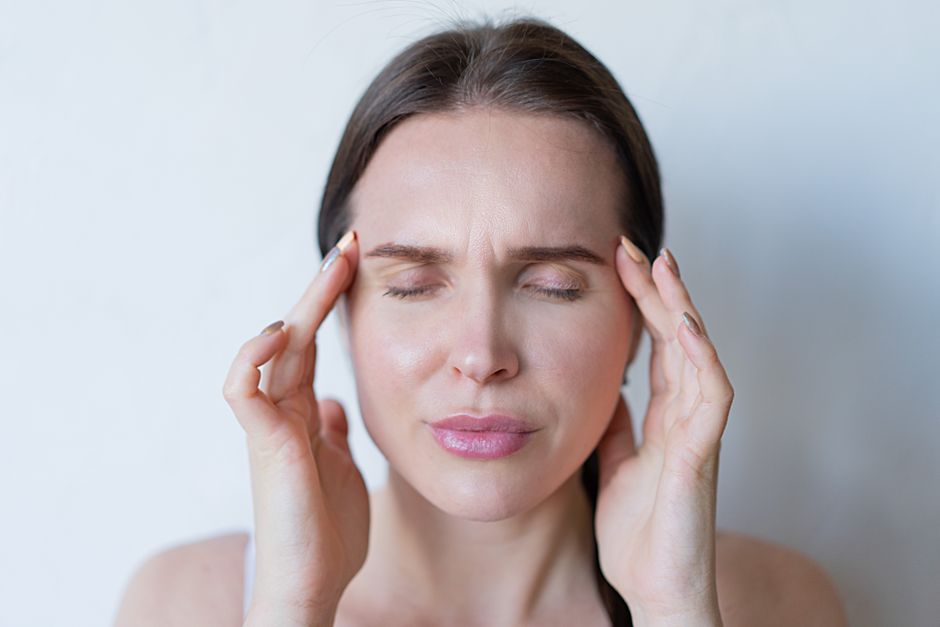
A tension headache usually builds on both sides of your head. It feels like a tight band squeezing your skull. The good news is that most tension headaches can be eased at home within 20 to 30 minutes using simple steps like resting in a quiet, dim room, applying a cold or warm compress, drinking water, and taking an over-the-counter pain reliever if you can safely use one.
These steps work because tension headaches are not caused by a problem inside your brain. They come from tight muscles in your scalp, neck, and shoulders, along with changes in how your nervous system processes pain signals. Calming those muscles and that pain response is what helps.
Below is what actually works, what does not, and when a headache is a sign to seek medical care instead of treating it yourself.
What Actually Stops A Tension Headache Immediately At Home?
The fastest relief usually comes from combining a few simple actions at once rather than trying one thing at a time.
Start by stepping away from whatever you are doing. Screen glare, loud noise, and mental strain all keep the pain going. Move to a quiet, dim room and sit or lie down with your neck supported.
Apply a compress. A cold pack on your forehead or temples can numb the area and dull pain. A warm pack on the back of your neck can relax tight muscles. There is no strong evidence that one works better than the other, so use whichever feels better to you. Wrap either one in a thin cloth so it does not hurt your skin, and keep it on for about 15 minutes at a time.
Drink a full glass of water. Even mild dehydration can trigger or worsen a headache, and many people do not realize they are running low.
If you can safely take over-the-counter pain medicine, this is the moment to take it. Ibuprofen, acetaminophen, naproxen, and aspirin are all used for tension headaches. They work best when taken early, before the pain fully settles in. Follow the label directions exactly and never exceed the daily maximum.
Gently massage your temples, jaw, and the base of your skull with your fingertips in slow circles. This relaxes the muscles that feed into tension headaches.
Most people feel meaningful relief within 20 to 30 minutes when they do these things together. If the headache is still strong after a few hours, that is a reason to check in with a doctor rather than keep waiting.
Why Do Tension Headaches Happen In The First Place?
Tension headaches come from the muscles and nerves around your head and neck, not from your brain itself.
The muscles in your scalp, jaw, neck, and shoulders can tighten and stay tight. When they do, they send pain signals that your brain reads as a band of pressure around your head. This is why the pain is usually on both sides and feels like squeezing rather than throbbing.
Several things commonly set this off:
- Stress and anxiety
- Long periods staring at a screen or holding your head in one position
- Poor posture, especially with your head pushed forward
- Not enough sleep, or poor-quality sleep
- Skipping meals
- Dehydration
- Eye strain
- Caffeine withdrawal
One detail worth knowing: tension headaches and migraines are not the same thing, even though people mix them up. A migraine is often one-sided, throbbing, and made worse by light, sound, or movement. It can also come with nausea. A tension headache is usually on both sides, steady, and does not usually get worse with activity. This matters because the treatments differ, and migraine medicine may not help a tension headache.
Does Massage Or Stretching Really Help?
Yes, for many people. Massage and gentle stretching target the tight muscles that drive tension headaches.
Slowly tilt your head toward one shoulder and hold for 15 to 30 seconds, then switch sides. Roll your shoulders back a few times. Gently open and close your jaw to release tightness there. These moves are simple and low risk.
Massage of the neck, shoulders, and temples can ease muscle tightness and lower stress. Some studies suggest massage may reduce how often tension headaches happen, though the research is not strong enough to call it a proven treatment. It is reasonable to try, especially if stress is part of your pattern.
What you should not do is press hard on your neck or crack it forcefully. Aggressive neck manipulation carries real risk, and the evidence that it helps headaches is limited.




What About Heat, Cold, And Caffeine?
Heat and cold both work for many people, and the choice comes down to comfort.
A warm shower or a warm pack on the neck relaxes tight muscles. A cold pack on the forehead or temples numbs the area and can dull pain. Some people alternate between the two. There is no reliable evidence that one is clearly better, so pick what feels good and keep it on for about 15 minutes.
Caffeine is trickier. A small amount of caffeine can boost the pain-relieving effect of some over-the-counter headache medicines, which is why caffeine is included in a few of them. But caffeine is also a common trigger. If you drink coffee every day and then skip it, you can get a withdrawal headache that feels a lot like a tension headache.
Here is the honest part: regular caffeine use can both help and cause headaches. If you get headaches often, look at your daily caffeine intake before adding more.
When Should You Not Treat A Headache At Home?
Most tension headaches are not dangerous. But some headaches are a sign of something serious, and those need medical care right away.
Get emergency help if a headache:
- Comes on suddenly and is severe, like a thunderclap
- Comes with fever and a stiff neck
- Comes with confusion, fainting, seizures, or trouble speaking
- Comes with weakness, numbness, or vision loss
- Follows a head injury
- Is the worst headache of your life
See a doctor soon, but not necessarily in an emergency, if your headaches are getting worse over time, are happening more often, wake you from sleep, or are not helped by over-the-counter medicine. Also see a doctor if you are pregnant, if you have a history of cancer, or if headaches started after age 50.
One more caution that matters: taking over-the-counter pain medicine too often can cause more headaches, not fewer. This is called medication overuse headache. It is a real and common problem. If you are reaching for pain relievers on many days of the month, that is a signal to talk to a doctor about a prevention plan rather than keep treating each headache as it comes.
How Can You Prevent The Next One?
Prevention comes down to removing the triggers that keep your muscles tight and your nervous system on edge.
Check your posture. Set your screen at eye level so your head is not tilted down for hours. Take a short break every 30 to 60 minutes to stand, roll your shoulders, and look away from the screen.
Keep steady habits. Drink water through the day. Do not skip meals. Aim for a consistent sleep schedule. Regular physical activity and stress-reducing practices like slow breathing or meditation can help lower the tension that builds into headaches.
If you get tension headaches often, a doctor may suggest a preventive approach. Some clinicians recommend certain medications or behavioral treatments for frequent tension headaches. The evidence for prevention is stronger for some options than others, so this is a decision to make with a clinician who knows your history, not something to self-prescribe.
Frequently Asked Questions
How do you get rid of a tension headache fast?
Rest in a quiet, dim room, apply a cold or warm compress, drink water, and take an over-the-counter pain reliever if you can safely use one. Doing these together usually eases a tension headache within 20 to 30 minutes.
Does caffeine help or hurt a tension headache?
A small amount of caffeine can boost the effect of some over-the-counter headache medicines, but regular caffeine use and then skipping it can trigger a withdrawal headache. If you get headaches often, review your daily caffeine intake.
When is a headache a medical emergency?
A sudden severe headache, or one with fever and a stiff neck, confusion, weakness, vision loss, or after a head injury, needs emergency care. These signs can point to something more serious than a tension headache.
Can taking too much pain medicine cause more headaches?
Yes. Using over-the-counter pain relievers too often can cause medication overuse headache, which means more headaches, not fewer. If you take them on many days of the month, talk to a doctor about a prevention plan.
