
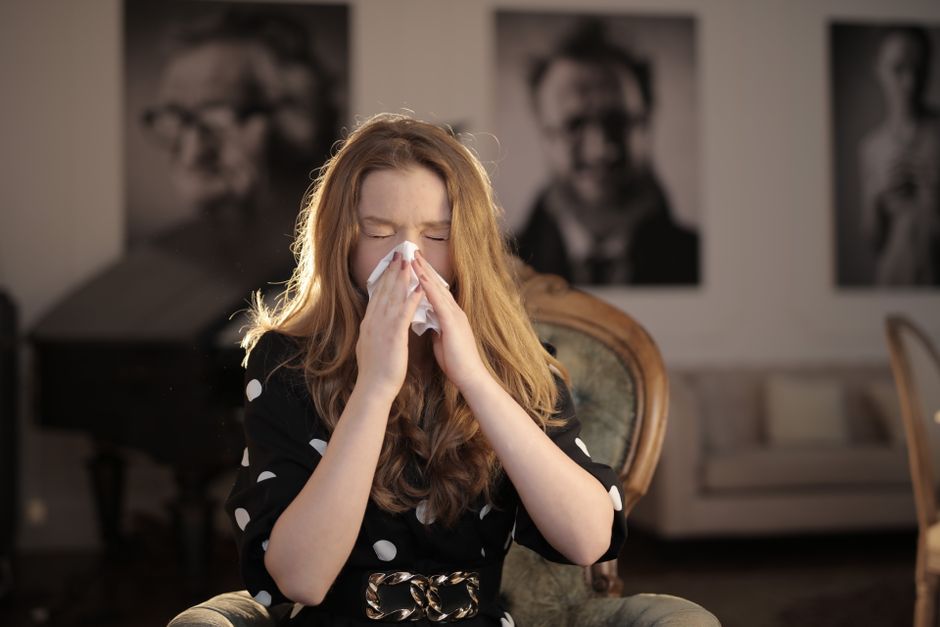
A sneezing attack can hit at the worst time — during a meeting, in a quiet room, or right before sleep. The urge to sneeze builds, and you feel powerless to stop it. The good news is that several tricks actually work by interrupting the nervous reflex behind the sneeze. Pressing your tongue to the roof of your mouth, pinching the bridge of your nose, or exhaling forcefully through your nose can often stop a sneeze before it starts. These methods work by distracting the trigeminal nerve, which triggers the sneeze reflex, or by physically blocking the airflow needed to complete a sneeze.
What Exactly Causes a Sneezing Attack?
Sneezing is a reflex your body uses to clear the nasal passages. The trigeminal nerve, which runs through your face, detects an irritant — dust, pollen, a tickle, or even bright light. It sends a signal to your brainstem, which triggers a chain reaction: you take a deep breath, your chest muscles tighten, your eyes close, and air blasts out at up to 100 miles per hour.
A sneezing attack means multiple triggers are firing in rapid succession. This can happen with allergies, a cold, or even after eating certain foods. The American Academy of Allergy, Asthma & Immunology notes that about 18% of people experience “gustatory rhinitis” — sneezing triggered by spicy or hot foods. Some people also sneeze when they step from a dark room into bright sunlight, a condition called photic sneeze reflex. It affects roughly 18% to 35% of the population, according to research published in the journal Neurology.
Understanding the trigger matters because the trick that works for a dust-related sneeze may not work for a light-triggered one. But most sneeze-stopping methods target the reflex itself, not the cause.
How To Stop A Sneezing Attack Tricks That Work
Several tricks have real evidence behind them. They work by interrupting the nerve signals or altering the physical mechanics of the sneeze. Here are the most reliable ones.
Press your tongue to the roof of your mouth. Place the tip of your tongue against the hard palate just behind your front teeth. Apply firm pressure. This stimulates a nerve in the roof of your mouth that can override the sneeze signal. Many people find this stops a sneeze within seconds.
Pinch the bridge of your nose. Squeeze the soft part of your nose where it meets your face, right between your eyes. This compresses the nerves that carry the sneeze signal. Hold for five to ten seconds. It works best when you feel the sneeze building but before the final inhale.
Exhale forcefully through your nose. When you feel a sneeze coming, take a short breath in and then blow out hard through your nostrils. This reverses the airflow and can prevent the sneeze from completing. It is surprisingly effective for many people.
Tickle the roof of your mouth. Use your tongue to gently scratch the palate near the back of your mouth. The sensation distracts the trigeminal nerve. Some people report this works better than pressing the tongue flat.
Look at a bright light. This only works for people who already have the photic sneeze reflex. For them, looking at a bright light can actually trigger a sneeze rather than stop one. But for others, the sudden light exposure can interrupt the reflex. It is worth trying if you are in a situation where you can safely glance at a light source.
None of these tricks are guaranteed for everyone. Sneezing is a complex reflex, and individual anatomy and trigger sensitivity vary. But these methods are safe, free, and have no side effects. Try them the next time you feel an attack starting.
What Does Research Say About Sneezing and the Vagus Nerve?
The vagus nerve runs from your brainstem down through your chest and abdomen. It controls many automatic functions, including heart rate, digestion, and some reflexes. Some people claim that stimulating the vagus nerve can stop a sneeze. The idea is that the vagus nerve can override the sneeze reflex by activating the parasympathetic nervous system.
Research on this is limited. A 2019 study in Clinical Autonomic Research found that vagus nerve stimulation can reduce the frequency of sneezing in some people with chronic rhinitis. But the study used an implanted device, not a simple home trick. There is no solid evidence that humming, coughing, or bearing down — common vagus nerve stimulation methods — reliably stop a sneeze.
That said, some people do report success with these methods. Taking a slow, deep breath and then holding it for a few seconds can sometimes calm the reflex. This may work more through relaxation than direct nerve stimulation. If you find it helpful, there is no harm in using it. Just be aware that the evidence is not strong.
The most reliable research-backed approach remains targeting the trigeminal nerve directly. The tongue press and nose pinch methods have more anecdotal support and a clearer physiological basis.





What Not to Do During a Sneezing Attack
Some popular advice is not just ineffective but potentially harmful. Avoid these common mistakes.
Do not hold your nose and mouth shut. This can trap air pressure inside your head. The force of a sneeze is enough to rupture eardrums or damage blood vessels in the eyes. There are documented cases of people suffering eardrum perforations from suppressing sneezes this way. Let the sneeze out if you cannot stop it safely.
Do not use decongestant sprays for more than three days. Over-the-counter nasal sprays like oxymetazoline (Afrin) can provide quick relief from congestion that triggers sneezing. But using them longer than three days can cause rebound congestion, making the problem worse. The FDA warns against prolonged use.
Do not take antihistamines daily without talking to a doctor. First-generation antihistamines like diphenhydramine (Benadryl) cause drowsiness and can impair driving. Second-generation ones like loratadine (Claritin) are safer for daily use but still have side effects like dry mouth. If sneezing attacks are frequent, see an allergist rather than self-medicating long-term.
Do not assume it is allergies. Many people blame pollen or dust when the cause is something else. Non-allergic rhinitis, which affects about 20% of adults according to the American Academy of Allergy, Asthma & Immunology, can cause sneezing attacks without an allergic trigger. Common causes include changes in temperature, strong odors, and hormonal shifts. Treating it like allergies with antihistamines may not work.
When Should You See a Doctor for Sneezing Attacks?
Occasional sneezing is normal. But frequent attacks that disrupt your life warrant a medical visit. The CDC estimates that about 60 million Americans have allergic rhinitis, and many are undiagnosed. If you sneeze in clusters more than a few times a week, consider seeing an allergist.
See a doctor if you have any of these signs:
- Sneezing accompanied by wheezing, chest tightness, or shortness of breath
- Sneezing that lasts longer than four weeks without improvement
- Sneezing that starts after eating specific foods
- Sneezing that happens only in certain environments, like at work or in your bedroom
- Sneezing with thick, green, or bloody nasal discharge
An allergist can perform skin or blood tests to identify triggers. They may recommend prescription antihistamines, nasal steroid sprays, or immunotherapy (allergy shots). For non-allergic rhinitis, treatments include ipratropium nasal spray, which reduces nasal secretions, or capsaicin nasal spray, which desensitizes the nerves over time.
One non-obvious point: chronic sneezing can sometimes signal a structural issue like a nasal polyp or deviated septum. These are not common, but they are worth ruling out if other treatments fail. An ENT (ear, nose, and throat specialist) can check for these with a simple nasal endoscopy.
Quick Comparison of Sneezing Attack Remedies
| Method | How It Works | Evidence Level | Best For |
|---|---|---|---|
| Tongue to roof of mouth | Stimulates palatal nerve to override reflex | Anecdotal, physiologically plausible | Oncoming sneeze |
| Pinch nose bridge | Compresses trigeminal nerve | Anecdotal, physiologically plausible | Mid-sneeze buildup |
| Forceful nasal exhale | Reverses airflow pattern | Anecdotal | Early warning signs |
| Antihistamines (oral) | Blocks histamine receptors | Strong for allergies | Frequent allergic attacks |
| Nasal steroid spray | Reduces inflammation in nasal passages | Strong for chronic rhinitis | Daily sneezing |
| Vagus nerve stimulation | Activates parasympathetic system | Limited, mostly theoretical | Some people report benefit |
Common Misconceptions About Stopping Sneezes
Myth: Sneezing is always caused by allergies. This is false. Only about 40% of chronic sneezing cases are allergic in origin, according to the American Academy of Allergy, Asthma & Immunology. The rest are non-allergic triggers or a mix of both.
Myth: Holding your breath stops a sneeze. It can sometimes delay it, but it does not stop the reflex. The sneeze usually comes out once you breathe again. And holding your breath too long can make you lightheaded.
Myth: Drinking water stops a sneeze. There is no evidence that hydration affects the sneeze reflex. Water may help if your throat is dry and the irritation is causing the sneeze, but that is a specific situation, not a general fix.
Myth: Sneezing with your eyes open is dangerous. This is a persistent urban legend. Your eyes will not pop out. The reflex to close your eyes during a sneeze is strong, but some people can keep them open without harm. The pressure is not enough to cause injury.
Myth: Spicy foods always cause sneezing. They can, but only in people with gustatory rhinitis. Most people do not sneeze from spicy food. If you do, it is a specific reflex, not a universal reaction.
Frequently Asked Questions
Can you stop a sneeze by pressing on your upper lip?
Some people report that pressing firmly on the philtrum — the groove between your nose and upper lip — can interrupt the sneeze reflex. The evidence is purely anecdotal, but it is safe to try.
Does tickling the roof of your mouth really stop sneezing?
Yes, for many people. The roof of your mouth is rich in nerve endings that connect to the trigeminal nerve, and the distraction can override the sneeze signal.
Why do I sneeze multiple times in a row?
Multiple sneezes happen when the initial sneeze does not fully clear the irritant. Each sneeze resets the reflex until the trigger is removed or the nerve stops firing.
Is it bad to suppress a sneeze?
Suppressing a sneeze by holding your nose and mouth shut can cause injury, including eardrum rupture or blood vessel damage. Use safe tricks like tongue pressure instead.
