
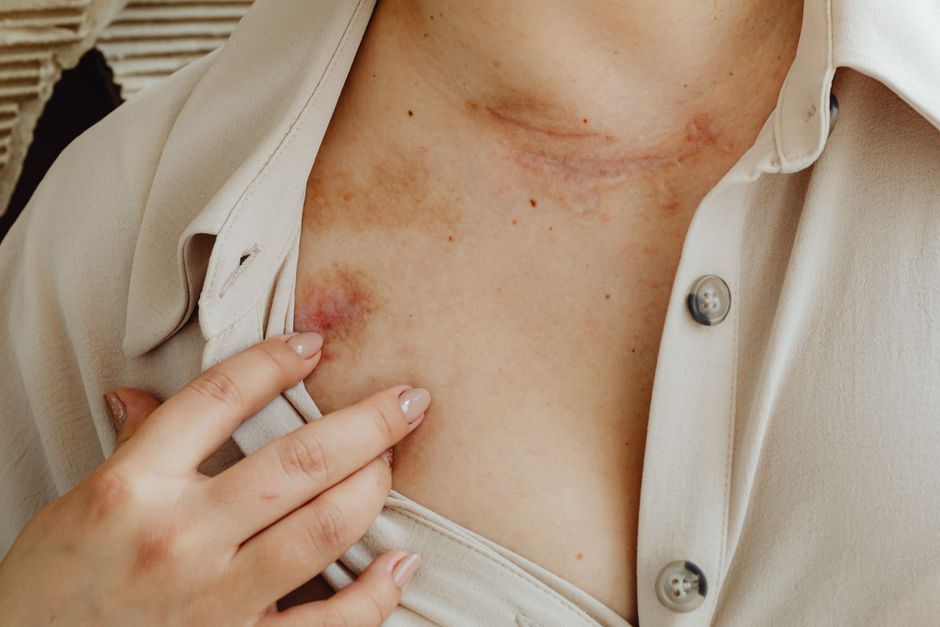
A keloid scar is a raised growth of extra tissue that can keep spreading beyond the original injury. You cannot reliably stop one from forming by treating the wound at home, and no proven method guarantees it will stop growing once it starts. The most effective step is to see a dermatologist early, because medical treatment can reduce size, relieve symptoms, and lower the chance of the scar coming back after removal.
Keloids form when the skin’s repair process overproduces collagen. The result is a firm, raised scar that extends past the edges of the original wound. They can itch, feel tender, and keep enlarging for months. Understanding why they grow is the first step to knowing what actually helps and what does not.
What Causes A Keloid Scar To Keep Growing?
A keloid grows because the skin keeps laying down collagen long after a normal wound would have healed. In ordinary scarring, collagen production slows and stops once the wound closes. In keloid-prone skin, the signal to stop is weak, so the repair process continues.
Researchers do not fully understand why this happens. What they do know is that certain people are far more likely to develop keloids. The tendency runs in families and is more common in people with darker skin tones, including those of African, Hispanic, and Asian descent.
Several things can trigger a keloid or make an existing one worse:
- Deep cuts, surgical incisions, and puncture wounds
- Burns
- Body piercings and ear piercing
- Severe acne or chickenpox
- Scratches and even minor skin injuries in people who are prone
One detail worth knowing: a keloid can appear weeks to months after the original injury. The wound may seem to heal normally before the raised tissue starts. That delay is part of why early treatment matters. Once the scar is actively growing, it is harder to control.
Keloids are not cancer. They are harmless growths of scar tissue. But they can be uncomfortable and can affect appearance, and some people find them distressing. That is a real and valid reason to seek treatment.
Can You Stop A Keloid From Growing On Your Own?
No home remedy has been proven to stop a keloid from growing. That is an honest statement of the evidence, not a reason to give up. Some self-care steps help protect the scar and reduce irritation, but they do not reliably halt growth.
What you can do at home is avoid making things worse:
- Do not pick, scratch, or scrub the scar
- Protect it from sun exposure, which can darken the scar and make it more visible
- Avoid tight clothing or friction over the area
- Keep the surrounding skin moisturized to reduce itching
Pressure and silicone are the two home-based methods most often discussed. Silicone gel sheets and pressure garments are used in clinical practice, and some studies suggest they can help soften scars and reduce thickness. The evidence is stronger for preventing scars in people at high risk than for stopping an active keloid. These methods need to be used consistently for months, and results vary.
Be cautious with online claims. No cream, oil, or supplement has been shown to stop a keloid from growing. If a product promises to “remove” a keloid, that claim is not supported by clinical evidence.
What Medical Treatments Can Slow Or Stop A Keloid?
Medical treatment is the most reliable way to control a growing keloid. A dermatologist can assess the scar and recommend options based on its size, location, and how active it is. Treatment often combines more than one method.
The main approaches used in clinical practice include:
- Corticosteroid injections. These are among the most common first-line treatments. They can flatten a keloid, reduce itching, and slow growth. Multiple sessions are usually needed.
- Silicone gel or sheets. Often used alongside other treatments to soften the scar and reduce thickness.
- Cryotherapy. Freezing the scar tissue can shrink smaller keloids. It is sometimes combined with steroid injections.
- Laser therapy. Certain lasers can reduce redness and flatten the scar. Results vary by scar and by patient.
- Radiation therapy. Used in some cases after surgical removal, usually for keloids that keep coming back. It is not a first choice and is reserved for specific situations.
- Surgical removal. Cutting out the keloid can work, but surgery alone has a high rate of the scar returning. It is usually paired with another treatment, such as steroid injections or pressure therapy, to lower that risk.
No single treatment works for everyone. Response depends on the person, the scar, and how long it has been growing. Some keloids improve significantly; others are stubborn. A dermatologist can adjust the plan over time.
It is also fair to say the evidence for each option varies. Steroid injections and silicone have the most support. Others, like laser and radiation, are used in specific cases with mixed results across studies. Your clinician should explain the expected benefit and the limits for your situation.
Why Early Treatment Matters More Than Anything Else
Treating a keloid early gives you the best chance of limiting its growth. A small, new keloid is easier to control than a large, mature one. The longer a keloid grows, the more tissue there is to manage.
This is why the timing of a dermatology visit matters. If you notice a scar that is rising, spreading past the wound edges, itching, or feeling tender, that is a signal to get it checked. Waiting to see if it settles is a common mistake. Keloids rarely shrink on their own.
People with a known tendency to form keloids should mention it before any surgery, piercing, or procedure. A clinician can plan the wound care and consider preventive measures. This is one of the few situations where prevention has a real footing, because the risk is known ahead of time.
What Raises The Risk Of A Keloid Coming Back?
Keloids have a strong tendency to return after treatment, especially after surgery alone. This is the single biggest challenge in managing them. The same biology that caused the first keloid can cause a new one at the treatment site.
Factors that raise the risk of recurrence include:
- Removing the keloid without follow-up treatment
- Ongoing tension or movement at the scar site
- Delayed treatment of an active keloid
- Personal history of keloids or a family history
That is why surgery is almost never done alone. Combining removal with steroid injections, pressure therapy, or other methods lowers the chance of the scar returning. Even with combined treatment, recurrence is possible. Being realistic about this helps set expectations.
After any treatment, follow your clinician’s instructions closely. Protecting the healing area from sun, friction, and irritation supports the best possible result. Report any new growth early rather than waiting.
When Should You See A Doctor About A Keloid?
See a doctor if a scar is growing, extends beyond the original wound, or causes itching or pain. These are the classic signs of a keloid rather than an ordinary scar. A dermatologist can confirm the diagnosis and discuss treatment.
Also seek care if a scar changes quickly, bleeds, or looks different from before. Keloids themselves are not dangerous, but a changing skin growth should always be checked to rule out other conditions. A clinician can tell the difference.
For people with darker skin or a family history of keloids, it is reasonable to ask about scar prevention before any planned surgery or piercing. That conversation is low-risk and can shape how the wound is managed.
Frequently Asked Questions
Can a keloid scar go away on its own?
Keloids rarely go away without treatment and often keep growing or stay the same size. Some may flatten slightly over years, but you should not count on it.
What is the best treatment to stop a keloid from growing?
Corticosteroid injections are among the most commonly used and best-supported treatments for flattening a keloid and easing symptoms. Many people need a combination of treatments, and results vary.
Can I prevent a keloid after surgery?
If you are prone to keloids, tell your surgeon before the procedure so preventive steps can be planned. Silicone and pressure therapy are sometimes used, though evidence for prevention is stronger in some situations than others.
Are keloids dangerous?
Keloids are harmless growths of scar tissue and are not cancer. Any skin growth that changes quickly or bleeds should still be checked by a doctor.
