
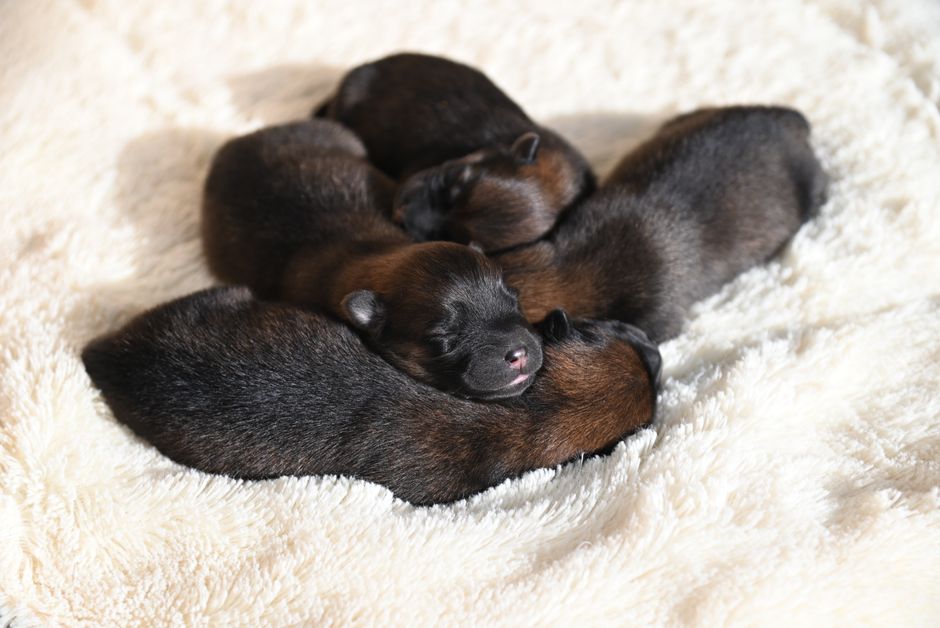
Newborn puppies cannot poop on their own. For roughly the first two to three weeks of life, a puppy’s digestive and nervous systems are not mature enough to push waste out without help. The mother normally does this by licking the puppy’s belly and genital area, which triggers the reflex that moves stool and urine out of the body. If the mother is absent, sick, or not caring for the litter, a human caregiver has to copy that stimulation by hand. This is a normal part of newborn puppy care, not a sign that something is wrong.
Why Newborn Puppies Cannot Poop Without Help
A newborn puppy’s body is not finished developing at birth. The muscles that control the bowels and bladder, and the nerves that signal a full rectum, are still maturing. The reflex to release waste only fires when the area around the anus and genitals is physically stimulated.
In a normal litter, the mother handles this. After feeding, she licks each puppy’s abdomen and rear. That licking does two things. It cleans the puppy, and it triggers the reflex that lets the puppy pass stool and urine. This is sometimes called the anogenital reflex.
This dependence is temporary. Most puppies begin to poop and pee on their own somewhere between two and four weeks of age, as their nervous system matures and they start moving around more. Until then, stimulation is a required part of care. A puppy that is never stimulated can become uncomfortable and, in serious cases, develop problems from retained waste.
How To Stimulate A Newborn Puppy To Poop
The method is simple and takes less than a minute per puppy. The key is timing it right after feeding, when the gut is most active.
Here is the standard approach used by breeders and veterinarians:
- Warm a cotton ball, soft cloth, or gauze pad with a little warm water. It should feel like a warm washcloth, not hot.
- Hold the puppy securely on its belly or in your palm, supporting the head and neck.
- Gently rub the genital and anal area in a small circular motion. Use light, steady pressure — roughly the pressure a mother’s tongue would apply.
- Keep rubbing for up to 30 to 60 seconds. Stool and urine usually appear within that window.
- Wipe the puppy clean afterward and dry the area so it does not stay damp.
Urine usually comes first and is easier to trigger. Stool may take a little longer and may not appear at every feeding. That is normal. The stimulation should feel like grooming, not scrubbing. Rough rubbing can irritate the skin, which is thin and delicate in newborns.
Do this after every feeding during the first weeks of life. Newborn puppies eat often, so that means several times a day. If you are hand-raising a litter, this is one of the most important routines you will repeat.
When Should You Stimulate, And How Often?
Stimulate right after each feeding. That is when the digestive tract is most likely to respond, and it mirrors what happens naturally when a mother cleans her puppies after they nurse.
Newborn puppies typically need to eat every two to four hours in the first days of life, including overnight. Each feeding should be followed by stimulation. As puppies grow and eat less often, the schedule spaces out too.
You can also stimulate if a puppy seems uncomfortable, restless, or has a firm, bloated belly. A puppy that has not passed stool for a day or more, despite regular stimulation, may be constipated and should be checked by a veterinarian. Do not wait if the puppy is also crying, refusing to eat, or has a hard, swollen abdomen.



What Normal Puppy Stool Looks Like
Knowing what is normal helps you spot problems early. In the first days, a puppy’s stool is soft and yellowish to brownish. It may look a little like pudding.
If a puppy is being bottle-fed with a commercial milk replacer, the stool is usually firmer than that of a mother-fed puppy. Formula-fed puppies tend to have more formed stool, and it is often a mustard-yellow color. This is expected and not a concern on its own.
Signs that something may be wrong include:
- Stool that is very watery, bloody, or black and tarry
- No stool at all for more than a day despite regular stimulation
- A hard, swollen, or painful-looking belly
- Straining with no result
- Lethargy, poor feeding, or constant crying
Newborn puppies can decline quickly. Any of these signs is a reason to contact a veterinarian rather than wait and see.
What If The Mother Is Present?
If the mother is caring for her puppies normally, you usually do not need to stimulate them yourself. She will do it as part of cleaning and nursing. Your job is mostly to watch and make sure it is happening.
Some mothers, especially first-time mothers or those who are stressed, sick, or had a difficult birth, do not stimulate or clean their puppies well. If you notice puppies that are dirty, damp, or seem to be straining without relief, you can step in and stimulate them yourself. It will not harm them, and it can fill a gap in care.
If the mother rejects the litter or cannot care for them, hand-rearing becomes necessary. That means feeding, keeping the puppies warm, and stimulating them to poop and pee after every feeding until they can do it on their own.
Common Mistakes And Safety Points
A few errors are common when people first care for newborns.
Rubbing too hard. Newborn skin is fragile. Light, steady pressure is enough. If the area looks red or irritated, you are pressing too firmly.
Using cold water or a dry cloth. Warmth helps trigger the reflex. A warm, damp cotton ball works better than something cold or dry.
Expecting stool every single time. Urine usually comes at every stimulation, but stool may not. As long as the puppy is passing stool regularly and seems comfortable, occasional gaps are normal.
Ignoring a puppy that never produces stool. If stimulation consistently produces nothing and the puppy seems uncomfortable, that is a medical issue, not something to keep waiting out.
Keep the puppy warm throughout. Newborns cannot regulate their own body temperature, and chilling makes everything worse. Stimulate in a warm, draft-free spot, and return the puppy to its warm bed right after.
When To Call A Veterinarian
Call a veterinarian if a puppy has not passed stool for more than a day despite regular stimulation, or if the belly looks hard and swollen. Also call if you see blood in the stool, black tarry stool, or stool that is mostly water.
Other warning signs include a puppy that will not eat, feels cold to the touch, cries constantly, or seems limp and unresponsive. Newborns can go downhill within hours, so it is better to check early than to wait. A veterinarian can tell you whether the puppy is constipated, dehydrated, or dealing with something more serious.
For most healthy puppies with a hands-on caregiver, stimulation is a simple routine that works well. The reflex is reliable when triggered correctly, and the need for it fades on its own within the first few weeks of life.
Frequently Asked Questions
How do you stimulate a newborn puppy to poop?
Gently rub the puppy’s genital and anal area with a warm, damp cotton ball or cloth in small circles for up to 30 to 60 seconds, right after feeding. This mimics the mother’s licking and triggers the reflex that releases stool and urine.
How often should you stimulate a newborn puppy to poop?
Stimulate after every feeding, which for a newborn can mean every two to four hours, including overnight. As the puppy grows and eats less often, the schedule spaces out.
What if a newborn puppy does not poop after stimulation?
Occasional gaps are normal, but if a puppy has not passed stool for more than a day despite regular stimulation, or has a hard, swollen belly, contact a veterinarian. Newborns can decline quickly, so do not wait.
When can puppies poop on their own?
Most puppies begin to poop and pee without help somewhere between two and four weeks of age as their nervous system matures. Until then, they depend on the mother or a caregiver to stimulate them.
