
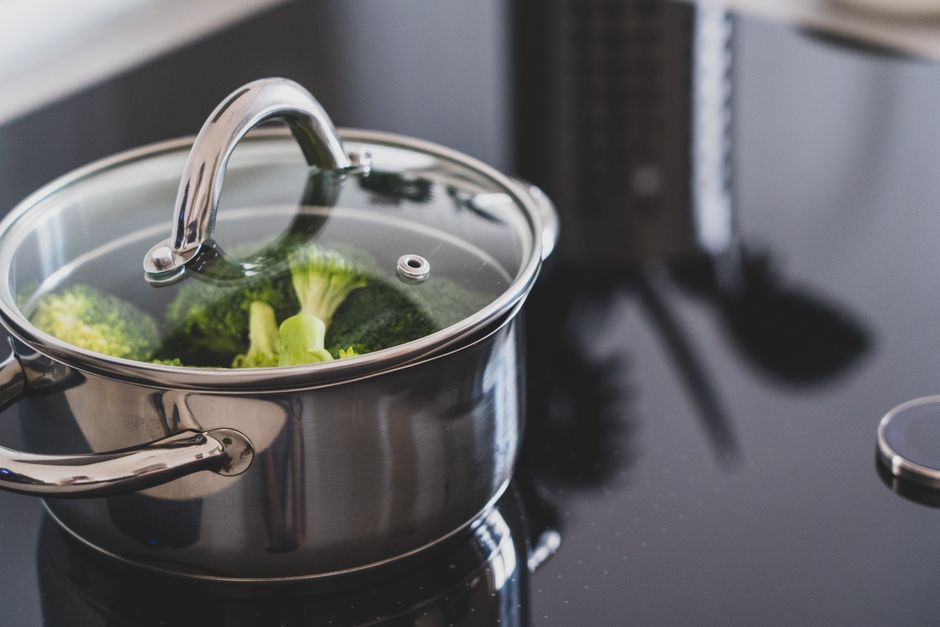
You can steam fresh broccoli without a steamer using a pot with a lid and a small amount of boiling water. Add about an inch of water, bring it to a boil, set the broccoli in a heatproof colander or directly above the water, cover, and let the steam cook it for roughly 3 to 5 minutes. The broccoli turns bright green and tender-crisp, and it never sits in the water, so it keeps more of its water-soluble nutrients than boiling does.
The method works because steam transfers heat efficiently without soaking the vegetable. You do not need special equipment. A skillet, a saucepan, or a microwave-safe bowl can all do the same job.
What Is the Basic Stovetop Method Without a Steamer?
Any wide pot or deep skillet with a tight-fitting lid can act as a steamer. The setup is simple: water on the bottom, broccoli held above it, and a lid to trap the steam.
Here is the reliable approach:
- Cut the broccoli into florets of similar size so they cook evenly. Keep the stems slightly smaller than the florets, since stems take a little longer.
- Add about 1 inch of water to the pot and bring it to a rolling boil.
- Set a heatproof colander, a metal steamer insert, or even a few crumpled balls of foil in the pot to keep the broccoli out of the water. If you have none of these, rest the florets on the sides of a wide skillet above a shallow pool of water.
- Add the broccoli, cover tightly, and cook for 3 to 5 minutes. Smaller florets finish closer to 3 minutes; larger pieces need closer to 5.
- Lift the lid and check with a fork. The stem should pierce easily but still offer a little resistance.
The lid matters more than the equipment. Steam escapes quickly from an open pot, so a snug lid is what actually cooks the broccoli. If your lid does not fit well, a piece of foil pressed over the top works.
Can You Steam Broccoli in a Regular Frying Pan?
Yes, and a wide skillet is one of the easiest tools for the job. Its broad surface spreads the florets in a single layer so they steam evenly.
Add just enough water to cover the bottom of the pan, about a quarter inch. Bring it to a boil, add the broccoli in one layer, and cover. The shallow water turns to steam almost immediately, and the wide lid traps it across the whole pan.
Watch the water level. In a wide pan, a thin layer of water can boil off fast. If the pan runs dry before the broccoli is done, add a splash of hot water rather than cold, so the cooking does not stall.
How Do You Steam Broccoli in the Microwave?
The microwave steams broccoli well and quickly, and it is a legitimate method rather than a shortcut. The water in and around the broccoli turns to steam inside the covered container.
Put the florets in a microwave-safe bowl with about 2 to 3 tablespoons of water. Cover with a microwave-safe lid or a plate, leaving a small gap for steam to escape. Microwave on high for about 3 to 4 minutes, then check. Cooking times vary widely between microwaves, so start shorter and add time in 30-second increments.
One caution worth stating plainly: steam from a covered microwave container can cause burns when you lift the lid. Open it away from your face and let it rest a moment first.





How Long Should You Steam Broccoli, and How Do You Know It Is Done?
Fresh broccoli florets typically steam in 3 to 5 minutes. The exact time depends on floret size, how fresh the broccoli is, and how much steam your setup produces.
Doneness is easier to judge by texture than by the clock. A fork should slide into the stem with mild resistance. The florets turn a deeper, brighter green. Overcooked broccoli shifts toward a dull olive color and turns soft and mushy.
There is a real nutritional reason to stop at tender-crisp rather than soft. Broccoli is high in vitamin C and other water-soluble nutrients, and these leach into cooking water and degrade with prolonged heat. Steaming keeps the vegetable out of the water, which is why it preserves more of these nutrients than boiling. Shorter cooking time helps too.
If you want to stop cooking precisely, move the broccoli to a plate right away. It keeps cooking in its own residual heat if left covered in a hot pot.
Does Steaming Preserve More Nutrients Than Boiling or Microwaving?
Steaming generally preserves more water-soluble vitamins than boiling. That is well established. When broccoli is boiled, vitamin C and other water-soluble compounds move into the cooking water, which is usually poured off.
Comparisons between steaming and microwaving are less clear-cut. Some studies suggest microwaving with minimal water retains nutrients about as well as steaming, because both limit contact with large volumes of water and keep cooking time short. The evidence is mixed on which is marginally better, and the difference is small compared with the gap between either method and boiling.
The practical takeaway is less about picking a winner and more about two habits: use little water, and do not overcook. Those two choices matter more than the appliance.
What Are Common Mistakes When Steaming Broccoli Without a Steamer?
The most common mistake is too much water. If the broccoli sits in water, you are boiling it, not steaming it, and you lose the nutrient advantage.
Other frequent problems:
- An ill-fitting lid. Steam escapes and cooking slows to a crawl. Use foil if needed.
- Uneven pieces. Large florets stay raw while small ones go soft. Cut them to a similar size.
- Walking away. Broccoli goes from bright and crisp to dull and mushy in a couple of minutes. Stay nearby.
- Crowding the pot. A single layer steams evenly. A piled-up pot cooks unevenly.
- Not drying the broccoli first. Wet florets add extra water and steam unevenly. A quick pat dry helps.
One point that surprises people: the thick stalk is not waste. Peeled and sliced, it steams in about the same time as the florets and carries much of the vegetable’s fiber.
How Should You Store and Reheat Steamed Broccoli?
Steamed broccoli keeps in a sealed container in the refrigerator for about 3 to 4 days. Cool it quickly rather than leaving it at room temperature for long.
Reheating is where texture suffers. A second round of high heat turns already-cooked broccoli soft and dull. A brief warm-up in a covered pan with a splash of water, or a short burst in the microwave, is gentler than reheating it in a hot oven. Some people prefer to eat it cold in salads, where texture holds up better.
For food safety, follow standard guidance: refrigerate cooked vegetables within two hours, and discard anything that has sat out longer or shows an off smell or sliminess.
Frequently Asked Questions
Can you steam broccoli without any special equipment?
Yes. A pot with a lid, a small amount of boiling water, and a heatproof colander or foil to hold the broccoli above the water is all you need. A wide skillet with a lid works just as well.
How long does it take to steam broccoli without a steamer?
About 3 to 5 minutes once the water is boiling and the lid is on. Smaller florets finish near 3 minutes, and larger pieces take closer to 5.
Is microwaving broccoli as healthy as steaming it?
Both methods preserve water-soluble nutrients well because they use little water and short cooking times. The evidence is mixed on which is marginally better, but both clearly beat boiling.
Do you need to wash broccoli before steaming it?
Yes. Rinse the florets under running water and pat them dry before cooking, since dirt and grit can collect in the tight heads. Drying also helps the broccoli steam evenly.
