
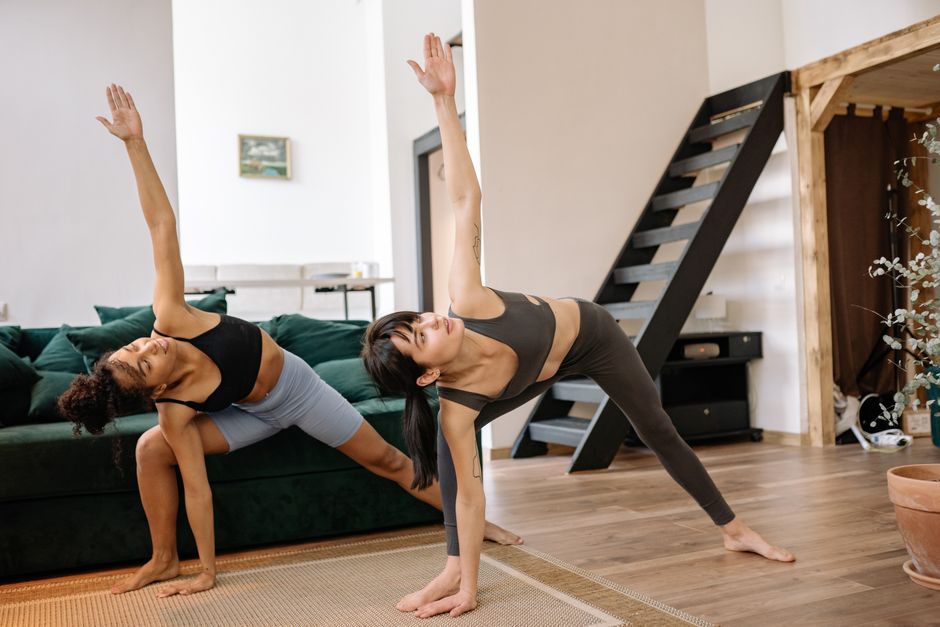
Getting older does not mean you have to become stiff. The key to staying flexible as you age is consistent, targeted movement. Static stretching held for 15 to 30 seconds, dynamic stretching before activity, and strength training through a full range of motion all work. The most important factor is doing it regularly — at least two to three times per week. No single stretch or gadget can replace a consistent routine.
What Happens to Flexibility as We Age?
With age, connective tissues like tendons and ligaments become stiffer. Collagen fibers cross-link more, and elastin loses some of its bounce. This is a normal biological process, not a disease.
Joint range of motion can decrease by about 20 to 30 percent between ages 20 and 70. But the rate of loss varies widely between individuals. It also differs from joint to joint. Some people lose flexibility in their hips first, others in their shoulders.
The good news: much of this loss is reversible or at least manageable with consistent stretching and strength work. The idea that you are “stuck” with the flexibility you have at age 50 is not supported by evidence.
What Type of Stretching Actually Works?
Three types of stretching have the best evidence for improving flexibility: static, dynamic, and proprioceptive neuromuscular facilitation (PNF).
Static stretching means reaching a position where you feel a mild stretch and holding it still. Research consistently shows that holding a static stretch for 15 to 30 seconds per muscle group, done two to three times per week, increases range of motion. The American College of Sports Medicine recommends accumulating 60 seconds of stretch per muscle group per session (for example, two 30-second holds).
Dynamic stretching involves moving a joint through its range of motion without holding the end point. Leg swings, arm circles, and torso twists are examples. Dynamic stretching is often recommended before exercise because it warms the muscles and prepares them for activity. Studies show it can improve flexibility similarly to static stretching when done consistently.
PNF stretching combines stretching with contracting the muscle. A common method is to stretch a muscle, then contract it against resistance for a few seconds, then stretch again. Some evidence suggests PNF can produce greater gains in range of motion than static stretching alone. However, it often requires a partner or a strap and carries a slightly higher risk of muscle strain if done incorrectly.
There is no strong evidence that one type is universally best. The most important factor is doing any of them regularly.
How Often Should You Stretch to See Results?
Consistency matters more than duration. Stretching two to three times per week for about 10 to 15 minutes per session is enough to maintain or improve flexibility for most adults over 35.
Stretching every day is fine, but not necessary. If you stretch once a week or less, you are unlikely to see lasting change. The body adapts to the stress you put on it. If you stop stretching, the gains will fade within a few weeks.
For best results, incorporate stretching into a broader routine that includes strength training and cardiovascular exercise. Flexibility gains are more durable when combined with muscle strength, because stronger muscles support better joint control and reduce stiffness from disuse.




Does Strength Training Help Flexibility?
Yes. Strength training through a full range of motion can improve flexibility just as much as stretching alone. Exercises like deep squats, lunges, and overhead presses put joints through their available range under load, which stimulates adaptations in both muscle and connective tissue.
Some studies have found that heavy resistance training using full-range movements increases hamstring flexibility nearly as much as static stretching. This challenges the old idea that lifting weights makes you tight. Muscle tightness after lifting is temporary, not permanent.
The practical takeaway: do not skip strength training. Focus on exercises that move joints through their full range — not just partial reps. If you cannot perform a squat to full depth because of stiffness, that is the exact range you need to work on.
What About Yoga, Pilates, and Other Classes?
Yoga and Pilates are effective because they combine stretching, strengthening, and balance work. Multiple studies show that regular yoga practice improves flexibility in older adults. The variety of poses challenges multiple joints and muscle groups.
The evidence for Pilates is somewhat less robust but still positive. Both can be good options if you prefer guided classes over solo stretching. The key is attendance — the benefit comes from regular participation, not the specific style.
One caution: some yoga styles (such as Bikram or advanced Ashtanga) involve intense postures that may increase injury risk if you are new to flexibility work. Start with beginner or moderate-intensity classes and listen to your body.
Common Flexibility Myths and Misconceptions
Myth: You should stretch until it hurts. Pain is a warning sign. Stretching should feel like a mild pull, never sharp or burning. Pushing into pain can cause microtears that lead to scar tissue and more stiffness over time.
Myth: Stretching before exercise prevents injury. The evidence here is mixed. Stretching alone, especially static stretching before a workout, does not reliably reduce injury risk. A proper warm-up (light cardio and dynamic movement) is more important for injury prevention than stretching. Save deep static stretching for after exercise or on separate days.
Myth: You need to hold a stretch for several minutes. Research shows that 30 seconds is enough for most muscles. Longer holds do not provide additional benefit for flexibility in the general population and may reduce muscle power if done right before explosive activity.
Myth: Flexibility is all or nothing. You can be flexible in one joint and stiff in another. Focus on the tight areas that limit your daily activities — reaching overhead, bending to tie shoes, turning your head to check traffic.
How To Stay Flexible As You Age What Actually Works — A Simple Plan
Based on the evidence, here is what works:
- Stretch each major muscle group (hamstrings, quadriceps, chest, back, shoulders, hips) two to three times per week.
- Hold static stretches for 15 to 30 seconds. Repeat each stretch two to four times for a total of 60 seconds per muscle group.
- Include dynamic stretching before workouts (leg swings, arm circles, torso twists).
- Strength train through full range of motion at least twice per week. Exercises like squats, lunges, pull-ups, and overhead presses count.
- Move every day. Even 5 to 10 minutes of walking or gentle stretching prevents stiffening from prolonged sitting.
- Be patient. Noticeable improvements in flexibility often take four to eight weeks of consistent practice.
No single stretch or tool — foam rollers, bands, or massage guns — is a substitute for consistent movement. They can help temporarily, but lasting change requires regular stretching and strengthening.
Frequently Asked Questions
How long does it take to improve flexibility after age 50?
Most people see measurable improvements in range of motion within four to eight weeks of stretching two to three times per week. Results depend on consistency and how tight you were at the start.
Is it safe to stretch every day?
Yes, as long as you avoid pain and do not push beyond a mild stretch. Daily light stretching is safe for most people. Allow 48 hours between intense PNF or deep static sessions for muscle recovery.
Can stretching alone prevent falls in older adults?
No. Flexibility alone is not enough to prevent falls. A combination of strength training, balance exercises (like standing on one foot), and regular walking is more effective. Stretching is one part of a fall-prevention program, not the whole answer.
