
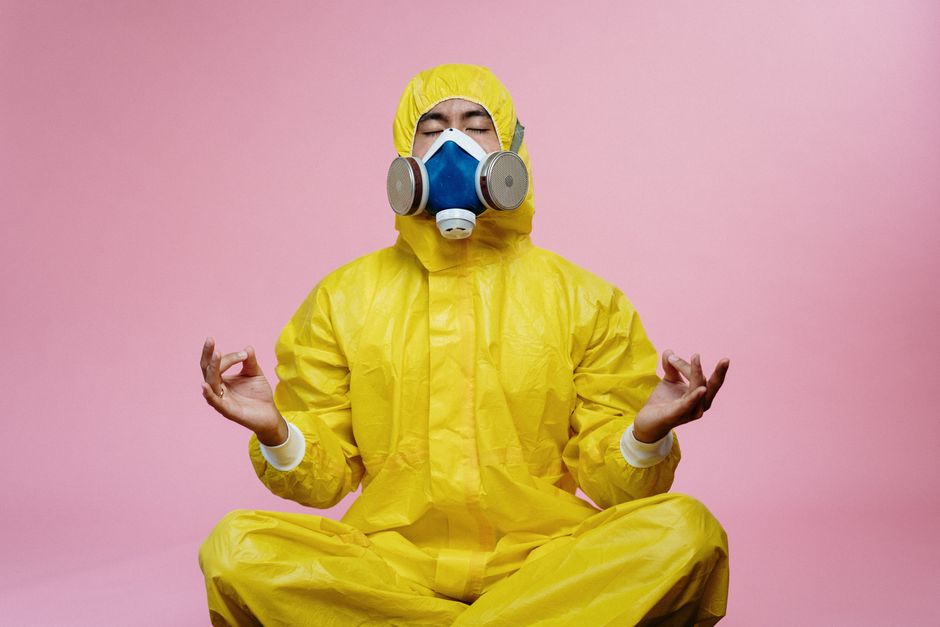
Staying calm at work is a skill built on physiology, not willpower. The fastest way to settle your body under pressure is to slow your exhale. A longer out-breath than in-breath activates the parasympathetic nervous system, the branch that lowers heart rate and dampens the stress response. You can do this at your desk in under a minute, and it works whether the pressure comes from a deadline, a difficult conversation, or a full inbox.
That is the core of what the science supports. The rest of this article explains why your body reacts the way it does at work, which techniques have real evidence behind them, and which popular advice does not hold up.
What Happens In Your Body When Work Stress Hits?
Your body runs a stress response that was built for short-term physical threats, not for a tense meeting or a looming deadline. When you perceive a threat, your brain signals your adrenal glands to release hormones including adrenaline and cortisol. Adrenaline raises heart rate and blood pressure within seconds. Cortisol keeps the system primed for longer.
This is the well-established fight-or-flight response. It is useful when you need to react fast. It becomes a problem when it switches on repeatedly across a workday and never fully switches off.
The physical signs are familiar. Tight shoulders. Shallow breathing. A racing heart before you speak. A clenched jaw. These are not signs of weakness. They are normal outputs of a nervous system doing what it evolved to do.
One clarification worth knowing: the stress response is not all bad. Short bursts of stress can sharpen focus and improve performance. The issue is chronic activation — stress that stays switched on for weeks or months. That pattern is linked to poorer sleep, digestive trouble, and cardiovascular strain. Research consistently shows chronic stress affects both mental and physical health.
How To Stay Calm At Work Science Backed Tips
Breathing techniques have the strongest and most accessible evidence base for acute calm. Slow breathing at roughly six breaths per minute has been studied for its effects on heart rate variability, a marker of how well the parasympathetic system is engaged. You do not need to count precisely. The key is a slow rate and a longer exhale.
Here is a simple approach. Breathe in through your nose for about four seconds. Breathe out slowly for about six. Repeat for a minute. The extended exhale is the active ingredient.
Other techniques rest on solid evidence too:
- Cognitive reappraisal. Reframing a stressful thought changes its emotional impact. This is a core component of cognitive behavioral therapy and is well supported by research.
- Brief physical movement. A short walk or a few minutes of stretching can reduce tension. Exercise reliably reduces anxiety symptoms over time.
- Mindfulness practice. Studies show mindfulness-based programs can reduce stress and anxiety. Effects build with regular practice rather than a single session.
- Naming the feeling. Putting your stress into words can reduce its intensity. Some research supports this effect, though results vary.
None of these require special equipment or an app. All of them work better when practiced before you are overwhelmed, not only during a crisis.
Why Does Slow Breathing Actually Work?
Breathing is one of the few body functions you can control directly, and it connects to the nervous system through a specific pathway. The vagus nerve carries signals between your brain and your organs, including your heart. Slow, extended exhales increase vagal tone, which slows heart rate.
This is why the exhale matters more than the inhale. When you breathe out slowly, you are actively engaging the brake on your stress response. Rapid, shallow breathing does the opposite.
The effect is real but modest and temporary. Slow breathing can lower acute arousal within minutes. It is not a treatment for an anxiety disorder and does not replace clinical care. Think of it as a reset button you can press, not a fix for an ongoing problem.
What About Mindfulness At Work — Does It Hold Up?
Mindfulness has more research behind it than most workplace wellness trends, but the evidence is more measured than the marketing suggests. Studies consistently show that structured mindfulness programs can reduce symptoms of stress and anxiety. The effects are generally small to moderate, not dramatic.
What the evidence does not support is the idea that a few minutes of an app will transform your workday. Programs with real results usually involve regular practice over weeks. Some workplace studies also find that individual-level fixes like mindfulness do little when the source of stress is the job itself — unrealistic workloads, poor management, or job insecurity.
That distinction matters. If your stress comes from how your workplace is run, a breathing exercise will help you get through the afternoon but will not solve the underlying problem. Evidence indicates that workplace stress is driven substantially by job design and organizational factors, not just individual coping.
Which Popular Calm-Down Tips Do Not Hold Up?
Some widely shared advice has weak or no evidence behind it. Others are actively counterproductive.
Venting anger is a common example. Research on anger suggests that venting — shouting, hitting a pillow, or ranting — tends to increase arousal rather than reduce it. Calming activities like slow breathing or a quiet walk are better supported.
Stress balls and fidget toys are popular. The evidence that they reduce physiological stress is limited. Some studies suggest fidgeting may help attention for certain people, but claims about stress reduction are not well established.
Alcohol as a wind-down is worth flagging directly. It may feel relaxing, but it disrupts sleep quality and can worsen anxiety over time. It is not a stress management tool.
Supplements marketed for calm vary widely. Some have modest evidence, many do not. No supplement has been shown to replace the basics: sleep, movement, and managing the source of stress.
How Do You Build Calm Into The Workday Itself?
Prevention beats reaction. The most effective approach is to reduce how often your stress response fires and give it time to recover.
Start with sleep. Short sleep reliably increases stress reactivity, meaning you respond more strongly to the same stressors. Protecting sleep is one of the most evidence-supported ways to stay calmer during the day.
Next, build small recovery moments into your schedule. A short walk between meetings. A minute of slow breathing before a difficult call. These breaks are not indulgence — they give your nervous system the chance to return to baseline.
Pay attention to what actually triggers your stress. Is it a specific meeting, a person, or a time of day? Patterns are easier to manage than a vague sense of being overwhelmed.
Finally, know the limits of self-management. If stress is persistent, affects your sleep and mood most days, or interferes with your life, that is a reason to talk to a doctor or mental health professional. Self-help techniques are useful, but they are not a substitute for care when stress crosses into a clinical problem.
Frequently Asked Questions
What is the fastest way to calm down at work?
Slow your breathing, with a longer exhale than inhale, for about a minute. This engages the parasympathetic nervous system and can lower heart rate within minutes.
Does slow breathing really reduce stress?
Yes, research supports a modest and temporary calming effect on the body’s stress response. It helps manage acute tension but does not treat an anxiety disorder.
Is mindfulness at work actually proven?
Structured mindfulness programs have moderate evidence for reducing stress and anxiety over weeks of practice. A few minutes on an app is unlikely to produce meaningful change on its own.
When should work stress be a medical concern?
When stress is persistent, disrupts sleep or mood most days, or interferes with daily life, it is worth talking to a doctor or mental health professional. Self-help techniques are not a substitute for clinical care.
