
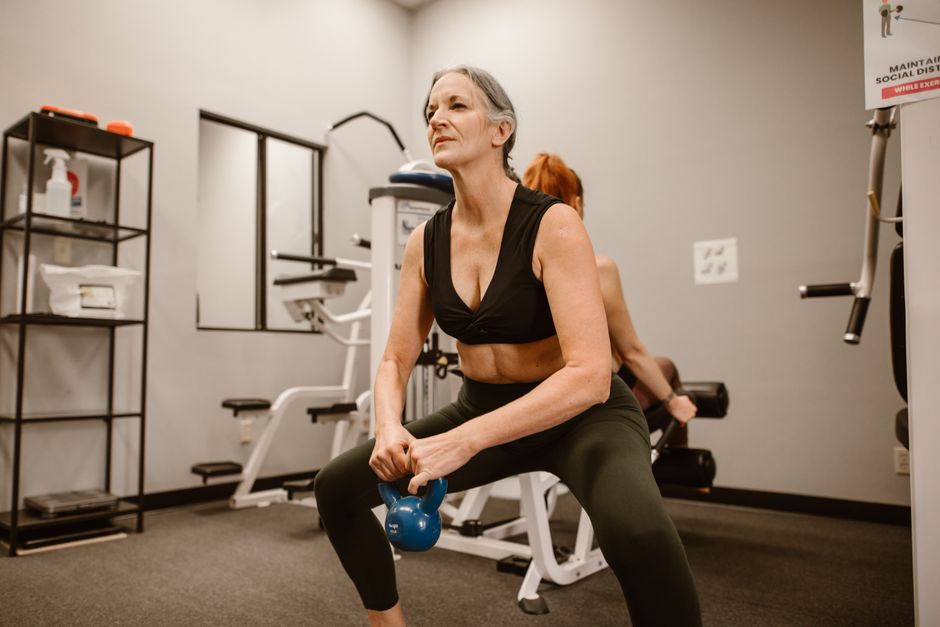
How low you can squat comes down to two things: how much your joints can move and how well you control that movement under load. If your hips, ankles, or thoracic spine are stiff, or if your stance and bracing are off, you will hit a wall long before your muscles give out. The fix is not one stretch or one cue. It is a short list of targeted mobility drills, a stance adjustment, and practice with load you can actually control.
Why Can’t I Squat Lower?
Depth is limited by the joint that runs out of range first. That varies from person to person, which is why generic advice like “just sit back” fails for some lifters and works for others.
Three restrictions show up most often. Ankle stiffness stops the knee from traveling forward, which forces your torso to pitch over. Hip stiffness, especially in flexion and internal rotation, blocks the pelvis from settling between your feet. Thoracic spine stiffness makes it hard to keep your chest up, so the bar drifts forward and you lose balance before you reach depth.
There is also a structural factor people rarely mention. The shape of your hip socket and the angle of your femoral neck set a ceiling on how deep you can go with a narrow stance. Some people have hip anatomy that simply does not allow a deep narrow squat. This is not a flexibility problem and no amount of stretching will change it. The workaround is a wider stance with feet turned out, which gives the femur room to clear the pelvis.
Soft tissue restriction and bony restriction feel similar but respond differently. Muscle tightness improves with consistent mobility work over weeks. Bony restriction does not. If you have spent months stretching with no change in depth, that is a signal to change your stance rather than stretch harder.
How To Squat Lower Fix Mobility And Depth Fast
The fastest path is to test each joint, find the one limiting you, and train that joint directly. Guessing wastes weeks.
Start with an overhead squat holding a light dowel or broomstick. Squat as low as you can with heels flat. Watch what happens first.
- If your heels lift or your torso folds forward early, your ankles are likely the limit.
- If your lower back rounds and your pelvis tucks under while your heels stay down, your hips are likely the limit.
- If your arms drift forward and your chest collapses, your thoracic spine is likely the limit.
- If you feel a hard pinch at the front of the hip that no amount of shifting relieves, that points toward bony restriction, not tight muscle.
Once you know the limiter, spend ten minutes a day on it rather than an hour once a week. Frequency beats duration for range of motion. Daily short sessions produce change faster than long sessions spaced far apart.
Then squat. Mobility work opens the door but does not teach your nervous system to use the new range under load. You need both.
Which Mobility Drills Actually Help?
These drills target the three common limiters. Do the ones that match your test result, not all of them.
For ankles: Knee-to-wall ankle mobilizations. Stand facing a wall with your toes a few inches back. Drive your knee forward over your second toe without letting your heel lift. Hold briefly, repeat for repetitions, then move the foot slightly farther back. This is the most direct way to improve dorsiflexion, which is the ankle motion that lets your knee travel forward in a squat.
For hips: A deep squat hold with support. Hold a doorframe or squat rack and sink into your lowest comfortable position. Let your elbows push your knees out. Stay there for a minute or more, breathing slowly. The adductors and hip capsule respond well to sustained time under gentle tension.
For thoracic spine: A foam roller along the mid-back, hands behind your head, and a slow extension over the roller. Keep your ribs down and avoid arching through the lower back. A few slow repetitions usually restores enough extension to keep your chest up.
One caution worth stating plainly. Aggressive stretching of a joint that is blocked by bone does not help and can irritate the hip. If a position produces a sharp pinch at the front of the hip, back off and widen your stance instead.
Does Stance Width And Foot Angle Change Depth?
Yes, and this is the fastest single change most people can make. Stance is not a style preference. It is a mechanical variable that determines whether your femur can clear your pelvis at the bottom.
Try this. Set your feet roughly shoulder width, toes turned out about 15 to 30 degrees. Squat down. Then widen your stance by a few inches and squat again. Then narrow it. Most people find one width where depth comes easily and the pinch disappears.
Turning your toes out does two things. It rotates the hip into a position where the femur has more room before it contacts the pelvis. It also lets the knee track over the foot more naturally, which reduces the demand on ankle range.
If you have been forcing a narrow, toes-forward squat because someone told you that is correct form, that advice may not fit your anatomy. A stance that lets you reach depth with a neutral spine and stable knees is the right stance for you.
How Do You Train Depth Without Losing Form?
You build depth the same way you build strength: gradually, with load you control. Forcing depth you cannot own teaches your body to compensate.
Use a box or bench set just below your current comfortable depth. Squat down and touch it lightly without sitting. This gives you a target and removes the fear of falling. Lower the box over time as your range improves.
Another reliable method is the pause squat. Descend to your current depth, pause for a slow count of two or three, then stand. The pause removes momentum and forces you to control the bottom position. It also gives your nervous system time to settle into a range it is not used to.
Go slower than feels natural on the way down. A controlled descent of two to three seconds builds the position control that a fast drop skips entirely.
Keep your heels down and your spine neutral throughout. If your lower back rounds sharply at the bottom, you have gone past the range you currently own. That is your depth for today, not a failure.
How Long Until Squat Depth Improves?
Noticeable change in range of motion often shows up within two to four weeks of consistent daily mobility work. That timeline is general and varies widely by person and by what is limiting you.
Soft tissue changes respond faster. Bony restriction does not change at all, and progress there comes from adjusting stance rather than gaining range. Strength and control at a new depth take longer than the range itself, often several weeks beyond the point where the position first becomes available.
Consistency matters more than intensity. Ten focused minutes most days will outperform a single long session each week. If you see no change at all after a month of daily work on the right target, the limiter is probably structural, and the answer is a stance change rather than more stretching.
What Mistakes Slow Progress?
Stretching everything instead of the one joint that limits you is the most common error. Broad routines feel productive but spread your effort thin.
Chasing depth before you can control it is another. Collapsing into the bottom with a rounded back does not train the position you want. It trains a compensation.
Ignoring pain is the third. Discomfort from a stretch is normal. A sharp pinch at the front of the hip, or pain that lingers after you stop, is a signal to change something, not push through.
Finally, skipping the loaded practice. Mobility without squatting under load does not transfer to your squat. The two have to happen together.
Frequently Asked Questions
How can I squat deeper fast?
Test which joint limits you, train that joint daily for short sessions, and adjust your stance width and foot angle. Most people see range improve within two to four weeks of consistent work.
Why can’t I squat below parallel?
Usually ankle, hip, or thoracic spine stiffness blocks the position, though hip socket anatomy can also set a hard limit. If stretching does nothing after a month, the cause is likely structural and a wider stance is the fix.
Does stretching actually help squat depth?
It helps when the limit is muscle or capsule tightness, and does nothing when the limit is bone. Targeting the specific restricted joint works far better than a general stretching routine.
Should I turn my feet out when I squat?
For most people, yes. Turning the toes out about 15 to 30 degrees gives the hip more room and reduces the ankle range needed to reach depth.
