
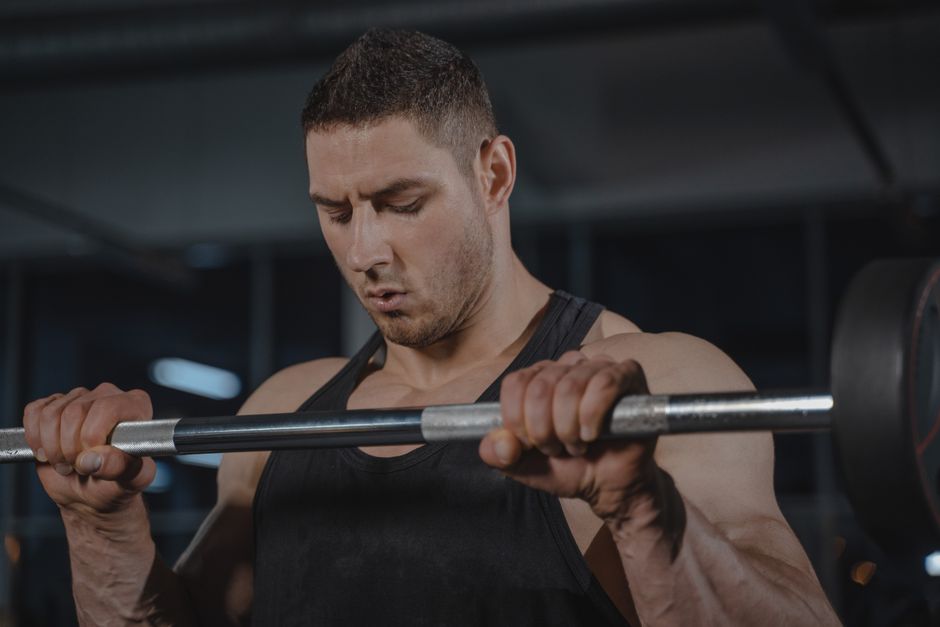
You can split your upper body workout by grouping exercises into pushing movements, pulling movements, and shoulder isolation, then training them on separate days or in one combined session. The push-pull split works because it organizes muscles by function instead of by body part, which lets you train related muscles together and give each group enough recovery time. Most people who want “more” from their upper body training use one of three approaches: a dedicated push day and pull day, an upper/lower split, or a single upper body day where pushing and pulling are paired.
What Does Push Pull Mean in an Upper Body Split?
Push movements drive weight away from your body. Pull movements bring weight toward it. That is the whole idea.
Pushing exercises train the chest, front shoulders, and triceps. The bench press, overhead press, and dips are the classic examples. Pulling exercises train the back, rear shoulders, and biceps. Rows, pull-ups, and face pulls fall here.
Grouping by movement rather than by muscle makes sense because muscles work in teams. When you press, your chest and triceps fire together. When you row, your lats and biceps fire together. Training those teams on the same day means one group is not fatigued while the other sits fresh.
There is a practical bonus. Push and pull days balance each other. A lot of pressing with too little pulling can contribute to shoulder issues over time, though the exact relationship is not fully settled in the research. Pairing them keeps your training more even.
How To Split Your Upper Body Workout Push Pull More?
There are three main ways to structure it, and the right one depends on how many days you train and how much volume you want.
Option 1: Push day and pull day. You train pushing muscles one session and pulling muscles the next. This lets you hit each group hard with more total sets. A common weekly setup is push, pull, rest, push, pull, rest, rest. This is the highest-volume option for people with four to six training days.
Option 2: Upper and lower split. You train the whole upper body in one session, then legs in another. Pushing and pulling are paired in the same workout. This suits three to four training days per week.
Option 3: Single upper body day with paired sets. You alternate a push exercise and a pull exercise back to back. This saves time and keeps your heart rate up. It suits people training two to three days per week.
If your goal is “more” — more volume, more frequency, more growth — the push/pull split gives you the most room to add sets. But more is not automatically better. Recovery is the limiting factor. If you cannot recover between sessions, added volume works against you.
How Many Sets and Reps Should Each Muscle Get?
General strength and conditioning guidance points to roughly 10 to 20 hard sets per muscle group per week for growth. That range is a broad starting point, not a rule. Beginners do well at the lower end. Advanced lifters often need more.
For reps, most muscle growth happens somewhere between about 6 and 20 reps per set when the set is taken close to failure. Lighter and heavier loads can both build muscle when effort is high. This is well supported across the resistance training literature.
Rest between sets matters more than many people think. For compound lifts, longer rest — often two to three minutes — lets you keep quality high on the next set. Shorter rest is fine for isolation work.
- Compound push: bench press, overhead press, dips
- Compound pull: row variations, pull-ups, lat pulldowns
- Isolation push: triceps pushdowns, lateral raises
- Isolation pull: biceps curls, rear delt flyes, face pulls
Keep the order sensible. Do the hardest compound lifts first while you are fresh. Isolation work comes last.





Push Day vs Pull Day: What Goes Where?
Here is a simple way to see the split side by side.
| Push Day | Pull Day |
|---|---|
| Chest press (barbell, dumbbell, machine) | Row (barbell, dumbbell, cable) |
| Overhead press | Pull-up or lat pulldown |
| Incline press | Seated cable row |
| Dips or push-ups | Face pulls |
| Lateral raises | Rear delt flyes |
| Triceps pushdowns | Biceps curls |
Notice the balance. Each day has two or three big compound lifts and a few smaller ones. That structure holds up whether you train twice a week or six times.
One thing worth knowing: lateral raises and rear delt work are often placed on push and pull days respectively, but the shoulders respond well to frequency. Some lifters train side and rear delts two or three times a week regardless of the split. The evidence supports training a muscle more often when volume is spread out, as long as you recover.
How Often Should You Train Each Muscle?
Training a muscle twice per week tends to produce more growth than once per week when total weekly volume is matched. This is one of the more consistent findings in resistance training research.
That does not mean you must train every muscle twice a week. It means spreading your weekly sets across two or more sessions usually beats cramming them into one. A push/pull split run twice a week naturally gives you that frequency.
If you only train three days a week, an upper/lower split run as upper, lower, upper one week and lower, upper, lower the next keeps frequency reasonable. The exact rotation matters less than hitting each muscle often enough and recovering between sessions.
Recovery is individual. Sleep, nutrition, stress, and training age all change how much you can handle. A 25-year-old sleeping eight hours recovers differently than a 50-year-old sleeping six. There is no universal number that fits everyone.
Common Mistakes With Push Pull Splits
The most common mistake is doing far more pushing than pulling. Pressing feels good and gets attention, so people overdo it. Over time, that imbalance can leave the upper back and rear shoulders underdeveloped relative to the chest and front delts.
A reasonable target is at least as much pulling volume as pushing volume. Many coaches suggest slightly more pulling. That is a sensible default, though the ideal ratio is not firmly established in research.
The second mistake is skipping legs entirely. A push/pull split is an upper body plan. If you run it alone, you still need lower body training somewhere in the week.
The third mistake is chasing soreness. Soreness is not a reliable measure of a good workout. Progress in load, reps, or quality over weeks is what tells you the plan is working.
The fourth is adding volume faster than you can recover. More sets only help if you can complete them with good form and bounce back before the next session. When in doubt, add a little, wait a few weeks, and see how you respond.
Do You Need a Push Pull Split To Build Muscle?
No. Muscle growth depends mostly on training hard, training consistently, and hitting enough weekly volume per muscle. How you organize that volume into days is secondary.
Push/pull is popular because it is simple, balanced, and easy to schedule. It is not the only way. Full body training three times a week works well, especially for beginners. Upper/lower splits work well for intermediate lifters. The best split is the one you will actually follow and recover from.
If you are new to lifting, almost any structured plan with progressive overload will build muscle for the first several months. The finer details of split choice matter more once you have been training consistently for a while and progress slows.
Frequently Asked Questions
Is a push pull split better than an upper lower split?
Neither is clearly better for muscle growth when weekly volume is matched. Push/pull lets you add more sets per muscle because each session is more focused, while upper/lower fits fewer training days.
How many days a week should I do a push pull split?
Most people run it four to six days a week, such as push, pull, rest, push, pull, rest, rest. Three days a week is possible but usually means pairing push and pull in the same session.
Should I train push and pull on the same day?
Yes, pairing them in one upper body session works well and is common in upper/lower splits. It saves time and keeps pushing and pulling volume balanced.
How much pulling should I do compared to pushing?
Aim for at least as much pulling volume as pushing, and many coaches recommend slightly more. The ideal ratio is not firmly established in research, so balance is the practical goal.
