
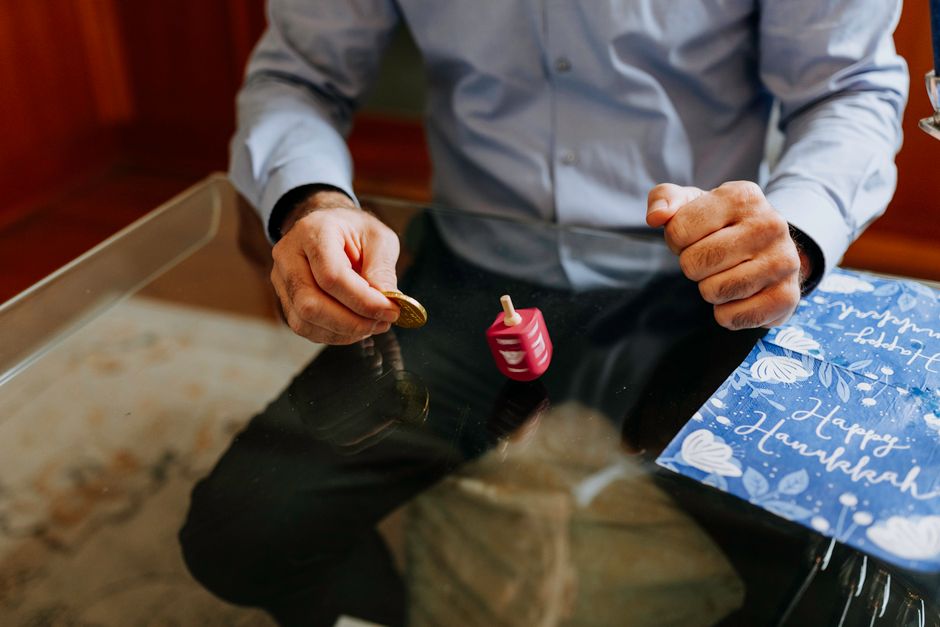
A coin spin is a balance trick, not a strength trick. The longer a coin stays upright and turning, the more of its energy has gone into a smooth, low-wobble rotation instead of bouncing and scraping. The single biggest factor is the surface you spin on: a hard, flat, slightly textured surface lets a coin spin far longer than a soft or slick one. After that, it comes down to how you launch it, the coin itself, and a few small habits that keep the spin clean. None of this is medical advice — it is plain physics you can test at your kitchen table.
Why does a coin spin stay up at all?
A spinning coin stays upright because of the way its rotation interacts with the surface beneath it. As the coin loses energy, it does not simply fall over. It starts to lean, and the point of contact begins to move in a small circle. That motion is what keeps it from toppling immediately.
The physics here is well understood. A spinning disk on a flat surface precesses — its axis of rotation slowly tilts and sweeps around. The friction at the contact point, and the way the rim touches the surface, gradually drain energy. The spin ends when the coin can no longer sustain that motion and it drops flat.
One detail most people miss: a coin does not spin on its flat face. It spins on its edge, balanced almost vertically. The rim is doing the work. That is why a coin with a smooth, even rim spins better than one with a chipped or worn edge.
What surface makes a coin spin longest?
Hard, flat, and slightly grippy wins. A coin spins longest on a firm surface with a little texture — think a wooden table, a hard countertop, or a smooth stone tile. Soft surfaces absorb energy and kill the spin fast.
The reason is friction. You need just enough grip at the contact point to keep the coin from sliding sideways, but not so much that it grinds energy away. A surface that is too slick lets the coin skate and wobble out. A surface that is too soft — a tablecloth, a carpet, a rubber mat — swallows the spin almost instantly.
Here is a quick comparison of how surfaces tend to behave:
- Bare wood or laminate table: usually the best balance of grip and hardness.
- Glass or polished stone: very hard, but often too slick, so the coin slides and wobbles.
- Metal tray or countertop: hard, but can be noisy and slick depending on finish.
- Tablecloth, carpet, or foam mat: poor — the softness drains energy fast.
If your only surface is too slick, try a sheet of paper or a thin cloth laid flat. It adds just enough grip without softening the surface underneath. Test a few spots — the same table can spin very differently in different places.
How do you launch a coin for a long spin?
The launch sets the whole spin. A clean start with a fast, level flick and almost no wobble will always beat a hard, sloppy one. Your goal is maximum rotation with minimum tilt.
Hold the coin between your thumb and index finger, near the rim, standing on edge. Snap your fingers to release it with a quick twist. The important part is the release: keep the coin vertical as it leaves your hand. If it tips even slightly at the start, that tilt grows and the coin falls early.
A few things that help on the launch:
- Flick fast, not hard. Speed of rotation matters more than force. A sharp snap beats a heavy shove.
- Keep it level. Release the coin standing straight up. A level launch wobbles less.
- Let go cleanly. Do not drag your fingers on the rim as it leaves — that adds a stutter.
- Start lower. Releasing close to the surface means less distance to fall and less bounce.
Practice the release on its own before worrying about spin time. A steady, repeatable launch is the foundation everything else builds on.
Which coin spins best?
A larger, heavier coin with a smooth, even rim usually spins longer and is easier to control than a small, light one. Size and weight give the coin more rotational momentum, so it resists slowing down.
Bigger coins also have a larger rim contact area, which makes the balance more forgiving. Very small or very thin coins are harder to launch cleanly and lose their spin quickly. Coins with a raised, uneven design on the rim can catch and wobble.
That said, this is a general trend, not a rule. A well-balanced coin you are used to will often outperform a theoretically better one you have never handled. Try a few and see which feels steadiest in your hand.
What habits help you spin a coin for a long time?
Consistency and a clean environment do more for spin time than any single trick. Most long spins come from repeating the same good launch on the same good surface.
Keep these habits in mind:
- Use the same spot. A flat, level patch of table gives repeatable results. A slightly tilted surface shortens every spin.
- Keep the coin clean. Dirt, oil, or sticky residue on the rim adds drag and causes wobble.
- Stay level. Make sure the surface itself is flat. Even a small slope pulls the coin and ends the spin early.
- Reduce air movement. A strong draft or a fan blowing across the table can nudge a slow-spinning coin off balance.
- Practice the release. A repeatable, level flick is worth more than any surface upgrade.
None of this requires special equipment. A steady hand, a good table, and a clean coin cover most of it.
What mistakes end a coin spin early?
Most short spins come from a few avoidable errors. Fixing them often adds noticeable time right away.
The most common mistake is launching with a tilt. If the coin leaves your hand leaning even a little, that lean grows and the coin drops sooner. The second is spinning on a soft or slick surface — either one drains energy fast. The third is a sloppy release where your fingers drag on the rim.
Other spin-killers include a dirty or damaged coin, a surface that is not level, and flicking too slowly. A weak launch gives the coin less rotation to work with, so it runs out of energy quickly. Speed on release matters more than most people expect.
One clarification worth knowing: you cannot make a coin spin forever. Friction and air resistance always drain energy, so every spin ends. The goal is to slow that loss, not eliminate it. Anyone claiming a trick to spin a coin indefinitely is describing something physics does not allow.
Frequently Asked Questions
What is the best surface to spin a coin on?
A hard, flat surface with a little texture, like a wooden or laminate table, usually gives the longest spin. Soft or very slick surfaces drain energy faster.
Does a heavier coin spin longer?
A larger, heavier coin with a smooth rim generally spins longer because it has more rotational momentum. A well-balanced coin you are used to can still outperform a heavier one.
Why does my coin fall over so quickly?
Most early falls come from a tilted launch, a soft or slick surface, or a release where your fingers drag on the rim. A level, clean flick on a firm surface fixes most of it.
Can a coin spin forever?
No. Friction and air resistance always drain the coin’s energy, so every spin ends. You can slow the loss but cannot eliminate it.
