
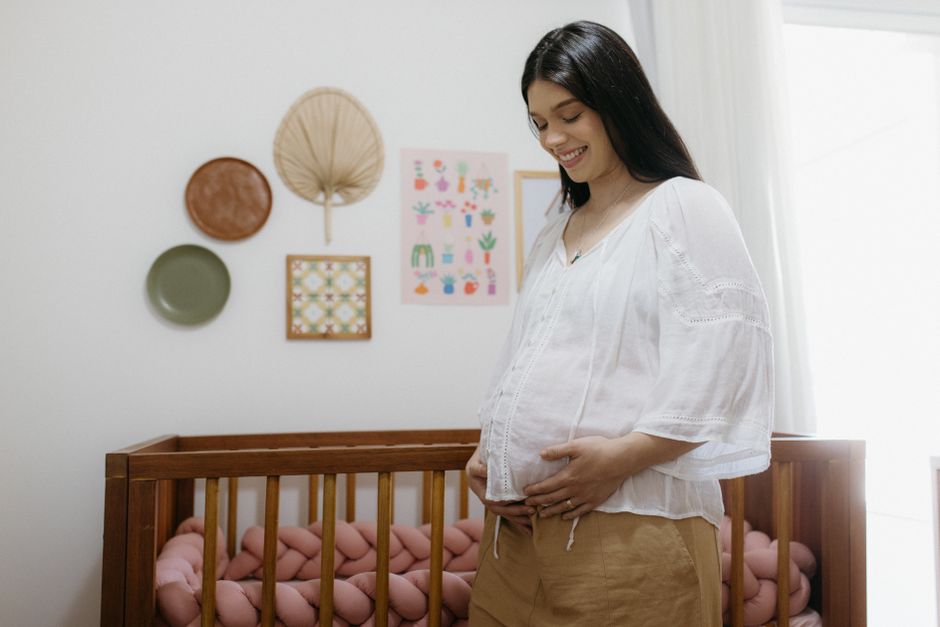
New parents often discover that the house they love was not built for a sleeping baby. Every footstep in the hallway, every flush of a toilet, and every car door slamming outside seems to land directly in the crib. The good news is that you can meaningfully reduce the noise reaching your baby without tearing down walls or hiring a contractor. The most effective approach combines sealing air gaps, adding mass to existing surfaces, and introducing consistent background sound to mask sudden noises.
Why Does Sound Travel Into The Nursery?
Sound travels as vibrations through air and solid materials. When a door closes downstairs, the impact vibrates the floor joists, which carry that energy up through the walls and into the nursery. Airborne noise, like a dog barking outside, enters through the path of least resistance — often a window frame or an electrical outlet.
Understanding these two pathways matters because they require different fixes. Airborne noise is blocked by sealing gaps and adding dense materials. Impact noise, like footsteps, is harder to stop because it travels through the structure itself. You cannot fully stop impact noise without major construction, but you can reduce it to a level that won’t wake a sleeping baby.
How To Soundproof A Nursery Without Major Construction?
The single best return on investment is sealing every gap between the nursery and the rest of the house. Sound behaves like water — it finds the smallest crack and pours through it. Walk around the nursery and look for gaps under the door, around window frames, and at electrical outlets on shared walls.
Acoustic caulk is a flexible sealant designed specifically for soundproofing. Apply it along the edges of the baseboards, around window trim, and where the wall meets the floor. This takes an afternoon and costs very little, yet it can noticeably reduce the high-frequency sounds that slip through tiny openings.
For the door, install a door sweep at the bottom and weatherstripping around the frame. A solid core door blocks more sound than a hollow interior door. If replacing the door is not an option, hang a heavy moving blanket or thick quilt over the inside of the door. This adds mass and absorbs sound that would otherwise pass through the panel.
Adding Mass To Walls And Windows
Mass stops sound. Thin drywall vibrates easily, passing sound from one side to the other. Adding a second layer of drywall with acoustic caulk between the layers is technically a construction project, but it is a small one that does not require structural changes. If even that feels like too much, there are simpler mass-based solutions.
Bookshelves filled with books are surprisingly effective sound absorbers. A tall, fully loaded bookshelf placed against the wall shared with a noisy room acts as both mass and a diffusion surface. The irregular shapes of the books break up sound waves rather than reflecting them cleanly into the room.
Windows are often the weakest point in a nursery. Single-pane windows transmit outside noise easily. Heavy curtains designed for sound absorption, sometimes called acoustic curtains or moving blankets with grommets, add mass and absorb sound. They will not block all noise, but they reduce the sharpness of sudden sounds like thunder or a motorcycle passing by.
For windows that face a consistently noisy street, consider a removable window insert. These are plexiglass or acrylic panels cut to fit inside the window frame, held in place with foam tape. They create an air gap between the insert and the existing window, which disrupts sound transmission. This is a rental-friendly solution that can be removed without damage.
Furniture Placement And Soft Surfaces
Sound reflects off hard surfaces. An empty room with hardwood floors echoes loudly. A nursery filled with a crib, dresser, and soft textiles naturally absorbs more sound before it reaches the baby’s ears.
Place the crib against an interior wall rather than a wall shared with the outside or a noisy room. Interior walls that do not connect to bathrooms, kitchens, or stairwells are the quietest. If the crib must be against a shared wall, position it away from the corner — corners concentrate sound energy.
A thick area rug with a padded underlay does more than soften falls. It absorbs sound that would otherwise bounce off the floor and up into the crib. Wall hangings, like woven tapestries or quilted panels, serve the same purpose on vertical surfaces.
Fabric acoustic panels are available in child-friendly shapes and colors. These panels are made of compressed felt or foam and attach to walls with adhesive strips. They are not a major construction project and can be rearranged or removed as the child grows. They are most effective at absorbing mid and high frequency sounds, like voices and television audio.
Using White Noise To Mask Sudden Sounds
Even with all the physical soundproofing in place, some noise will still get through. This is where masking becomes essential. White noise does not block sound — it covers it with a consistent, steady signal that the brain quickly learns to ignore.
A baby who sleeps with a steady fan or white noise machine is less likely to startle at a door slam or a dog bark. The sudden noise still reaches the ear, but it is less noticeable against the constant background sound. This is the same reason rain on a roof sounds calming rather than disruptive.
Choose a white noise machine that plays continuous, non-looping sound. Some machines have a looping track that creates a noticeable pattern shift every few minutes. True white noise, or pink noise which is slightly lower pitched, should sound like static or a gentle waterfall.
Volume matters. The noise should be audible but not loud. A general guideline is to keep it at a level where you can still hold a normal conversation in the room. There is no need to blast the machine — the goal is masking, not deafening.
What Does Not Work And Why
Egg cartons are a persistent myth. They do not absorb sound meaningfully and they are a fire hazard. The cardboard is too thin and too light to make any real difference in a nursery.
Thin foam mats, like the interlocking puzzle pieces used on playroom floors, absorb almost no airborne sound. They help with impact noise on the floor directly beneath them, but they do nothing for sound traveling through walls or windows.
Turning up the volume on a sound machine to drown out loud neighbors is counterproductive. Excessively loud noise exposure is harmful to developing ears. Keep the masking sound at a conversational level and address the physical gaps instead.
Painting a wall with “soundproofing” paint is a marketing claim without meaningful evidence. These paints contain slightly more solids than standard paint, but the difference in sound transmission is negligible for a living space.
When To Consider Professional Help
If the nursery is directly below a frequently used room, like a home gym or a toddler’s playroom, the impact noise may be severe enough that DIY solutions will not suffice. In this case, consult an acoustic consultant who can assess the specific structure and recommend targeted solutions.
Some of these solutions, like adding resilient channels or mass-loaded vinyl between layers of drywall, are still less invasive than a full renovation. They require opening the ceiling or wall, but they do not require moving load-bearing structures.
For most families, the combination of sealing gaps, adding mass with furniture and curtains, and using a white noise machine will produce a noticeable improvement. The goal is not a perfectly silent room — it is a room where sudden noises do not wake a sleeping baby. That is an achievable goal without major construction.
Frequently Asked Questions
What is the cheapest way to soundproof a nursery?
Sealing gaps under the door and around windows with weatherstripping and acoustic caulk is the cheapest effective method. A heavy blanket hung over the door also adds mass for very little cost.
Do soundproof curtains actually work?
Soundproof curtains reduce high-frequency noise and soften echoes, but they do not block low-frequency sounds like bass or heavy traffic. They are most effective when combined with sealed window gaps.
Is it safe to play white noise all night for a baby?
Yes, when played at a low to moderate volume that allows normal conversation in the room. Keep the machine at least a few feet from the crib and avoid maximum volume settings.
Will a rug help soundproof a nursery?
A thick rug with a padded underlay reduces impact noise from footsteps and absorbs sound that bounces off the floor. It does not stop sound coming through walls or windows.
