
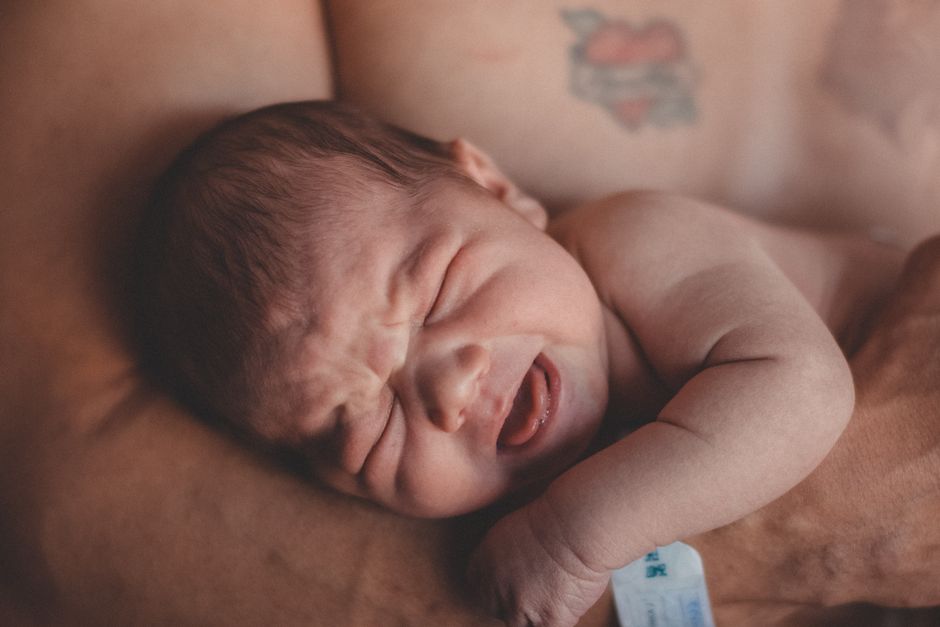
A crying newborn at night is not a sign that you are doing something wrong. It is how babies communicate hunger, discomfort, tiredness, or the need for closeness, and it is normal. The safest ways to soothe a newborn at night are to respond promptly, check the basics like feeding and a clean diaper, use swaddling and gentle motion, and keep the environment calm and dim. Never shake a baby, and always place them on their back to sleep in their own safe sleep space.
Why Do Newborns Cry So Much At Night?
Newborn crying peaks in the first few months of life and often clusters in the evening and night hours. This is a well-documented pattern, not a parenting failure. During this period, a baby’s nervous system is still maturing, and they have not yet developed the ability to self-soothe or link sleep cycles the way older children do.
Newborns also have small stomachs and need to feed frequently around the clock. Night waking for feeds is biologically expected, not a habit to be broken. Many parents are surprised to learn that a newborn’s sleep is split into many short stretches, and that “sleeping through the night” is not a realistic expectation in the early weeks.
There is also a normal period of increased, inconsolable crying in early infancy that clinicians often call the period of PURPLE crying. It tends to start in the first weeks, peak around the second month, and fade by around three to four months. Understanding this pattern matters, because it is the time when frustrated caregivers are most at risk of losing control. Knowing that this phase is temporary and normal can help you stay calm.
What Should You Check First When A Newborn Cries At Night?
Work through the basics in a calm, predictable order. Most night crying has an ordinary cause, and a simple checklist resolves most of it.
- Hunger. This is the most common reason. Offer a feed, especially if it has been a while since the last one.
- Diaper. Check for a wet or soiled diaper and change it if needed.
- Temperature. Feel the back of the neck or the chest. Overheating and being too cold can both cause distress. A general guide is to dress your baby in about one more layer than you would wear yourself in the same room.
- Discomfort. Look for tight clothing, a scratchy tag, a trapped limb, or a hair wrapped around a finger or toe.
- Burping. A trapped bubble of air after feeding can cause discomfort.
- Overstimulation. Too much light, noise, or activity can overwhelm a newborn.
If all of these are addressed and your baby is still crying, the need is often simply for closeness and calming. That is a real need, not a bad habit.
How To Soothe A Crying Newborn At Night Safely
The techniques that reliably calm newborns are the ones that mimic the conditions of the womb. These are sometimes called the five S’s: swaddling, side or stomach position (only while awake and supervised), shushing, swinging, and sucking. Used together, they can be very effective.
Swaddling. A firm, snug swaddle can reduce the startle reflex that wakes many newborns. Use a thin blanket and keep it loose around the hips so the legs can bend up and out. Stop swaddling once your baby shows signs of rolling over, because a swaddled baby who rolls can end up face-down. Always place a swaddled baby on their back to sleep.
Shushing. A steady, rhythmic “shhh” sound, roughly as loud as a gentle shower, can calm a newborn. Some parents use white noise machines. If you do, keep the volume moderate and the device away from the crib, not right next to your baby’s head.
Gentle motion. Slow, rhythmic rocking, swaying, or a gentle bounce while holding your baby securely can be soothing. Keep movements soft. Never shake a baby, even in frustration. Shaking can cause serious, permanent brain injury.
Sucking. Offering a feed, a clean finger, or a pacifier can help. If you are breastfeeding and want to establish your supply, some clinicians suggest waiting until feeding is well established before introducing a pacifier, though guidance on timing varies. Ask your pediatric provider what fits your situation.
Skin-to-skin contact. Holding your baby against your bare chest can lower crying and help regulate their breathing and temperature. It also calms parents, which matters more than many people realize.
What Are The Safe Sleep Rules For Nighttime?
Safe sleep practices reduce the risk of sleep-related infant death, and they apply every time your baby sleeps, day or night. These are well-established recommendations from pediatric authorities.
- Place your baby on their back for every sleep.
- Use a firm, flat sleep surface with a fitted sheet, such as a crib, bassinet, or play yard that meets current safety standards.
- Keep the sleep space bare. No pillows, blankets, bumpers, stuffed toys, or loose bedding.
- Room-share, meaning your baby sleeps in the same room as you but on a separate surface, ideally for the first several months.
- Avoid letting your baby sleep on a sofa, armchair, or adult bed alone, as these surfaces carry a higher risk.
- Do not use weighted sleep sacks, weighted blankets, or positioners for infants. These are not considered safe for sleep.
If your baby falls asleep while feeding, move them to their own sleep surface as soon as you can. Falling asleep with a baby on a soft surface is a known risk, particularly when a parent is very tired.
When Should You Call A Doctor About Night Crying?
Most night crying is normal, but some signs need medical attention. Trust your instincts and contact your baby’s clinician if something feels wrong.
Seek prompt medical advice if your baby has a fever, is feeding poorly, is unusually sleepy or hard to wake, has a change in cry that sounds high-pitched or weak, is vomiting repeatedly, has fewer wet diapers than usual, or seems to be in pain. Also call if the crying is inconsolable for long stretches and your baby seems unwell rather than simply tired or hungry.
For any baby under three months, a fever should be taken seriously and checked by a clinician right away. Do not wait to see if it passes on its own.
How Do You Stay Calm When Nothing Works?
Every parent reaches a point where the crying wears them down. That is normal, and it is not a reflection of your love or your ability. What matters is what you do in those moments.
If you feel overwhelmed, it is safe to put your baby down in their crib on their back and step away for a few minutes to breathe. A crying baby in a safe sleep space is safer than a baby being handled by a frustrated caregiver. Call someone for support, take turns with a partner, or reach out to a trusted person.
Never shake a baby. If you feel close to losing control, put the baby down safely and walk away until you feel calmer. This is one of the most important things any caregiver can know.
One clarification worth stating plainly: responding to your newborn at night does not “spoil” them. Newborns do not have the developmental ability to manipulate or form bad habits. Meeting their need for comfort is appropriate care, not a problem to fix.
Frequently Asked Questions
Is it normal for a newborn to cry every night?
Yes, frequent night crying is normal in early infancy and often peaks around the second month. It usually eases by around three to four months as the nervous system matures.
Should I pick up my newborn every time they cry at night?
Yes, responding to a newborn’s cries is appropriate and does not spoil them. Newborns cannot manipulate and rely on caregivers to meet their needs.
Can I let a newborn cry it out at night?
No, letting a newborn cry it out is not recommended, because newborns cannot self-soothe and need responsive care. Sleep training methods are generally considered for older infants, not newborns.
What if my baby won’t stop crying no matter what I do?
If your baby is inconsolable and seems unwell, contact your clinician, and for any baby under three months a fever needs immediate medical attention. If you feel overwhelmed, place your baby safely on their back in the crib and step away to calm down.
