
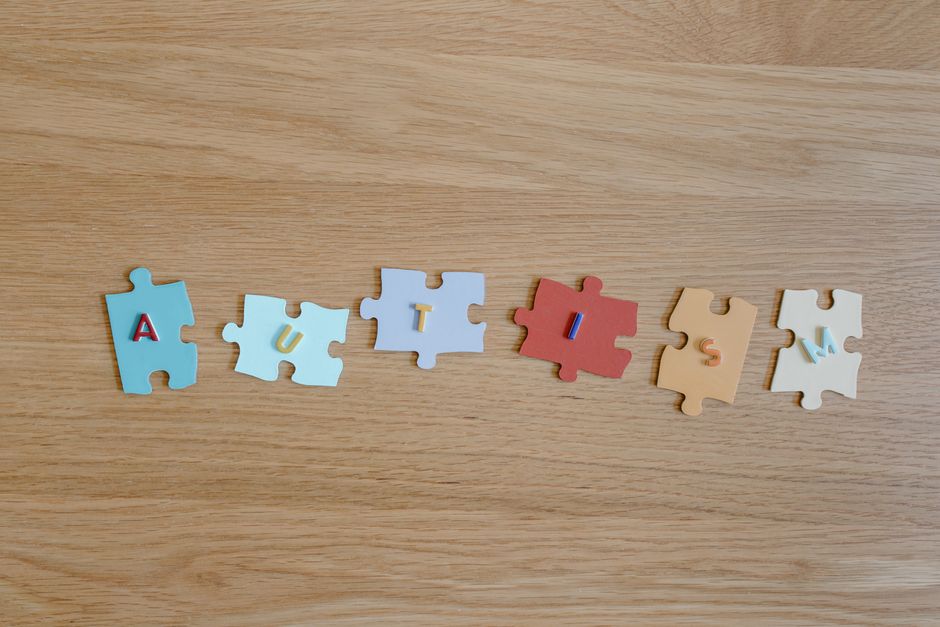
Socializing on your own terms means deciding when, how, and with whom you connect — instead of following rules that were written for people whose brains work differently. Autistic adults can build satisfying social lives, but the goal is not to pass as non-autistic. It is to find connection that respects your energy, your communication style, and your need for recovery time. Research consistently shows that masking — suppressing autistic traits to appear neurotypical — is linked to exhaustion, anxiety, and depression in autistic adults. So the starting point is not “try harder.” It is “know your limits and design around them.”
Why Does Socializing Drain Autistic Adults So Quickly?
Social interaction is not inherently harder for autistic people in the way a personality flaw would be. It is harder because it asks the brain to do several demanding jobs at once.
Many autistic people process language literally and need extra time to interpret tone, sarcasm, and implied meaning. At the same time, they may be managing sensory input — background noise, flickering lights, strong smells — that non-autistic people filter out automatically. Add the conscious effort of tracking eye contact, facial expression, and conversational timing, and you have a workload that runs continuously in the background.
The result is often described as a “social battery.” This is a useful metaphor, not a literal measurement. What is well established is that autistic adults report higher rates of fatigue and sensory overload after social events than non-autistic peers. Recovery time is not weakness. It is part of how the nervous system resets.
One clarification worth making: not all autistic people are introverts, and not all want less social contact. Some want a great deal of connection but find the standard formats — loud parties, rapid group conversation, unstructured mingling — poorly suited to how they communicate. The problem is often the format, not the desire.
How To Socialize With Autism On Your Own Terms Without Masking
Masking is the deliberate or habitual hiding of autistic traits. It can include forcing eye contact, scripting conversations in advance, suppressing stimming, or mimicking the expressions of people around you.
Some autistic adults mask so automatically they no longer notice they are doing it. That is precisely why it is worth examining. Research published in the journal Autism and in other peer-reviewed sources has found associations between frequent masking and poorer mental health outcomes, including anxiety and depression. This does not mean masking is a moral failure or that it is always avoidable. It means the cost is real and worth accounting for.
Socializing on your own terms usually involves a few practical shifts:
- Choose settings where you can leave when you need to, rather than events that lock you in for hours.
- Tell at least one trusted person what you need — a quiet corner, a shorter visit, or a text instead of a call.
- Let yourself stim in ways that help you regulate, if the environment allows it.
- Accept that declining an invitation is a complete sentence, not something that requires an excuse.
None of this is a cure for social difficulty. It is harm reduction. The evidence base for specific social strategies in autistic adults is still developing, and much of what circulates online is personal experience rather than controlled study. Treat advice as a starting point, not a prescription.
What Does “On Your Own Terms” Actually Look Like In Practice?
It looks different for every person, but a few patterns come up often.
Depth over breadth. Many autistic adults do better with a small number of close relationships than a wide network of acquaintances. One-on-one conversation removes much of the group-timing pressure that makes larger gatherings hard.
Written communication as a legitimate option. Text, email, and online communities are not a lesser form of connection. For people who think better in writing, they can be the primary form. Many autistic adults report that online friendships feel more accessible because they allow time to compose a response.
Shared interest as the entry point. Conversations built around a specific topic — a hobby, a game, a field of study — give structure. There is a clear subject, a natural reason to talk, and less need to generate small talk from nothing.
Scheduled recovery. If you know a social event will cost you energy, plan for the time afterward. Some people block out the rest of the day. Others need the next morning. The point is to treat recovery as part of the event, not an afterthought.
What does not work well, for most people, is forcing a template that ignores these realities. A social life that requires constant masking tends to collapse over time, often through burnout.





Is Autistic Burnout A Real Risk From Too Much Socializing?
Yes. Autistic burnout is a recognized concept in the autistic community and increasingly in clinical literature. It is characterized by exhaustion, reduced tolerance to sensory input, and a loss of skills that a person previously had — sometimes including speech or the ability to perform daily tasks.
It is distinct from ordinary tiredness and from depression, though the two can overlap and be confused. Burnout typically develops after a prolonged period of masking and pushing past limits, often without adequate recovery.
Recovery is not quick. There is no established timeline, and no medication approved specifically for autistic burnout. What clinicians who work with autistic adults generally recommend is reducing demands where possible, restoring access to sensory regulation, and rebuilding tolerance gradually. Some people find therapy helpful, particularly approaches that focus on acceptance rather than teaching neurotypical social performance.
If you are experiencing a loss of skills or prolonged exhaustion, that is a reason to speak with a clinician who understands autistic adults. Not all do. Finding one who does can take effort.
How Do You Handle Social Pressure From Family And Friends?
Pressure usually comes from a good place and lands badly. Relatives may interpret a declined invitation as rejection. Friends may read a need for quiet as distance.
Being direct tends to work better than explaining at length. A short statement like “I want to see you, and I do better in smaller settings” gives the other person something concrete. It also separates the relationship from the format.
You are not obligated to disclose that you are autistic. Some people find disclosure improves understanding. Others find it invites unsolicited advice. Both are reasonable positions, and you can change your mind over time.
It helps to remember that non-autistic people also have social limits. They just tend to have more room to express them without being questioned. Asking for the same room is not asking for special treatment.
What About Dating And Close Relationships?
Autistic adults date, form partnerships, and build families. The same principles apply: clarity, format, and recovery.
Direct communication tends to reduce friction in close relationships. Many autistic adults prefer explicit statements over hints, and partners who can adapt to that often find the relationship runs more smoothly. Some research suggests that autistic adults in relationships report similar levels of satisfaction to non-autistic adults, though the evidence is mixed and depends heavily on the study design and the support available to both partners.
What matters is finding people who do not require you to perform a version of yourself that costs too much to maintain.
When Should You Seek Professional Support?
Social difficulty alone is not a reason to see a doctor. But some situations warrant it.
If you are experiencing persistent low mood, anxiety that interferes with daily life, or a loss of skills you used to have, that is worth discussing with a clinician. Autistic adults have higher rates of co-occurring anxiety and depression than the general population, and these are treatable.
If you are seeking an autism assessment as an adult, be aware that waiting times and availability vary widely by region, and not all clinicians are trained to recognize autism in adults, particularly in women and people who mask heavily. This is a known gap in the system, not a reflection of whether your experience is real.
There is no medication that treats autism itself. Any medication prescribed would be for a co-occurring condition such as anxiety or depression, and that decision belongs with a qualified clinician who knows your history.
Frequently Asked Questions
Is it okay to avoid social situations as an autistic adult?
It is okay to choose the amount and type of social contact that works for you, and that may mean less than others expect. Avoiding all contact long-term, however, is associated with poorer mental health in the general population, so the goal is usually selective connection rather than total withdrawal.
Does masking autism cause long-term harm?
Research consistently links frequent masking to higher rates of anxiety, depression, and exhaustion in autistic adults. It does not mean masking is always avoidable, but the cost is well documented.
How do I tell friends I need less social time?
Keep it short and specific — name what you can do rather than what you cannot. For example, “I do better with one-on-one visits than group dinners” gives the other person something workable.
Can autistic adults have satisfying relationships?
Yes. Many autistic adults build close friendships and long-term partnerships. The evidence suggests satisfaction depends more on mutual understanding and communication fit than on social style alone.
