
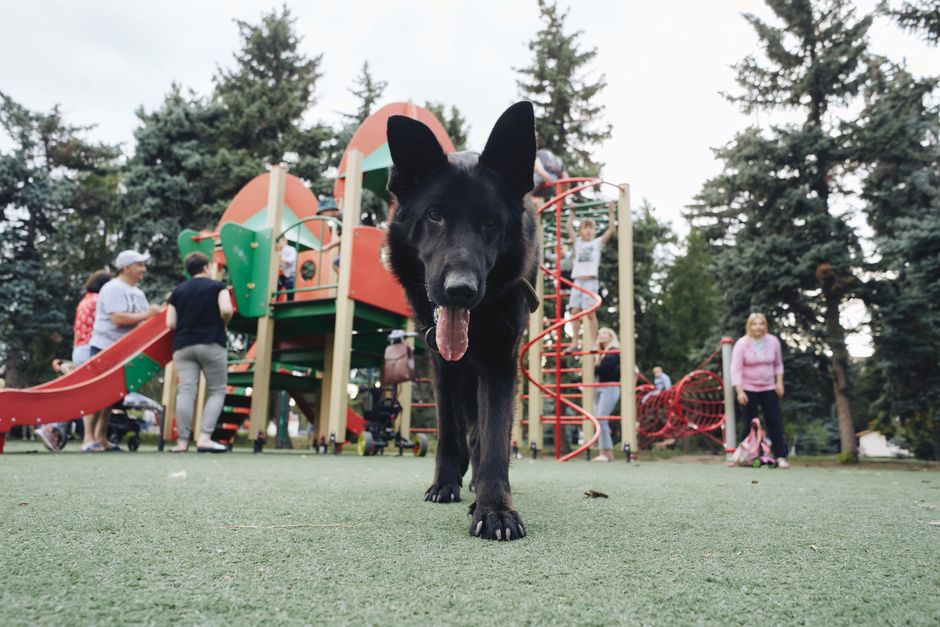
German Shepherd puppies have a narrow window for learning to accept the world without fear. That window starts closing around 12 to 16 weeks of age. Socializing a German Shepherd puppy the right way means giving it safe, positive exposure to new people, animals, sounds, and places during that window — and continuing calmly after it closes, because the process does not actually end at 16 weeks.
German Shepherds are a working breed. They were developed to herd, guard, and partner closely with people. That history gives them traits that make socialization both important and a little different from socializing, say, a Labrador. They are often alert, highly trainable, and slow to warm to strangers. A German Shepherd that misses early exposure can grow into an adult that is wary, reactive, or hard to handle. The good news is that the breed’s intelligence and eagerness to work with its person make structured socialization very achievable.
Why Is Early Socialization So Important For German Shepherds?
Puppies go through what behaviorists call a sensitive period for socialization, roughly between 3 and 14 weeks of age. During this time, the puppy’s brain is especially open to forming lasting impressions about what is normal and safe. Experiences during this period tend to stick.
A puppy that meets many friendly people, hears everyday sounds, and walks on different surfaces during this window is more likely to take new things in stride as an adult. A puppy that is kept isolated until it is fully vaccinated — a common mistake — can come out of that isolation already past the sensitive period, and more prone to fear.
This is where German Shepherds need extra thought. The breed is known for strong territorial and protective instincts. Those instincts are not a flaw; they are part of what the dog was bred to do. But they mean a poorly socialized German Shepherd is more likely to become overprotective or suspicious rather than simply shy. Early, positive exposure helps the dog learn the difference between a real threat and a neighbor walking past the fence.
When Should You Start Socializing A German Shepherd Puppy?
Socialization should start the day the puppy comes home, usually around 8 weeks of age. Do not wait until the puppy has finished all its vaccinations.
Veterinary behavior experts generally agree that the risk of a puppy growing up fearful and possibly being euthanized for behavior problems is a greater threat than the risk of infection during carefully managed outings. That does not mean parading a young puppy through a dog park. It means controlled, safe exposure.
Until the puppy is fully vaccinated, avoid places where unknown dogs roam freely and where you cannot control what the puppy contacts. Instead, carry the puppy in your arms or use a stroller in public, let it meet healthy, vaccinated, friendly adult dogs in private yards, and invite clean, vaccinated dogs and calm people into your home. This gives the puppy exposure without the disease risk of high-traffic dog areas.
Talk to your veterinarian about your specific area and the local disease risk. Parvovirus, in particular, can survive in soil for long periods, and risk varies by region.
What Does Good Socialization Actually Look Like?
Socialization is not the same as flooding a puppy with new things. Quality matters far more than quantity. The goal is for each new experience to end with the puppy feeling safe, not overwhelmed.
Watch your puppy’s body language. A relaxed puppy has a loose, wiggly body, an open mouth, and ears that move naturally. A stressed puppy freezes, tucks its tail, flattens its ears, yawns repeatedly, or tries to back away. If you see stress signals, stop and give the puppy space. Forcing a scared puppy to “get over it” usually backfires and can make the fear worse.
Keep sessions short. A few minutes of positive exposure at a time is plenty for a young puppy. Let the puppy choose to approach new things, and reward calm curiosity with treats and praise.
What To Expose Your German Shepherd Puppy To
- People of different ages, including children, older adults, and people wearing hats, glasses, or uniforms.
- People of different appearances, including different skin tones, facial hair, and mobility aids.
- Friendly, vaccinated adult dogs that are calm and good with puppies.
- Household sounds like the vacuum, doorbell, blender, and thunder recordings at low volume.
- Different surfaces: grass, concrete, wood floors, gravel, and metal grates.
- Handling of the paws, ears, and mouth, so future vet visits and grooming go more smoothly.
- Rides in the car, starting with short, calm trips that do not always end at the vet.
- Being alone for short, gradually increasing periods, so the puppy learns that solitude is normal.





How Do You Socialize A German Shepherd Puppy With Other Dogs?
Dog-to-dog socialization is where German Shepherds often need the most care. The breed can be prone to same-sex aggression, particularly between two females or two males, and this tendency tends to show up as the dog matures.
Puppy classes are one of the best tools available. A good class is run by a qualified trainer, uses positive reinforcement, and separates puppies by size and play style. It lets your puppy practice reading other dogs’ signals in a controlled setting. Look for a class that requires proof of age-appropriate vaccinations and cleans the space between sessions.
Outside of class, choose playmates carefully. A calm, confident adult dog that corrects a puppy gently and fairly is worth more than a dozen wild play sessions. Avoid dog parks until your puppy is older and you know it can handle the chaos. Bad experiences with rude or aggressive dogs during the sensitive period can leave a lasting mark.
Watch for bullying in either direction. If your puppy is pinning other dogs or being pinned constantly, interrupt and give a break.
How Do You Prevent Fear And Reactivity In A German Shepherd?
Preventing fear comes down to three things: going slow, pairing new things with something good, and never punishing fear.
When your puppy shows fear, do not scold it. Punishment confirms that the scary thing was worth worrying about. Instead, stay calm, increase distance from whatever is worrying the puppy, and reward any relaxed behavior. Over time, you can close the distance as the puppy gains confidence.
The same principle applies to people. If your German Shepherd puppy is wary of strangers, do not let strangers rush up and pet it. Ask them to stand still, avoid eye contact, and toss a treat. Let the puppy approach on its own terms. This teaches the puppy that strangers predict good things.
One non-obvious point: socialization is not just about the puppy. Your own calm matters. German Shepherds read their people closely. If you tense up when a stranger approaches, the puppy notices. Staying relaxed and matter-of-fact does more than any treat.
What Happens After The Socialization Window Closes?
Socialization does not stop at 16 weeks. The sensitive period is when learning is easiest, but dogs keep learning their whole lives. Continued positive exposure through the first year and beyond helps lock in the dog’s confidence.
Adolescence, roughly 6 to 18 months, is a common time for new fear periods and for protective instincts to surface. A German Shepherd that was friendly as a puppy may suddenly bark at strangers. This is normal development, not a sign that you failed. Keep up structured, positive exposure, and consider working with a trainer if reactivity appears.
Adult German Shepherds benefit from ongoing training, exercise, and controlled social contact. A bored or under-exercised German Shepherd is more likely to develop behavior problems regardless of how well it was socialized as a puppy.
Should You Work With A Trainer Or Behaviorist?
For most German Shepherd puppies, a good puppy class and consistent home effort are enough. But some situations call for professional help.
Consider working with a certified trainer or veterinary behaviorist if your puppy shows intense fear, growling, snapping, or freezing that does not improve with gentle exposure. Early intervention is far easier than trying to fix a deeply ingrained behavior in an adult dog.
Choose professionals who use reward-based, force-free methods. Aversive tools like shock collars and prong collars can suppress behavior without addressing the underlying fear, and for a fearful puppy they often make things worse. Ask about methods before you hire anyone.
Frequently Asked Questions
At what age should you start socializing a German Shepherd puppy?
Start the day the puppy comes home, usually around 8 weeks of age. The sensitive period for socialization runs roughly from 3 to 14 weeks, so waiting until vaccinations are complete means missing most of it.
Can I take my German Shepherd puppy outside before it is vaccinated?
Yes, but carefully. Carry the puppy or use a stroller in public, and avoid areas where unknown dogs roam or where the ground may be contaminated. Ask your veterinarian about local disease risk before deciding where to go.
Are German Shepherds harder to socialize than other breeds?
They are not harder so much as different. Their protective and territorial instincts mean poor socialization is more likely to produce a wary or overprotective adult, which makes early positive exposure especially important.
What if my German Shepherd puppy is scared of people?
Do not force contact. Have strangers stand still, avoid eye contact, and toss treats so the puppy approaches on its own. If fear is intense or does not improve, consult a force-free trainer or veterinary behaviorist.
