
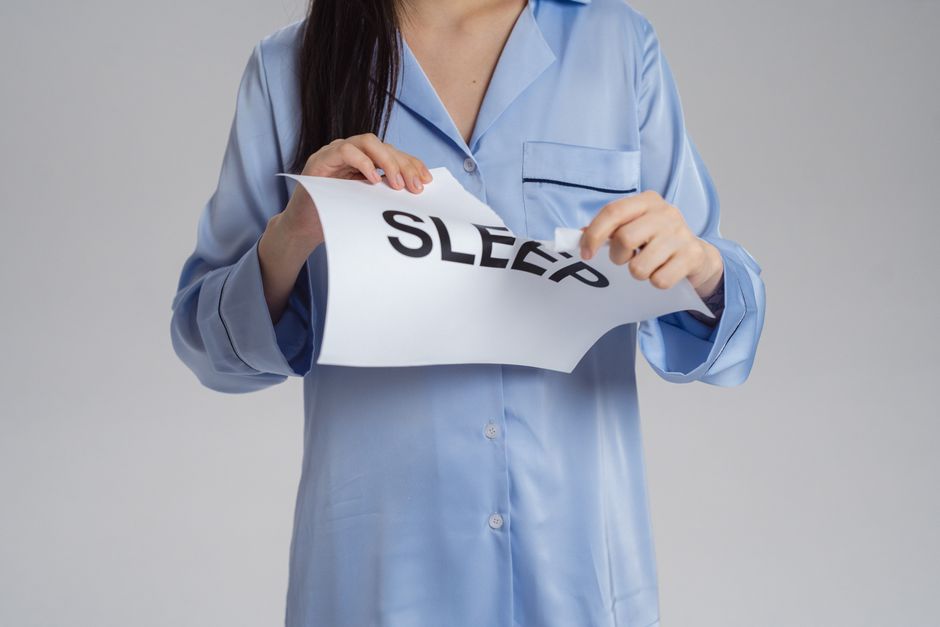
Falling asleep with insomnia often feels impossible because the harder you try, the more awake your brain becomes. The most effective approach combines a consistent sleep schedule, a cool and dark bedroom, and a wind-down routine that starts about an hour before bed. If you are still awake after about 20 minutes, get out of bed and do something quiet in dim light until you feel sleepy again, rather than lying there frustrated.
Why Can’t I Fall Asleep Even When I’m Tired?
Insomnia often involves a state of heightened alertness. Your body may feel exhausted, but your brain is still processing threats, worries, or stimulation. This is sometimes called hyperarousal. It means your nervous system is stuck in a “on” position when it should be shifting into “off.”
Sleep is not something you can force. It is a natural process that happens when your body meets the right conditions. Pressure to fall asleep quickly usually backfires. It raises stress hormones like cortisol, which keep you alert. Understanding this can help you stop fighting sleep and start inviting it.
Common contributors include irregular schedules, caffeine late in the day, screen time before bed, and an uncomfortable sleep environment. Stress and anxiety are also major factors. Sometimes the issue is behavioral — you have trained your brain to associate your bed with wakefulness.
What Is The Best Way To Fall Asleep Quickly?
The fastest way to fall asleep is to lower your body temperature slightly and reduce mental stimulation. Your core temperature naturally drops as you get sleepy. A warm bath or shower about 90 minutes before bed can help this process along. As your body cools down afterward, it signals that it is time for sleep.
Your bedroom should be cool, ideally between 60 and 67 degrees Fahrenheit. Darkness matters too. Blackout curtains or a sleep mask block light that can suppress melatonin, the hormone that regulates sleep. Quiet is important, but if you cannot control noise, a white noise machine or earplugs can help.
Breathing exercises are another practical tool. Slow, deep breaths activate the parasympathetic nervous system, which promotes calm. Try breathing in for four counts, holding for seven, and exhaling for eight. Repeat this cycle a few times. This is not a guaranteed cure, but it is a safe and simple technique that many people find helpful.
How To Sleep With Insomnia When Your Mind Won’t Shut Off?
Racing thoughts are one of the most common reasons people lie awake. The goal is not to stop thinking — that is nearly impossible. The goal is to redirect your thoughts to something neutral or boring.
A “brain dump” can help. Before bed, write down everything on your mind for five minutes. Put it on paper so your brain does not have to hold onto it overnight. This is not a proven treatment for everyone, but some studies suggest it reduces nighttime worry for people who tend to ruminate.
If you wake up in the middle of the night with thoughts spinning, do not stay in bed. Get up, go to another room, and do something quiet in dim light. Read a boring book. Fold laundry. Avoid screens and bright lights. Return to bed only when you feel drowsy. This technique is called stimulus control, and it is one of the most effective behavioral strategies for insomnia.
The key is to break the association between your bed and frustration. When you lie in bed awake repeatedly, your brain learns that bed means alertness. Getting up teaches your brain that bed means sleep.





What Sleep Habits Actually Work For Chronic Insomnia?
Consistency matters more than any single trick. Going to bed and waking up at the same time every day — including weekends — helps anchor your internal clock. This is one of the most established recommendations in sleep medicine.
Avoid caffeine after mid-afternoon. Caffeine has a half-life of about five to six hours. That means a 2 PM coffee can still be affecting you at 8 PM. Alcohol is also tricky. It may help you fall asleep initially, but it fragments sleep later in the night. You may wake up multiple times or have poor-quality sleep.
Exercise helps, but timing matters. Regular physical activity improves sleep quality for many people. However, vigorous exercise too close to bedtime can be stimulating. Aim to finish intense workouts at least a few hours before bed.
Limit naps if you have trouble sleeping at night. A short nap of 20 to 30 minutes early in the afternoon is fine for some people. Longer naps or late-day naps can steal sleep pressure from the night ahead.
What Is Cognitive Behavioral Therapy For Insomnia?
Cognitive Behavioral Therapy for Insomnia, or CBT-I, is the first-line treatment recommended by major medical organizations. It is not a medication. It is a structured program that changes the thoughts and behaviors that interfere with sleep.
CBT-I includes several components. Sleep restriction therapy limits the time you spend in bed to match your actual sleep time. This may sound counterintuitive, but it builds sleep pressure and strengthens the association between bed and sleep. Stimulus control, described earlier, is another component. Cognitive restructuring helps you challenge unhelpful beliefs like “I will never sleep again” or “I will be useless tomorrow if I do not get eight hours.”
Research consistently shows that CBT-I is effective for chronic insomnia. Many studies have found it works as well as or better than sleep medications, and the benefits last longer. Unlike sleeping pills, CBT-I has no side effects and does not lose effectiveness over time.
You can find CBT-I through a trained therapist, some sleep clinics, and structured online programs. It requires effort and consistency, but it addresses the root causes of insomnia rather than just covering up the symptoms.
When Should I Consider Sleep Medications?
Sleep medications can be helpful in the short term, but they are not a long-term solution for most people. Over-the-counter options like diphenhydramine (the active ingredient in many sleep aids) can cause drowsiness but may lead to tolerance and daytime grogginess.
Prescription sleep medications exist, but they come with risks. Some can cause dependence, memory problems, or next-day impairment. They are generally recommended for short-term use, often a few weeks or less, and usually alongside behavioral strategies.
Melatonin is a supplement that some people use for sleep. It is a hormone that helps regulate your sleep-wake cycle. It is most useful for shift work, jet lag, or people with delayed sleep phase. It is not a strong sleep aid for general insomnia. Doses vary, and the right amount depends on the individual. No clinical guidelines currently exist for melatonin use in general insomnia, so it is best discussed with a healthcare provider.
Do not combine sleep medications with alcohol. This can be dangerous and increases the risk of severe sedation and breathing problems.
What If Nothing Seems To Help?
If you have tried consistent sleep habits and behavioral strategies for several weeks without improvement, it is time to see a healthcare provider. Chronic insomnia can be a symptom of an underlying condition such as sleep apnea, restless legs syndrome, depression, or anxiety.
Sleep apnea is especially important to rule out. It involves pauses in breathing during sleep and can cause frequent awakenings that you do not remember. Common signs include loud snoring, gasping during sleep, and excessive daytime sleepiness. Sleep apnea requires medical evaluation and is not treated with typical insomnia strategies.
Your provider may recommend a sleep study to get a clearer picture of what is happening. This is an overnight test that measures brain waves, breathing, heart rate, and movement during sleep. It can identify conditions that behavioral strategies cannot fix.
Do not feel discouraged if you need professional help. Insomnia is a legitimate medical condition, not a personal failure. Effective treatments exist, and most people improve with the right approach.
Frequently Asked Questions
How many hours of sleep do I really need?
Most adults need between seven and nine hours per night. The exact amount varies by person, so focus on how you feel during the day rather than a strict number.
Is it better to stay in bed or get up when I can’t sleep?
Get up if you have been awake for about 20 minutes. Staying in bed while frustrated trains your brain to associate bed with wakefulness.
Does using my phone before bed really affect sleep?
Yes. The blue light from screens can suppress melatonin and the content can be mentally stimulating. Try to stop using screens at least 30 to 60 minutes before bed.
Can I cure insomnia without medication?
Many people improve significantly with Cognitive Behavioral Therapy for Insomnia and consistent sleep habits. This approach addresses the underlying causes and has lasting benefits without side effects.
