
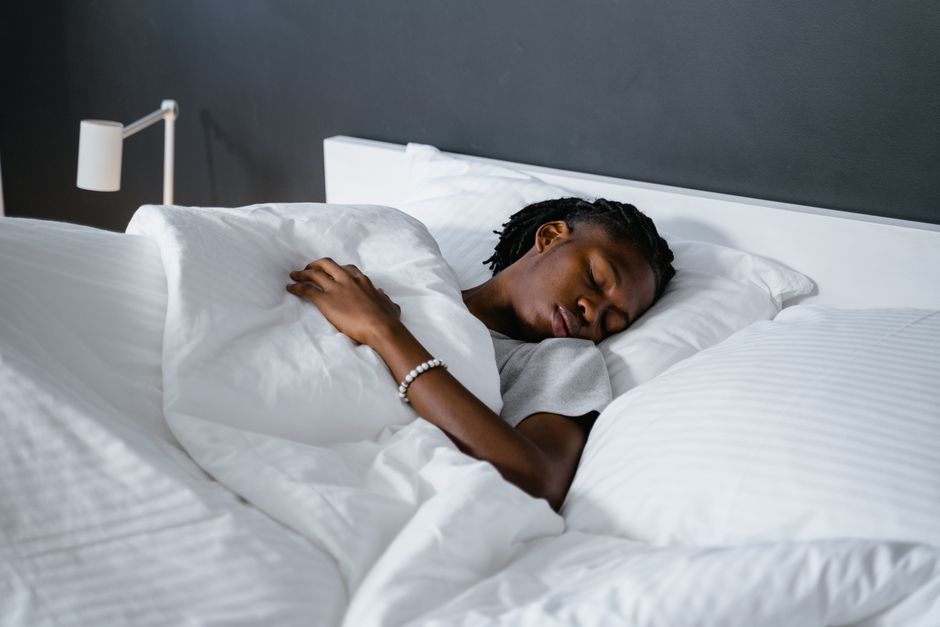
Sleeping with COVID-19 comes down to two problems: your cough gets worse when you lie flat, and your nose blocks up when you lie on your side. The fix is to prop your upper body up at an angle, sleep on your stomach or side rather than flat on your back, and treat the cough before bed. None of these positions cure COVID-19. They reduce the mechanical triggers that make coughing and congestion worse at night, which can help you get the rest your body needs to recover.
Why Does COVID Cough Get Worse At Night?
Gravity is the main reason. When you lie flat, mucus from your nose and sinuses drains backward into your throat instead of running out or being swallowed normally. That pooling triggers the cough reflex. Lying flat also makes it harder for your lungs to clear secretions, because you lose the natural drainage that upright posture provides.
There is a second factor that gets less attention. At night, your cough reflex is somewhat suppressed during deep sleep, so mucus can collect rather than being cleared continuously. When you shift position or wake briefly, the accumulated mucus triggers a burst of coughing. This is why many people with respiratory infections report coughing fits right as they fall asleep or when they turn over.
Dry air makes all of this worse. Indoor heating and air conditioning lower humidity, which dries out airway linings and makes mucus thicker and harder to clear. A room humidifier, or simply breathing steam from a hot shower before bed, can loosen secretions so they move more easily.
What Is The Best Sleeping Position With COVID?
There is no single position that works for everyone, but the general principle is clear: keep your head and chest higher than your stomach, and avoid lying flat on your back. Two positions tend to work best.
Upright with your upper body elevated. Prop yourself up with pillows so your head and torso are at an angle of roughly 30 to 45 degrees. Stack pillows behind your back and shoulders, not just under your head. Pillows only under the head bend your neck forward and can make drainage worse. A wedge pillow works well here because it holds its shape through the night.
Lying on your side or stomach. Side sleeping keeps your airway open and lets mucus drain to one side rather than pooling at the back of your throat. Stomach sleeping, sometimes called prone positioning, is used in hospitals for patients with low oxygen levels. For mild illness at home, some people find it easier to breathe on their stomach, especially with a pillow under the chest and hips. Prone positioning in a hospital setting is a monitored medical intervention. Doing it at home for comfort is reasonable, but it is not a substitute for medical care if your breathing is genuinely difficult.
If you have reflux or heartburn along with COVID, lying on your left side may help, since the stomach sits lower than the esophagus in that position. If you are pregnant, side sleeping, especially on the left, is generally recommended in later pregnancy, but check with your own clinician about what applies to you.
How To Sleep With Covid Positions Cough Relief More
Getting comfortable is only part of the job. The other part is reducing the cough itself before you get into bed, so you are not fighting your own airway all night. Here is what tends to help, in order of how directly it addresses the problem.
- Clear your nose before bed. Saline nasal spray or a saline rinse loosens mucus and reduces postnasal drip, which is one of the main nighttime cough triggers. Use a rinse only with distilled, sterile, or previously boiled and cooled water. Never use tap water directly.
- Take a hot shower or breathe steam. Ten minutes of steam before bed can thin mucus and calm irritated airways.
- Drink warm fluids. Warm water with honey and lemon is a traditional remedy, and honey has some evidence behind it for soothing cough. Do not give honey to children under 12 months old because of the risk of infant botulism.
- Use a humidifier in the bedroom. Keep it clean, since dirty humidifiers can spread mold and bacteria into the air.
- Elevate your head and chest, not just your head. This is the single most effective mechanical change for nighttime cough.
- Consider an over-the-counter cough suppressant for sleep. Dextromethorphan is the most common suppressant ingredient. It can reduce the cough reflex, but it does not treat the infection. Follow the package directions and check with a pharmacist if you take other medications or have any chronic condition.
One clarification worth making: cough medicines are not a cure and do not shorten illness. They reduce symptoms. That is a real benefit when the symptom is keeping you awake, but it is a comfort measure, not a treatment for COVID-19 itself.
What If You Cannot Breathe Well Lying Down?
This is the point where positions stop being a comfort tip and start being a warning sign. If you cannot get comfortable in any position, or if lying flat makes you feel short of breath in a way that sitting up relieves, that is worth taking seriously. Difficulty breathing when lying flat has a name in medicine, orthopnea, and it can be a sign that something more than a mild upper respiratory infection is going on.
Seek urgent medical care if you have any of the following:
- Shortness of breath at rest, or breathing that feels labored
- Lips, face, or fingertips turning blue or gray
- Chest pain or pressure that does not go away
- Confusion, trouble staying awake, or unusual drowsiness
- Oxygen saturation below 94 percent on a home pulse oximeter, if you have one, especially if it stays low or drops with activity
Do not try to manage these at home with pillows and positioning. Call emergency services or go to an emergency department. Positioning can help mild congestion. It cannot fix low oxygen from a lung infection.
Should You Sleep Separately If You Have COVID?
Yes, if you can. COVID-19 spreads mainly through respiratory droplets and airborne particles, and sleeping in the same bed with someone who is infectious raises their exposure considerably. The CDC recommends isolating from others in the household while you are contagious, and sleeping in a separate room is one of the more effective ways to reduce household spread.
If a separate room is not possible, sleep head to toe, keep the room ventilated with a window cracked or a fan running, and consider wearing a well-fitting mask in shared spaces. The infectious period is generally considered to be from a day or two before symptoms start until symptoms are improving and fever has been gone for at least 24 hours without fever-reducing medication, though guidance on exact isolation timing has been updated over time. Check current public health guidance for the most recent recommendations.
How Long Does Nighttime Cough Last With COVID?
A cough is one of the most persistent symptoms of COVID-19, and it often outlasts the other symptoms by a wide margin. Many people find their cough lingers for two to three weeks, and some continue coughing for a month or longer even after they otherwise feel recovered. This is common with respiratory viruses in general, not unique to COVID.
A lingering cough after the acute illness is usually the airway lining healing and clearing residual mucus. It is not necessarily a sign that you are still contagious or that something has gone wrong. That said, a cough that is getting worse rather than better, or one that comes with new fever, chest pain, or shortness of breath, should be evaluated by a clinician.
Sleep will likely be disrupted for the first several nights. That is expected. Prioritize rest, keep your head elevated, treat the cough, and give your body time. Sleep is when much of the immune response to a respiratory infection does its work, so protecting it matters more than getting a perfect night.
Frequently Asked Questions
What is the best sleeping position for COVID cough?
Sleep with your head and chest elevated at roughly 30 to 45 degrees, or lie on your side or stomach. Keeping your upper body raised reduces mucus pooling in your throat, which is the main trigger for nighttime coughing.
Does sleeping on your stomach help with COVID?
Some people find it easier to breathe on their stomach, and prone positioning is used in hospitals for patients with low oxygen. At home, it is reasonable for comfort, but it is not a treatment for low oxygen levels and does not replace medical care.
How do you stop coughing at night with COVID?
Clear your nose with saline before bed, breathe steam, use a humidifier, and keep your head elevated. An over-the-counter suppressant like dextromethorphan may reduce the cough reflex for sleep, but it treats the symptom, not the infection.
When should you go to the hospital with COVID?
Go to an emergency department if you have shortness of breath at rest, chest pain, confusion, bluish lips or face, or oxygen saturation below 94 percent. These are signs of serious illness that positioning and home remedies cannot address.
