
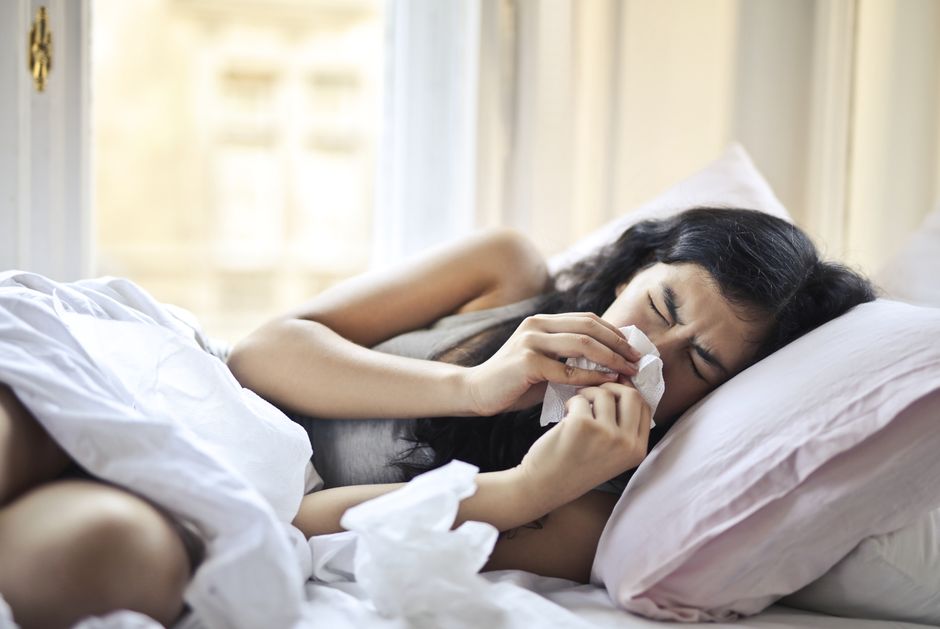
If you are waking up congested, sneezing, or itchy-eyed, the problem may be the room you sleep in. Bedrooms collect allergens — dust mites, pet dander, pollen, and mold spores — that sit in bedding, carpet, and soft surfaces. The most effective way to sleep better with allergies is to reduce those allergens where you spend seven to nine hours a night, and to keep outdoor pollen out of the room in the first place.
How To Sleep With Allergies Bedroom Tips That Help Most
Two changes matter more than everything else combined: covering your bedding and cleaning the air. Sleep is a long exposure. You spend roughly a third of your life in one room, breathing within inches of pillows, sheets, and a mattress that can hold years of allergen buildup.
The single most studied bedroom intervention for dust mite allergy is allergen-impermeable bedding covers. These are zippered fabric encasements, usually made of tightly woven microfiber, that wrap the mattress, box spring, and pillows. They block dust mite allergen from passing through. Research on dust mite avoidance consistently shows that physical barriers around bedding reduce measured allergen levels in the bed.
Pair that with a HEPA air cleaner. HEPA stands for high-efficiency particulate air. A true HEPA filter captures 99.97 percent of particles at 0.3 microns, which includes most pollen, pet dander, and many dust particles. The catch is that air cleaners only work while they run, and they only clean the air that passes through them. A unit that is too small for the room will not move enough air to matter. Choose one rated for a room at least as large as yours, and run it on high while you sleep if noise allows.
Everything else in this article supports these two steps. They are not glamorous, and they do not fix the problem overnight. But they address the largest allergen reservoirs in the room.
Why Does Your Bedroom Make Allergies Worse at Night?
Bedrooms are allergen traps by design. They are usually the least ventilated room in a home, they are full of soft surfaces, and they are often kept warm and humid — conditions dust mites thrive in.
Dust mites are microscopic organisms that feed on shed human skin cells. They do not bite. Their waste particles are the allergen, and those particles are small enough to become airborne when you move in bed. A mattress, pillow, or comforter can hold a large population of mites. Their favorite conditions are warmth and relative humidity above roughly 50 percent.
Pollen adds a second layer in spring and fall. It rides in on clothing, hair, pets, and open windows. Once inside, it settles into carpet and upholstery and gets stirred up again when you walk around or get into bed.
Pet dander is a third factor. Dander is not just fur — it is shed skin flakes plus proteins in saliva and urine. These proteins are sticky and lightweight. They stay airborne for a long time and cling to walls and fabrics. People without pets in the home can still find dander in a bedroom if a previous occupant had a cat or dog.
Mold is the fourth. It grows where moisture collects — leaky windows, damp basements, bathroom walls near the bedroom. Mold spores become airborne and can trigger allergy symptoms in sensitive people.
How Do You Reduce Dust Mites in the Bedroom?
Dust mite control is about starving them of humidity and removing the surfaces they live in.
- Encase the mattress, box spring, and every pillow in allergen-impermeable covers. Zip them closed and wipe the surface clean monthly.
- Wash bedding weekly in hot water. Water at 130°F (54°C) or hotter kills dust mites. If your water heater is set lower for safety reasons, dry the bedding on a high heat setting instead, which also reduces mite survival.
- Keep indoor relative humidity between 30 and 50 percent. A hygrometer costs little and tells you what your bedroom is actually doing. Below 50 percent, dust mites struggle to reproduce.
- Replace carpet with hard flooring if you can. If you cannot, vacuum weekly with a machine that has a HEPA filter, and stay out of the room for a while afterward.
- Reduce clutter. Stuffed animals, stacks of books, and piles of laundry all hold dust.
One non-obvious point: mite allergen is heavy and settles quickly. It does not stay floating in the air the way pollen does. That means cleaning surfaces and bedding matters more than running an air purifier for mites specifically. Air cleaners help most with pollen, dander, and smoke.





Should You Shower Before Bed and Change Clothes?
Yes, and this is one of the easiest wins. During the day, pollen and outdoor particles collect on your hair, skin, and clothing. If you get into bed without rinsing off, you carry that load straight into your sheets.
A quick shower before bed rinses pollen from your hair and face. Changing into clean clothes or pajamas that never go outside keeps the day’s pollen out of the bed. If a full shower is not realistic every night, at minimum wash your face and hands and change your shirt.
Keep daytime clothes out of the bedroom entirely if pollen is a trigger for you. A hamper in another room, or at least a closed one, limits how much outdoor material ends up on your floor and furniture.
Do Air Purifiers and Filters Actually Help?
Air purifiers help with airborne allergens, and the evidence is strongest for pollen, pet dander, and smoke particles. They are less useful for dust mite allergen because those particles settle rather than float.
What matters is the filter type and the size of the unit. A true HEPA filter is the standard. Avoid “HEPA-like” or “HEPA-type” marketing language — those are not held to the same filtration standard. Room size ratings are based on the unit running at its highest speed, so a purifier rated for a large room will only clean a smaller room effectively if you run it on low for quiet.
For central heating and cooling systems, a high-efficiency filter (rated MERV 11 to 13) can help, but check your system’s manual first. Filters that are too restrictive can reduce airflow and strain the equipment. Change them on the schedule the manufacturer recommends.
Keep windows closed during high pollen periods. Run air conditioning instead, which cools and dehumidifies. If you want fresh air, do it in the middle of the day when pollen counts are often lower, not at dawn when many plants release pollen.
What About Pets, Pillows, and Bedding Materials?
If you are allergic to a pet, the most effective step is keeping the animal out of the bedroom entirely and closing the door. This is hard for many people, and partial measures help less. A pet that sleeps on the bed deposits dander directly into the bedding all night.
If you cannot keep a pet out, wash bedding frequently and run a HEPA air cleaner. Some clinicians also recommend bathing the pet weekly, though this helps only briefly and can dry out an animal’s skin.
For pillows, choose ones you can wash, or use an impermeable cover under the pillowcase. Down versus synthetic is a common question. The allergen issue is not the filling itself — it is what the pillow collects over time. Any pillow that cannot be washed will accumulate dust mite allergen. Replace pillows that are old, stained, or no longer hold shape.
Specialty bedding marketed as “hypoallergenic” or “anti-allergy” often carries a premium without clear evidence it outperforms a simple impermeable cover. The cover is the part that does the work.
When Should You See a Doctor About Nighttime Allergies?
See a doctor if your symptoms do not improve after consistent bedroom changes, if they interfere with sleep most nights, or if you have asthma and your symptoms are worsening. Allergic rhinitis and asthma often travel together, and untreated nasal congestion can make asthma harder to control.
Bedroom changes reduce exposure. They do not treat the immune response itself. For many people, medication — antihistamines, nasal steroid sprays, or other options — is what actually controls symptoms. Which one fits you depends on your triggers and health history, so that conversation belongs with a clinician, not a bedroom checklist.
Allergy testing can identify what you are actually reacting to. That matters because the right bedroom strategy depends on the trigger. Dust mite control looks different from pollen control, which looks different from mold remediation. Guessing wastes effort.
Frequently Asked Questions
Does washing bedding in hot water kill dust mites?
Yes. Washing bedding in water at 130°F (54°C) or hotter kills dust mites and removes allergen. If your water is set lower for safety, use a hot dryer cycle instead.
Do air purifiers help with dust mite allergies?
They help less than you might expect, because dust mite allergen is heavy and settles quickly rather than staying airborne. Air purifiers are more useful for pollen, pet dander, and smoke.
What humidity level keeps dust mites away?
Keeping indoor relative humidity between 30 and 50 percent limits dust mite reproduction. A simple hygrometer can tell you what your bedroom is actually reading.
Should I keep my pet out of the bedroom if I have allergies?
Yes, keeping the pet out and closing the door is the most effective step if you are allergic to it. Partial measures like washing bedding help but reduce exposure less.
