
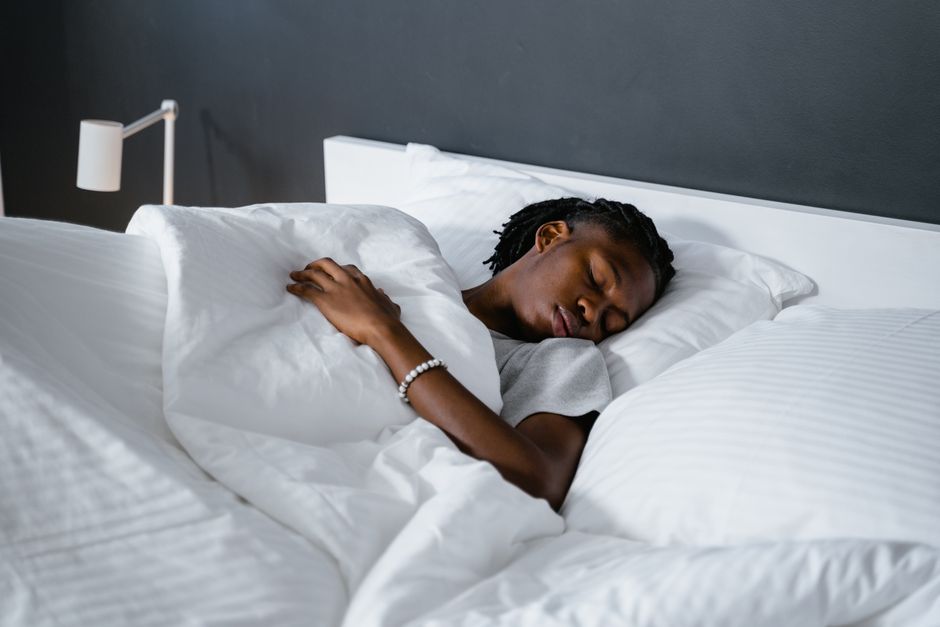
There is no scientifically proven method that reliably puts a person to sleep in 40 seconds. The widely shared “4-7-8” breathing exercise is often described as a 40-second technique, but no large clinical trial has shown it can reliably trigger sleep in that time. What the evidence does support is a set of calm-down steps that can lower arousal and make sleep more likely to arrive quickly.
The honest answer is that sleep onset depends on your nervous system shifting out of a wakeful state. You cannot force that shift on command. You can create the conditions for it, and some breathing and relaxation methods help many people get there faster than lying in bed trying to will themselves to sleep.
What Is the 40-Second Sleep Method and Does It Work?
The 40-second label usually refers to the 4-7-8 breathing pattern. You breathe in through your nose for 4 counts, hold for 7, and exhale slowly through your mouth for 8. One full cycle takes about 19 seconds, so two cycles come close to 40 seconds.
The idea behind it is physiologically reasonable. Slow breathing at roughly six breaths per minute increases what researchers call heart rate variability, a marker of the parasympathetic (“rest and digest”) branch of the nervous system being active. That branch slows heart rate and reduces the body’s stress response. This is well established.
What is not established is the 40-second claim. No large human trial has confirmed that this specific pattern reliably puts people to sleep within 40 seconds. The evidence for slow breathing as a relaxation tool is real. The evidence for it as a 40-second sleep switch is not.
That distinction matters. Breathing exercises are widely used in clinical settings for anxiety and stress, and some studies suggest they can modestly improve sleep quality over time. But sleep onset is not a switch you flip. It is a gradual transition, and the time it takes varies enormously between people and from night to night.
How To Sleep Fast In 40 Seconds Steps That Work
If you want to try a fast wind-down, the steps below combine the best-supported elements of relaxation techniques. Treat them as a routine that helps, not a guarantee. The goal is to reduce physical and mental arousal so sleep can take over.
- Dim the light and put the phone down. Bright light, especially from screens, signals wakefulness to the brain. Give your eyes a few minutes of low light before you start.
- Lie down and relax your face and jaw. Tension often hides in the face, shoulders, and hands. Deliberately loosen those areas.
- Breathe slowly through your nose. Inhale for about 4 counts, hold for 7, exhale for 8. Keep the pace comfortable, not strained.
- Repeat for a few cycles. Two cycles is the 40-second version. Many people need several minutes to feel the effect, and that is normal.
- Let your mind rest on one neutral image or word. Chasing thoughts keeps the brain alert. Returning gently to a single focus calms it.
If the 7-count hold feels uncomfortable, shorten it. There is nothing sacred about the exact numbers. The key ingredient, based on the physiology, is the slow, extended exhale. A longer exhale than inhale is what tends to nudge the nervous system toward calm.
One clarification that often gets lost: the 4-7-8 pattern is sometimes credited to Dr. Andrew Weil, who popularized it. It is a relaxation technique, not a medical treatment. It has not been validated as a cure for insomnia, and it should not replace care for a genuine sleep disorder.
Why Can’t I Fall Asleep in 40 Seconds?
Because sleep onset is not fully under conscious control. It depends on your body’s sleep drive and your internal clock lining up, plus your nervous system being calm enough to let go.
Several things work against a fast transition. Caffeine has a half-life of about 5 hours, meaning a good chunk of an afternoon coffee is still in your system at bedtime. Alcohol can make you drowsy but fragments sleep later. Stress and an active mind keep the brain in a more alert state. And lying in bed frustrated trains your brain to associate the bed with being awake, which makes the problem worse over time.
There is also natural variation. Some people genuinely take longer to fall asleep than others. A sleep onset of roughly 10 to 20 minutes is often described as typical, though normal ranges vary widely. If you usually take 30 minutes or more, that is not necessarily a disorder, but it is worth understanding why.
The 40-second expectation can backfire. When people time themselves and get frustrated, that frustration raises arousal and delays sleep further. The technique works best when you do not grade yourself on the clock.
What Actually Helps You Fall Asleep Faster?
The strongest evidence for falling asleep faster is not any single 40-second trick. It is consistent sleep habits and, for people with chronic insomnia, a structured behavioral therapy.
Cognitive behavioral therapy for insomnia, known as CBT-I, is the treatment with the most research support for ongoing sleep problems. It is recommended as a first-line approach for chronic insomnia in major clinical guidance, ahead of sleeping pills. It works by changing the thoughts and behaviors that keep sleep from happening.
For everyday faster sleep onset, the well-supported basics include:
- Going to bed and waking at roughly the same times each day, which strengthens your internal clock.
- Getting daylight exposure in the morning, which helps set that clock.
- Keeping the bedroom dark, quiet, and cool.
- Avoiding caffeine in the hours before bed.
- Getting out of bed if you are wide awake and frustrated, then returning when sleepy.
Relaxation techniques like slow breathing, progressive muscle relaxation, and guided imagery are reasonable additions. Some studies suggest they can help people relax and fall asleep more easily. They are low-risk and widely used. They are not proven to work in 40 seconds.
Is the 4-7-8 Breathing Exercise Safe for Everyone?
For most healthy adults, slow breathing exercises are low-risk. But “safe for everyone” is not accurate, and it is worth being specific.
Holding your breath can be uncomfortable or risky for people with certain heart or lung conditions.
If you have a heart rhythm disorder, uncontrolled high blood pressure, asthma, or another respiratory condition, check with a clinician before doing breath-hold patterns. The extended hold is the part most likely to cause problems.
Pregnant women and children should also be cautious with breath-holding. No clinical guidelines specifically address 4-7-8 breathing for these groups, so there is no established dosing or safety standard. A slow, comfortable breathing pace without long holds is generally the gentler option.
If you feel dizzy, short of breath, or lightheaded, stop. The technique should feel calming, not stressful.
When Should You See a Doctor About Sleep?
Occasional slow sleep onset is normal. Ongoing trouble falling asleep or staying asleep is not something to simply push through, especially if it affects your daytime function.
See a clinician if you regularly take more than about 30 minutes to fall asleep, wake frequently, or feel unrefreshed despite enough time in bed. Also seek care if you snore heavily, gasp for air at night, or feel very sleepy during the day. Those can be signs of sleep apnea, a condition that needs proper diagnosis and treatment.
Persistent insomnia is treatable. The most effective approach is usually behavioral, and a doctor or sleep specialist can point you toward evidence-based options. A 40-second breathing trick is a reasonable relaxation tool to try. It is not a substitute for addressing a real sleep problem.
Frequently Asked Questions
Can you really fall asleep in 40 seconds?
No proven method reliably puts a person to sleep in 40 seconds. The 4-7-8 breathing technique is often described that way, but no large trial has confirmed it works that fast.
Does the 4-7-8 breathing method help you sleep?
Some studies suggest slow breathing can help people relax and may modestly improve sleep, but the evidence for a 40-second effect is not established. It is best treated as a relaxation aid, not a guaranteed sleep switch.
What is the fastest way to fall asleep naturally?
Consistent sleep times, morning daylight, low caffeine, and a dark, cool room have the strongest evidence behind them. Slow breathing and relaxation techniques can help as additions.
Is holding your breath during 4-7-8 breathing safe?
Slow breathing is low-risk for most healthy adults, but the breath hold can be a concern for people with heart or lung conditions. Check with a clinician first if you have one of those conditions.
